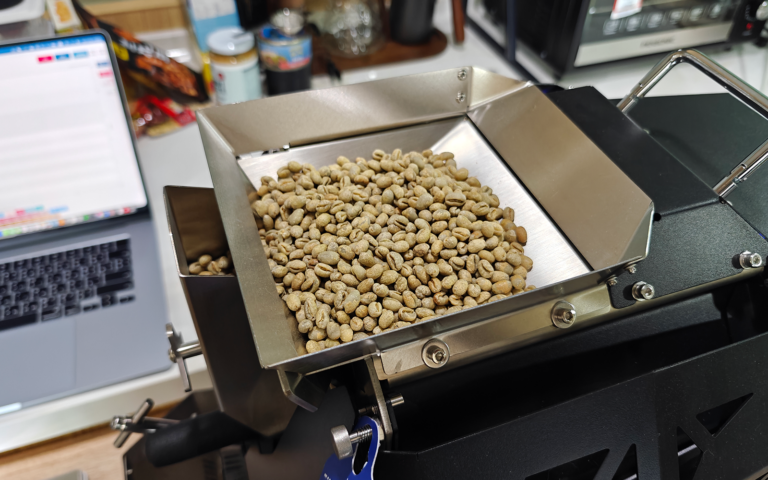
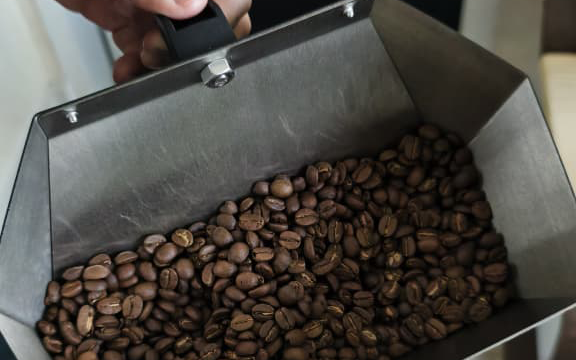
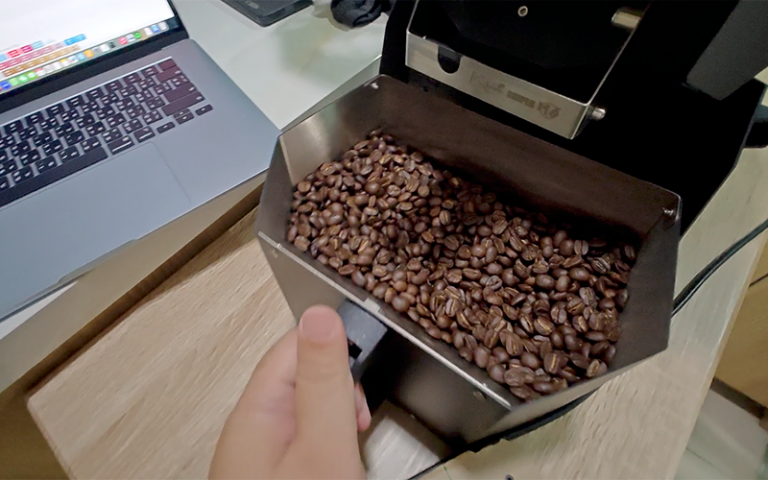
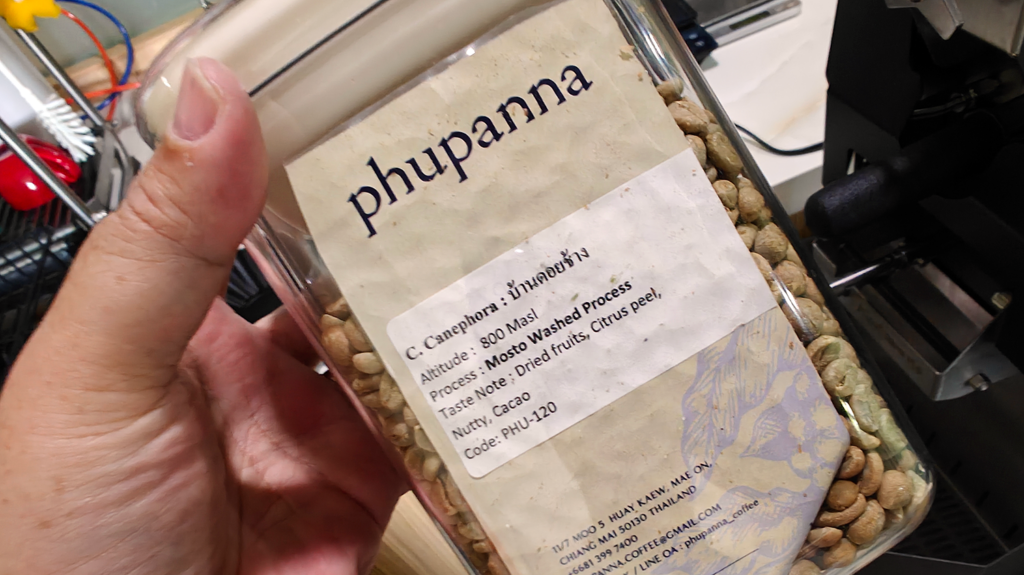
After months of roasting exclusively Arabica beans, I finally loaded C.Canephora (Robusta) into the Kaleido M6. This PHU-120 lot from Chiang Mai uses mosto washed processing—the same method that intrigued me about this bean initially. I went in confident, armed with experience from Mae Salong, Mae Ukho, Khun Kong, and Catuai roasts.
That confidence was misplaced. Robusta doesn’t play by Arabica’s rules.
The Assumption: “It’s Just Another Bean”
Here’s my critical mistake: I assumed Robusta behaves like Arabica.
Why wouldn’t it? It’s coffee. It has moisture content, density, cellulose structure. Heat dries it, develops it, cracks it, right?
I didn’t do enough research. I treated this first roast like any other baseline run—watch for dry end, listen for first crack, monitor second crack, drop accordingly. Standard procedure.
Robusta had other plans.
What I Recorded (And Why It’s Probably Wrong)
My Notes:
- Batch Size: 350g (conservative test batch)
- Dry End: 156°C – seemed normal, beans looked dry
- First Crack: 189°C – …or so I thought
- Second Crack: 215°C – heard this clearly
Here’s the problem: I don’t think I actually heard first crack.
During the roast, around 189°C, I marked “FC” in my notes. But honestly? The sound was ambiguous at best. With the Kaleido M6’s drum noise and soundproofing already making Arabica cracks challenging to hear, I was straining to catch something that sounded crack-like.
I convinced myself I heard it. The temperature seemed right based on my Arabica experience (Mae Ukho FC at 179-182°C, Catuai at 181-185°C). Surely Robusta wouldn’t be that different?
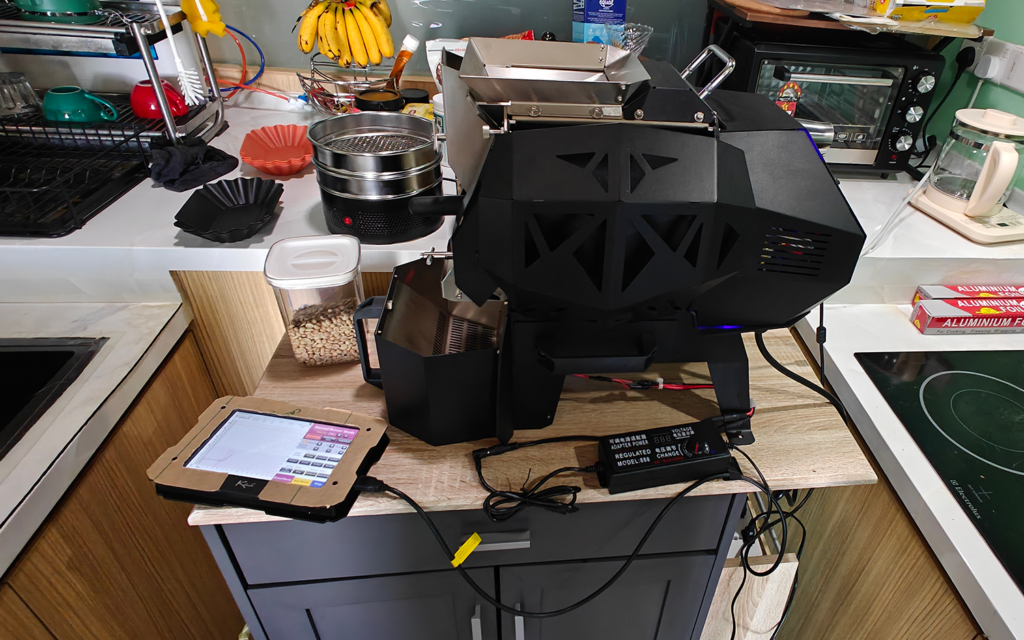
The Post-Roast Discovery: Robusta Doesn’t Crack Like Arabica
After dropping the beans and starting to research what I should have researched before roasting, I learned something fundamental:
Robusta’s first crack is often far quieter, less distinct, or even virtually silent compared to Arabica.
Why? The cellular structure differs. Robusta beans are denser in different ways, with tougher cell walls and different moisture distribution. When Arabica cracks, you hear explosive cellular rupture—those satisfying pops and snaps. Robusta? It might whisper. Or say nothing at all.
Some roasters report barely hearing Robusta’s first crack even on machines with excellent acoustics. On the Kaleido M6, where I already struggle to hear Arabica’s FC clearly? I probably had no chance.
What I “heard” at 189°C was likely:
- Random bean tumbling noise
- My imagination, desperately wanting to hear FC
- Confirmation bias—I expected FC around that temperature, so I “heard” it
The truth? I don’t know when this Robusta actually hit first crack. Or if the phenomenon even manifested audibly at all.
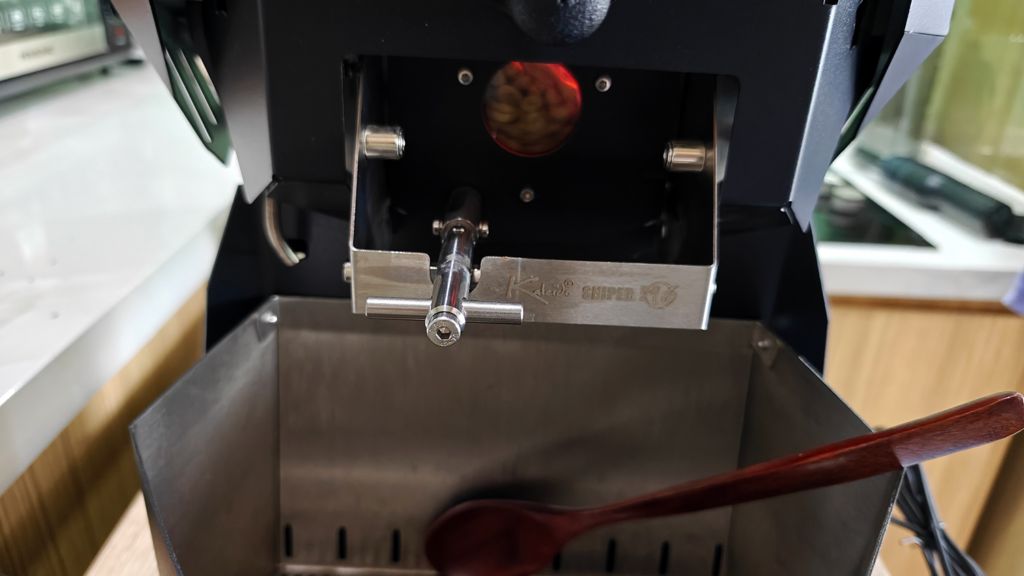
Second Crack: The Only Certainty
The one thing I’m confident about: second crack at 215°C was real.
SC tends to be louder and more distinctive than FC, even in Robusta. That crackling, more aggressive sound came through clearly despite the M6’s acoustic challenges. By 215°C, something was definitely happening—rapid cellular breakdown, oils migrating, structural changes accelerating.
So I have one reliable data point. Just one.
Why This Roast Is “Totally Wrong”
Without accurate first crack timing, I can’t properly assess:
- Maillard phase duration: When did it actually end? Unknown.
- Development time: From FC to drop… but when was FC? Unknown.
- Roast level appropriateness: Did I under-develop or over-develop? Hard to say.
- Phase distribution: Can’t calculate meaningful percentages without FC marker.
My carefully cultivated roasting methodology—built on phase percentages, Maillard time management, controlled development—just collapsed. The entire framework depends on knowing when first crack occurs.
For Robusta, I’m essentially roasting blind.
The Dry End Question
I’m reasonably confident about dry end at 156°C. The beans transitioned from shiny-wet green to matte-dry appearance. The smell changed from grassy to toasted grain. These visual and olfactory cues transcend species differences.
But even here, I’m less certain than with Arabica. Does Robusta’s different cellular structure change how dry end manifests? I don’t know. I’m working from Arabica assumptions because it’s all I have.
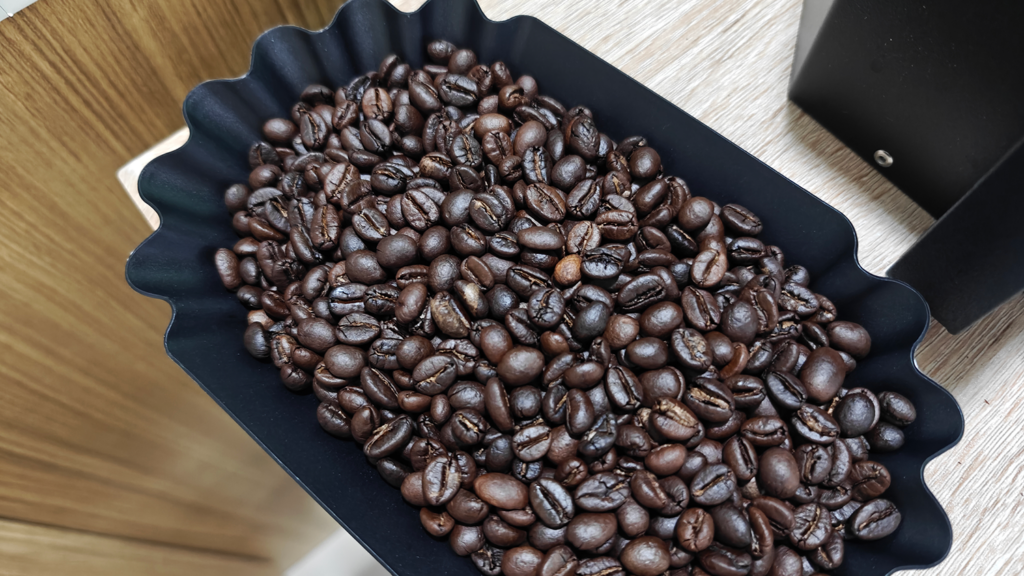
What’s Next: 650 Grams of Uncertainty
I have 650 grams of this PHU-120 Robusta remaining. Before roasting it, I need to actually do what I should have done before roast #1:
Research Robusta-Specific Roasting:
- How do experienced Robusta roasters identify first crack without audio cues?
- What visual indicators replace or supplement sound?
- Are there temperature ranges where FC typically occurs for Robusta?
- How does mosto washed processing affect Robusta’s roast progression?
Adjust Expectations:
- Accept that I might not hear first crack clearly
- Rely more heavily on visual cues through the sight glass
- Trust temperature markers and rate-of-rise changes
- Consider that Robusta’s phase timing might follow completely different patterns than Arabica
Plan for Roast #2:
- Maybe try a lighter roast (drop earlier) to see if I can identify FC occurrence by working backward from the result?
- Or push darker deliberately and focus on SC as my primary marker?
- Use temperature and visual cues as primary data, audio as secondary at best?

The Humbling Truth
This roast reminded me that confidence without knowledge is just arrogance. I thought months of Arabica roasting made me competent. It made me competent at roasting Arabica.
Robusta is a different species—literally Coffea canephora versus Coffea arabica. Different genetics, different cell structure, different chemistry, different behavior under heat.
Treating them as interchangeable was lazy. Now I’m paying the learning cost.
The 650g batch will be my real “first” Robusta roast—the one where I actually understand what I’m working with instead of projecting Arabica expectations onto a fundamentally different coffee.
Roast Status: Invalid data – FC timing unknown
Lessons Learned: Research before roasting, species matter
Reliable Data: DE @ 156°C, SC @ 215°C
Next Action: Study Robusta roasting methodology before batch #2
Roast Profile (Questionable):
- Batch Size: 350g
- DE: 156°C (probably accurate)
- FC: 189°C (probably wrong—didn’t actually hear it)
- SC: 215°C (confident)
- Drop: Unknown BT (didn’t record, too confused)
- Result: Unknown roast level, unreliable process data
First Robusta Roast: Everything I Thought I Knew Was Wrong
After months of roasting exclusively Arabica beans, I finally loaded C.Canephora (Robusta) into the Kaleido M6. This PHU-120 lot from Chiang Mai uses mosto washed processing—the same method that intrigued me about this bean initially. I went in confident, armed with experience from Mae Salong, Mae Ukho, Khun Kong, and Catuai roasts.
That confidence was misplaced. Robusta doesn’t play by Arabica’s rules.
The Assumption: “It’s Just Another Bean”
Here’s my critical mistake: I assumed Robusta behaves like Arabica.
Why wouldn’t it? It’s coffee. It has moisture content, density, cellulose structure. Heat dries it, develops it, cracks it, right?
I didn’t do enough research. I treated this first roast like any other baseline run—watch for dry end, listen for first crack, monitor second crack, drop accordingly. Standard procedure.
Robusta had other plans.
What I Recorded (And Why It’s Probably Wrong)
My Notes:
- Batch Size: 350g (conservative test batch)
- Dry End: 156°C – seemed normal, beans looked dry
- First Crack: 189°C – …or so I thought, I marked as 201°C
- Second Crack: 215°C – heard this clearly
Here’s the problem: I don’t think I actually heard first crack.
During the roast, around 189°C, I marked “FC” in my notes. But honestly? The sound was ambiguous at best. With the Kaleido M6’s drum noise and soundproofing already making Arabica cracks challenging to hear, I was straining to catch something that sounded crack-like.
I convinced myself I heard it. The temperature seemed right based on my Arabica experience (Mae Ukho FC at 179-182°C, Catuai at 181-185°C). Surely Robusta wouldn’t be that different?
The Post-Roast Discovery: Robusta Doesn’t Crack Like Arabica
After dropping the beans and starting to research what I should have researched before roasting, I learned something fundamental:
Robusta’s first crack is often far quieter, less distinct, or even virtually silent compared to Arabica.
Why? The cellular structure differs. Robusta beans are denser in different ways, with tougher cell walls and different moisture distribution. When Arabica cracks, you hear explosive cellular rupture—those satisfying pops and snaps. Robusta? It might whisper. Or say nothing at all.
Some roasters report barely hearing Robusta’s first crack even on machines with excellent acoustics. On the Kaleido M6, where I already struggle to hear Arabica’s FC clearly? I probably had no chance.
What I “heard” at 189°C was likely:
- Random bean tumbling noise
- My imagination, desperately wanting to hear FC
- Confirmation bias—I expected FC around that temperature, so I “heard” it
The truth? I don’t know when this Robusta actually hit first crack. Or if the phenomenon even manifested audibly at all.
Second Crack: The Only Certainty
The one thing I’m confident about: second crack at 215°C was real.
SC tends to be louder and more distinctive than FC, even in Robusta. That crackling, more aggressive sound came through clearly despite the M6’s acoustic challenges. By 215°C, something was definitely happening—rapid cellular breakdown, oils migrating, structural changes accelerating.
So I have one reliable data point. Just one.
Why This Roast Is “Totally Wrong”
Without accurate first crack timing, I can’t properly assess:
- Maillard phase duration: When did it actually end? Unknown.
- Development time: From FC to drop… but when was FC? Unknown.
- Roast level appropriateness: Did I under-develop or over-develop? Hard to say.
- Phase distribution: Can’t calculate meaningful percentages without FC marker.
My carefully cultivated roasting methodology—built on phase percentages, Maillard time management, controlled development—just collapsed. The entire framework depends on knowing when first crack occurs.
For Robusta, I’m essentially roasting blind.
The Dry End Question
I’m reasonably confident about dry end at 156°C. The beans transitioned from shiny-wet green to matte-dry appearance. The smell changed from grassy to toasted grain. These visual and olfactory cues transcend species differences.
But even here, I’m less certain than with Arabica. Does Robusta’s different cellular structure change how dry end manifests? I don’t know. I’m working from Arabica assumptions because it’s all I have.
What’s Next: 650 Grams of Uncertainty
I have 650 grams of this PHU-120 Robusta remaining. Before roasting it, I need to actually do what I should have done before roast #1:
Research Robusta-Specific Roasting:
- How do experienced Robusta roasters identify first crack without audio cues?
- What visual indicators replace or supplement sound?
- Are there temperature ranges where FC typically occurs for Robusta?
- How does mosto washed processing affect Robusta’s roast progression?
Adjust Expectations:
- Accept that I might not hear first crack clearly
- Rely more heavily on visual cues through the sight glass
- Trust temperature markers and rate-of-rise changes
- Consider that Robusta’s phase timing might follow completely different patterns than Arabica
Plan for Roast #2:
- Maybe try a lighter roast (drop earlier) to see if I can identify FC occurrence by working backward from the result?
- Or push darker deliberately and focus on SC as my primary marker?
- Use temperature and visual cues as primary data, audio as secondary at best?
The Humbling Truth
This roast reminded me that confidence without knowledge is just arrogance. I thought months of Arabica roasting made me competent. It made me competent at roasting Arabica.
Robusta is a different species—literally Coffea canephora versus Coffea arabica. Different genetics, different cell structure, different chemistry, different behavior under heat.
Treating them as interchangeable was lazy. Now I’m paying the learning cost.
The 650g batch will be my real “first” Robusta roast—the one where I actually understand what I’m working with instead of projecting Arabica expectations onto a fundamentally different coffee.
Roast Status: Invalid data – FC timing unknown
Lessons Learned: Research before roasting, species matter
Reliable Data: DE @ 156°C, SC @ 215°C
Next Action: Study Robusta roasting methodology before batch #2
Roast Profile (Questionable):
- Batch Size: 350g
- DE: 156°C (probably accurate)
- FC: 189°C (probably wrong—didn’t actually hear it)
- SC: 215°C (confident)
- Drop: Unknown BT (didn’t record, too confused)
- Result: Unknown roast level, unreliable process data