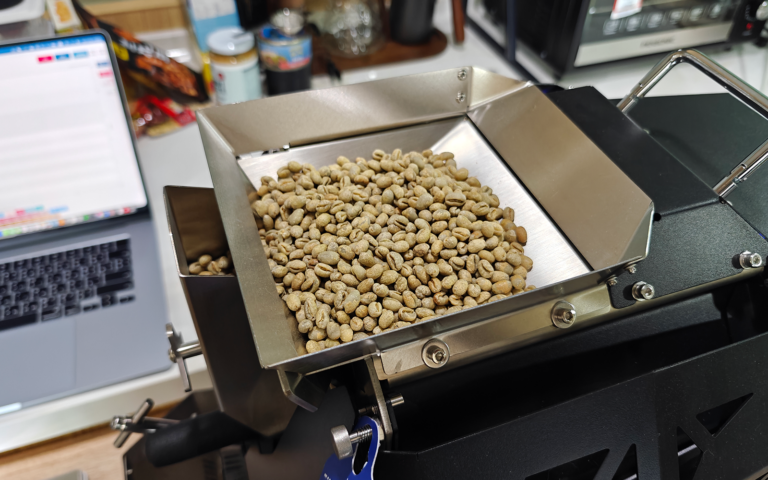
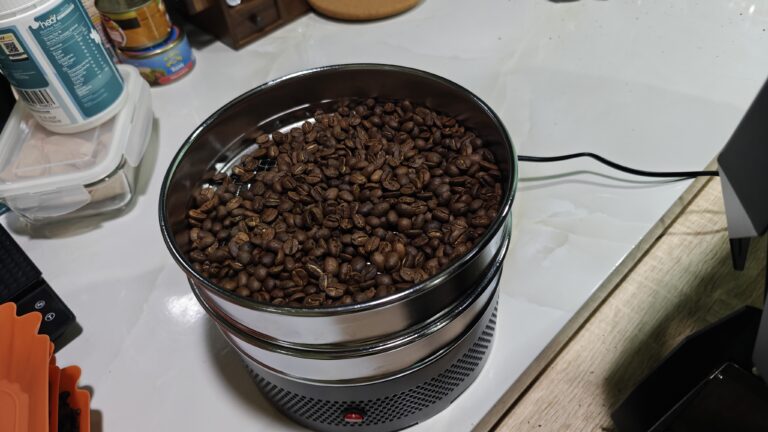
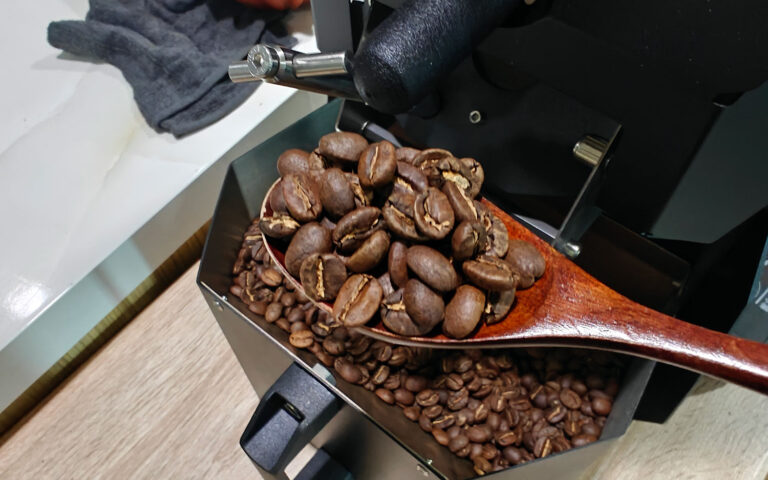
After establishing baseline temperatures from Vietnam roast #1 (DE 153.7°C, FC 184.9°C, SC 205.2°C), I planned roasts #2 and #3 with specific targets: shorter total roast time, medium-dark roast level, and intentionally stopping before second crack.
The execution? More of the same heat management struggles I’ve been battling for months.
The Plan: Deliberate, Modest
Unlike my Kenya competition roasts or my ambitious Catuai attempts, I approached these Vietnam roasts with realistic expectations:
Goal: Achieve medium-dark roast (around 9:30-10:30 total time, drop before SC @ 205.2°C)
Strategy: Use the baseline BT data, plan controlled heat reduction post-DE, target 2:30-3:00 Maillard time, develop conservatively
Outcome target: Drinkable coffee at a darker roast level that suits the bean’s body-forward character (as evidenced by my brother’s bitter preference)
Nothing groundbreaking. Just competent roasting with clear targets.
What Actually Happened: The Maillard Problem Returns
Here’s the frustration: I still can’t consistently control Maillard time.
Despite months of roasting experience, despite understanding the heat management principles, despite planning carefully—I keep making the same mistake:
I fail to reduce heat aggressively enough post-DE, causing first crack to arrive earlier than planned.
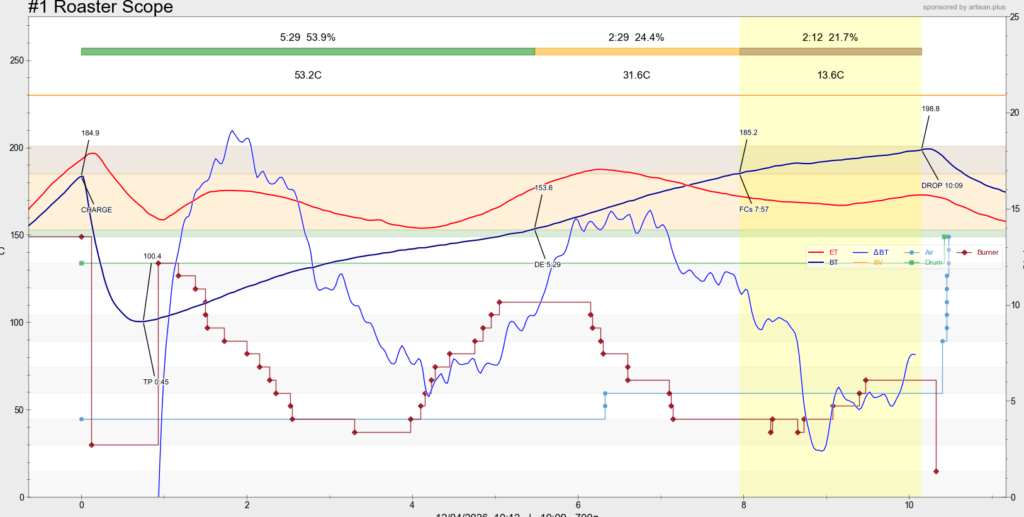
Roast #2:
- Planned Maillard: ~3:00 minutes
- Actual Maillard: shorter than planned
- FC arrived earlier than expected
- Total roast time: ~10 minutes ✓
- Final roast level: Medium-dark ✓
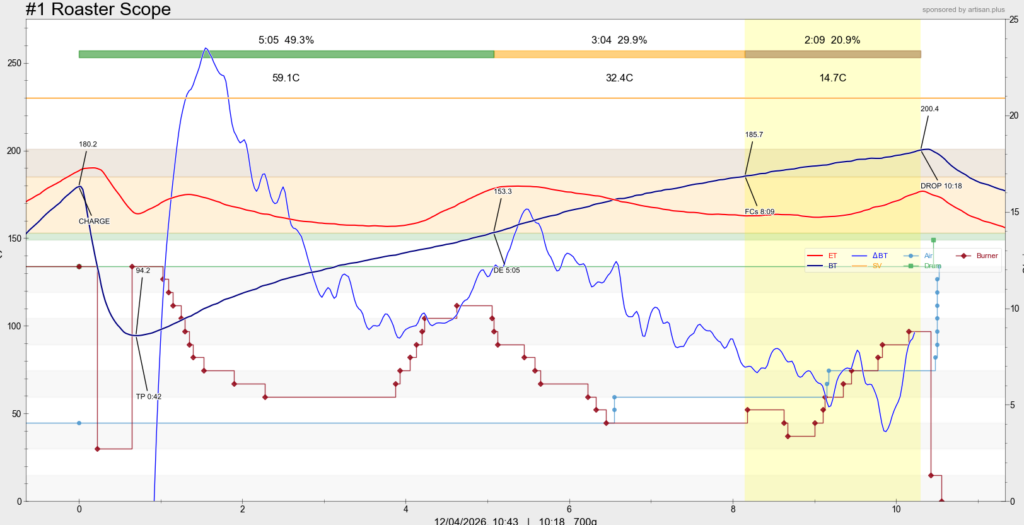
Roast #3:
- Same plan: ~3:00 Maillard target
- Same result: shorter than planned
- FC again earlier than expected
- Total roast time: ~10 minutes ✓
- Final roast level: Medium-dark ✓
The pattern is transparent: I reduce heat after DE, but not enough. The beans’ momentum carries them toward FC faster than my planned Maillard duration allows. By the time I realize FC is imminent, I’m already past my target development time.
Why This Keeps Happening
The Core Issue: I intellectually understand heat reduction needs to be aggressive, but I emotionally hesitate.
When I reduce heat too much, beans can stall—temperature climb slows to a crawl, and I’m left desperately adding heat back in a panic recovery. I’ve been there (Catuai roast #2 taught me that lesson painfully).
So I reduce heat conservatively. “Gently” lower the heat, I tell myself. “Stay in control.”
The result? Gentle heat reduction isn’t enough to significantly slow the bean temperature climb. The roaster’s thermal mass carries forward. FC arrives early. Maillard phase collapses again.
I’m caught between two fears:
- Fear of stalling the beans (too aggressive heat reduction)
- Fear of rushing through Maillard (too gentle heat reduction)
And I keep choosing the wrong fear to prioritize.
No Major Disasters, No Breakthroughs
What’s notable about roasts #2 and #3 is how… uneventful they were.
I didn’t overshooting into very dark roast (like early Robusta attempts). I didn’t dramatically undershoot into light roast. I didn’t have a thermal disaster or panic moment requiring emergency drop.
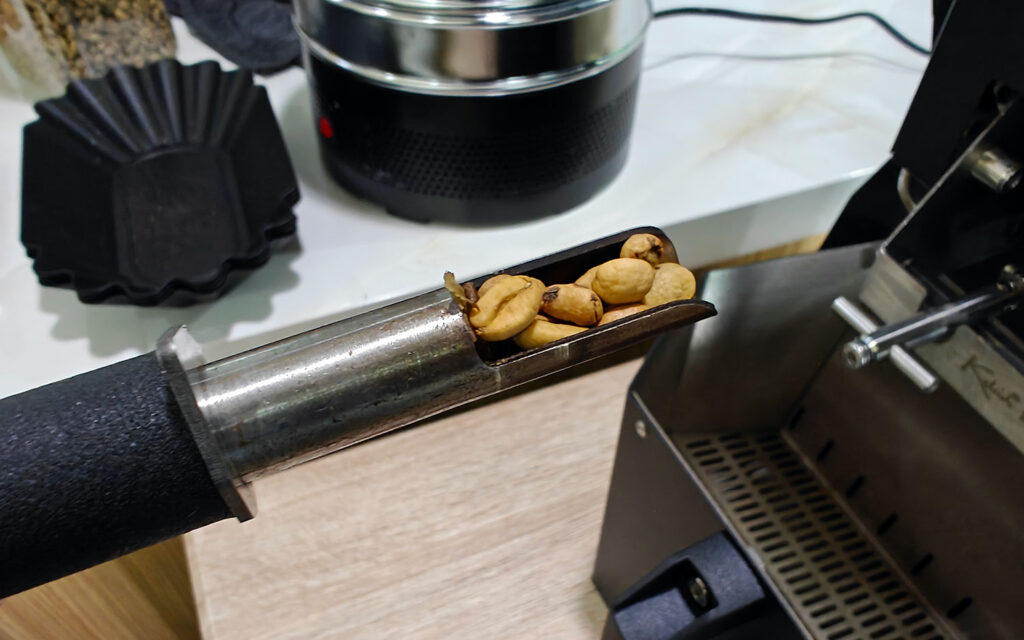
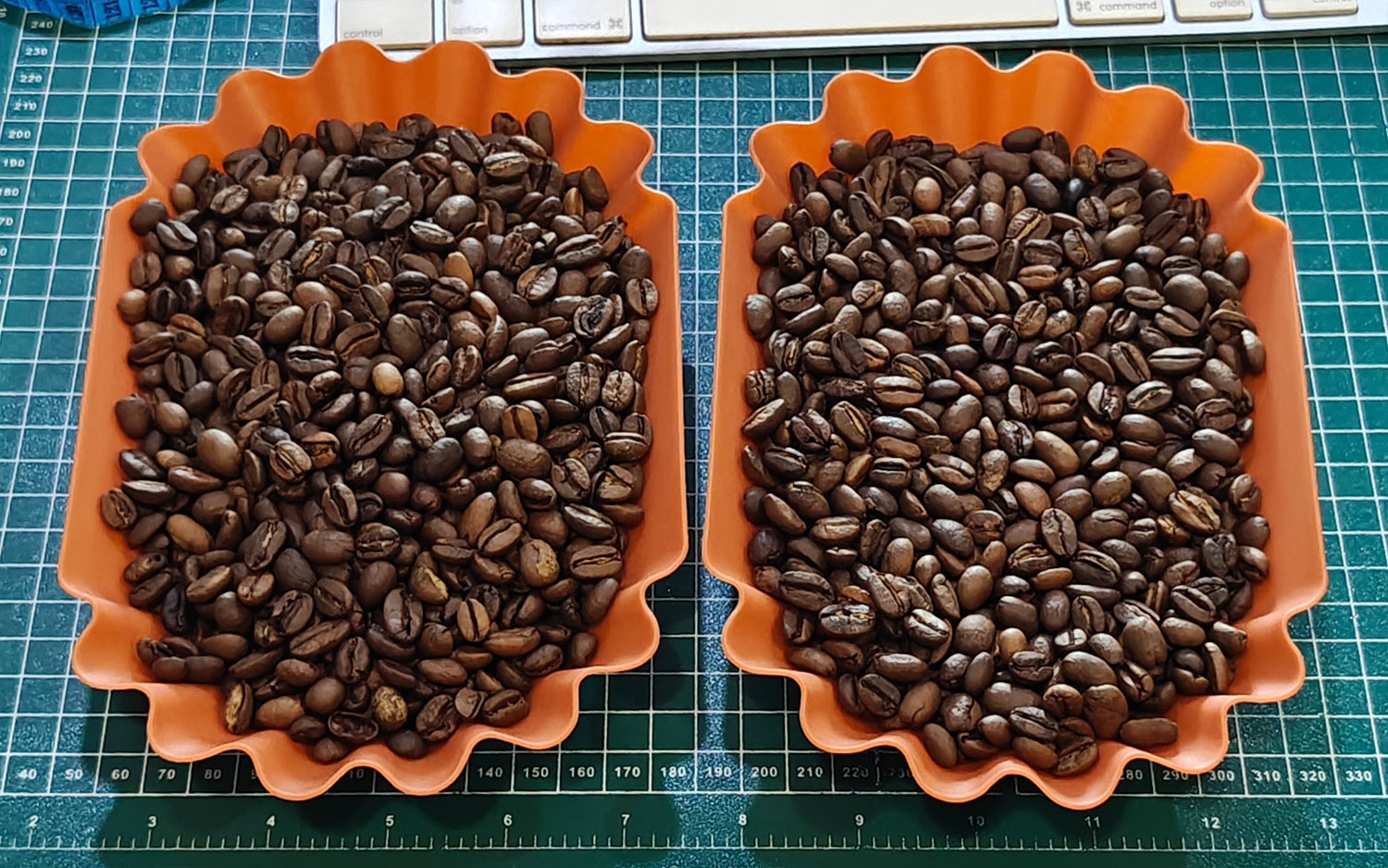
I just roasted Vietnam beans that came out medium-dark, roughly on schedule, without reaching second crack. The profile was mediocre—not executing my plan—but the results were acceptable.
This is what iterative roasting sometimes looks like: not exciting, not terrible, just… continuing to work on the same fundamental problem without dramatic progress.
The Lack of Novelty
I didn’t taste these roasts. I didn’t compare them side-by-side with roast #1. I didn’t analyze cup profiles or get sensory feedback. I just roasted, achieved medium-dark level, and moved on.
For my brother’s reference batch, this is probably fine. He doesn’t need precisely calibrated roasts—he just needs coffee he enjoys at a roast level he prefers.
For my own development as a roaster? This felt like spinning wheels. Two roasts that didn’t teach me anything new about Vietnam beans or reveal new truths about my heat management.
I’m still struggling with the same Maillard control issue I’ve been fighting since Mae Salong and Khun Kong roasts. Several months later, same problem.
The Honest Assessment
Roast #2 Status: Medium-dark, acceptable, uninspiring
Roast #3 Status: Medium-dark, acceptable, uninspiring
Heat Management: Still struggling with aggressive heat reduction post-DE
Learning: Minimal—same issues persist
Positive: At least I’m hitting target roast levels and not creating disasters
Some roasts are exciting—breakthroughs, failures that teach dramatically, unexpected successes. These Vietnam roasts #2 and #3 weren’t that.
They were just roasting. Competent enough, purposeful enough, but grinding away at unresolved problems rather than breaking through to new understanding.
What’s Next (Maybe)
I still have Vietnam beans remaining from the 2kg batch. Before roasting more, I need to actually address the Maillard control issue rather than just complaining about it.
Options:
- Study heat reduction timing more carefully: Maybe my “post-DE heat reduction” is happening too late. Do I need to start reducing heat before hitting DE?
- Accept that conservative heat reduction is my limit: Maybe trying to achieve 3+ minute Maillard phases is unrealistic on the Kaleido M6, and I should plan roasts assuming 2:30-2:45 Maillard max?
- Focus on other variables: Instead of fighting Maillard time, can I achieve roast goals through development time control instead?
- Get external feedback: Maybe a more experienced roaster on Kaleido M6 could identify what I’m missing about heat management timing.
But for now, Vietnam roasts #2 and #3 represent what they are: competent, uninspiring iteration toward mastery that hasn’t quite arrived yet.
Roast #2 Status: Medium-dark, ~10 minutes, stopped before SC
Roast #3 Status: Medium-dark, ~10 minutes, stopped before SC
Maillard Issue: Still unresolved
Next Action: Root cause analysis on heat reduction timing, or accept current limitations