Brazil Santos Roast #2: Maillard Time Slips Away (But Medium Roast Survives)
After the smooth, confidence-restoring first roast of my Brazil Santos beans, I approached roast #2 with specific targets: extend Maillard time for complexity, hit medium roast precisely, and apply everything I’d learned about the Kaleido M6’s temperature offset. The plan was solid. The execution? Not quite as planned – but the final result somehow landed where I wanted anyway.
The Detail I Forgot: Unusual Bean Specs
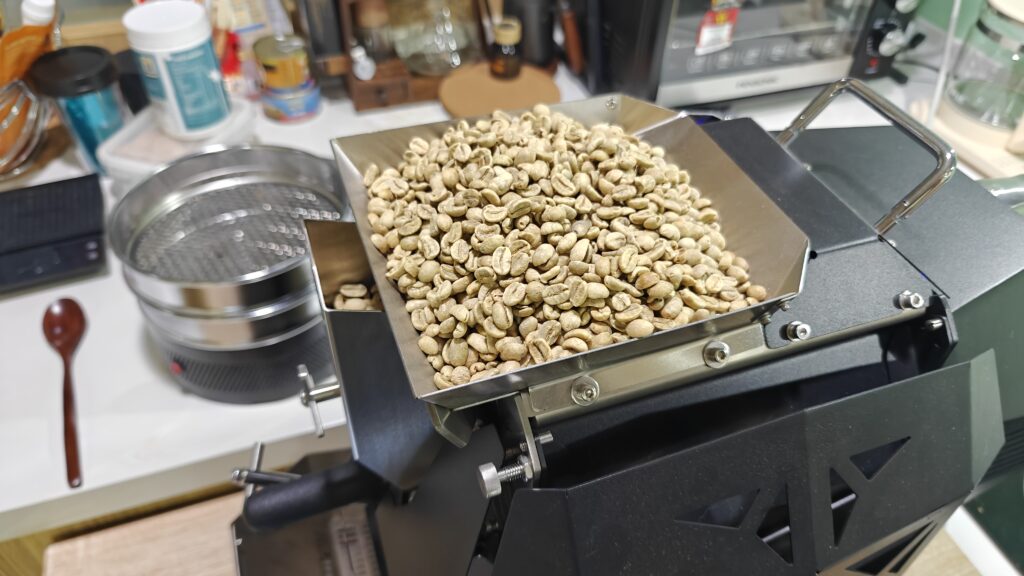
Before diving into roast #2, I need to correct an omission from my first roast post: this Brazil Santos has unusual physical characteristics.
Moisture Content: 11.8%
Density: 0.6
Both numbers sit outside typical ranges. Most Arabica green coffee comes in around:
- Moisture: 10-11%
- Density: 0.70-0.75
This Santos is wetter (11.8% vs typical 10-11%) and significantly less dense (0.6 vs typical 0.70+).
Higher moisture should theoretically extend drying time—more water to evaporate. Lower density should mean faster heat absorption and quicker progression through roast phases. These characteristics pull in opposite directions.
Interestingly, roast #1 didn’t reveal any obvious problems from these specs. The roast went smoothly despite the unusual numbers. This gave me false confidence that the bean’s physical quirks didn’t matter.
Roast #2 would prove otherwise.
The Plan: Extended Maillard Focus
Based on roast #1’s solid baseline (DE 149.5°C, FC 183.3°C, SC 199.5°C), I designed roast #2 around Maillard development:
Target Timeline:
- Dry End (DE): 6:00 @ ~149.5°C – moderate drying pace
- Maillard Phase: 5:40 to FC @ 183.3°C – extended for sweetness complexity
- Development: 21.25% of total roast time post-FC
- Drop: Medium roast before SC
The philosophy: Give the bean time to develop sugars during Maillard, then finish with controlled development for a balanced medium roast. Total roast time approximately 13-14 minutes.
This was an ambitious Maillard target—nearly 6 minutes. But after my Mae Ukho success with extended Maillard (5:27), and given Brazil’s naturally sweet, chocolatey profile, I thought long sugar development would pay dividends.
What Actually Happened: Heat Control Disconnect
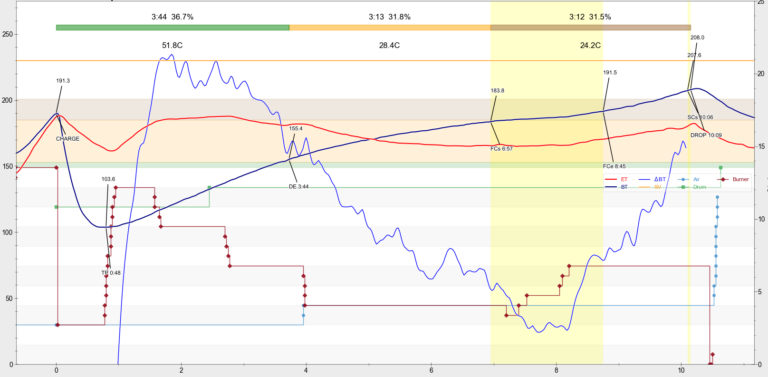
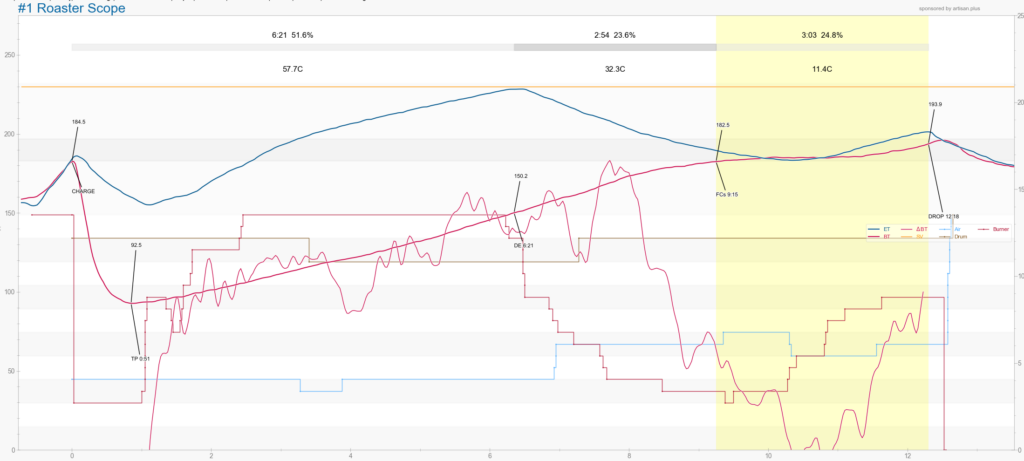
The Numbers:
- Dry End: 6:20 @ ~149.5°C (planned 6:00) – 20 seconds slow ✓ acceptable
- First Crack: 9:14 @ 183.3°C (planned 11:40) – 2 minutes 26 seconds early ✗
- Maillard Time: 2:54 (planned 5:40) – less than half the target ✗
- Development %: 24.8% (planned 21.25%) – extended by necessity
- Agtron Color: 51.3 (medium roast) ✓
The Heat Management Failure
Here’s where I went wrong:
Phase 1 – Aggressive DE Push
I increased heat application to hit my 6-minute DE target. With the bean’s high moisture content (11.8%), I wanted to avoid the extended drying phases that had plagued some earlier roasts.
This worked—I reached DE at 6:20, only 20 seconds behind plan. Success, right?
Phase 2 – Slow Cooldown Post-DE
The problem emerged after dry end. Following my plan, I reduced heat to transition into Maillard. But the heat reduction wasn’t aggressive enough—or more accurately, the cooldown time was slower than usual.
The roaster’s thermal momentum from my aggressive DE push carried forward. The bean temperature didn’t slow down as expected; it kept climbing at a faster rate than I’d planned for.
This is where the low density (0.6) likely bit me. Lower density beans absorb and respond to heat changes faster. When I reduced heat, the beans should have slowed their temperature climb—but the low density meant residual heat in the drum kept penetrating efficiently.
Phase 3 – Maillard Time Evaporates
As a result, I reached first crack at 9:14 instead of 11:40—a full 2 minutes 26 seconds early.
My carefully planned 5:40 Maillard phase collapsed to just 2:54. Not even three minutes. Barely half my target.
This is the opposite problem from my Catuai roast #2, where slow DE and insufficient heat created a short Maillard. Here, I had too much residual heat and couldn’t slow the bean temperature climb fast enough.
The Panic Extension: Development Phase Bloat
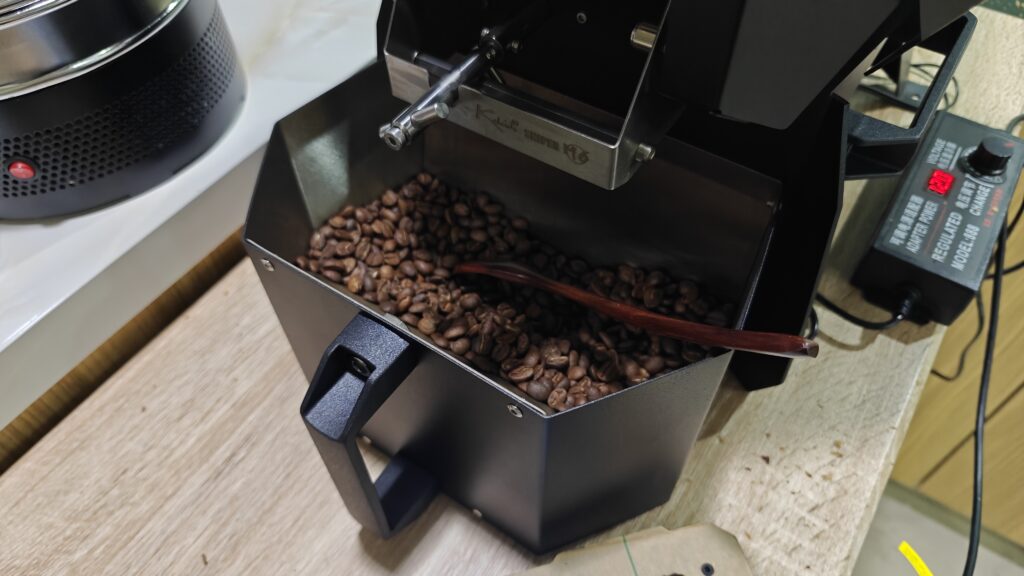
With FC arriving early and Maillard time already lost, I faced a decision: drop early (preserving my planned development percentage but risking underdevelopment) or extend development (compensating for lost Maillard time).
I chose extension. Instead of my planned 21.25% development, I pushed to 24.8%—giving the beans extra time post-FC to develop body and sweetness that the short Maillard phase might have missed.
This was reactive roasting, not planned roasting. I was compensating for earlier mistakes rather than executing a coherent profile.
The Unlikely Success: Medium Roast Anyway
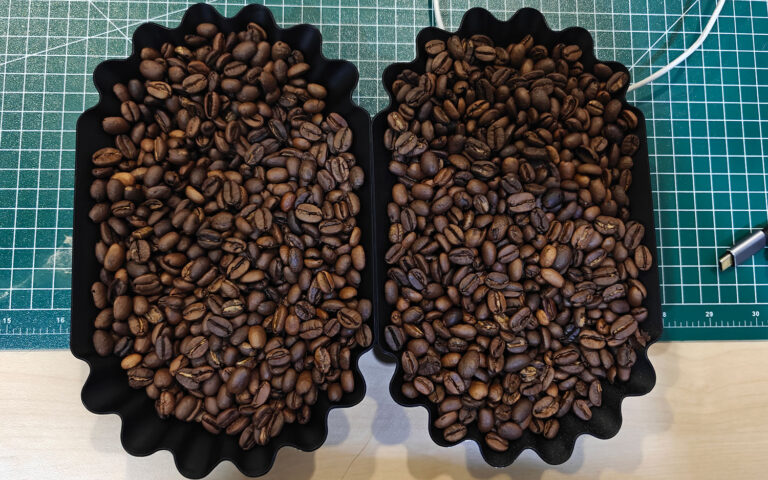
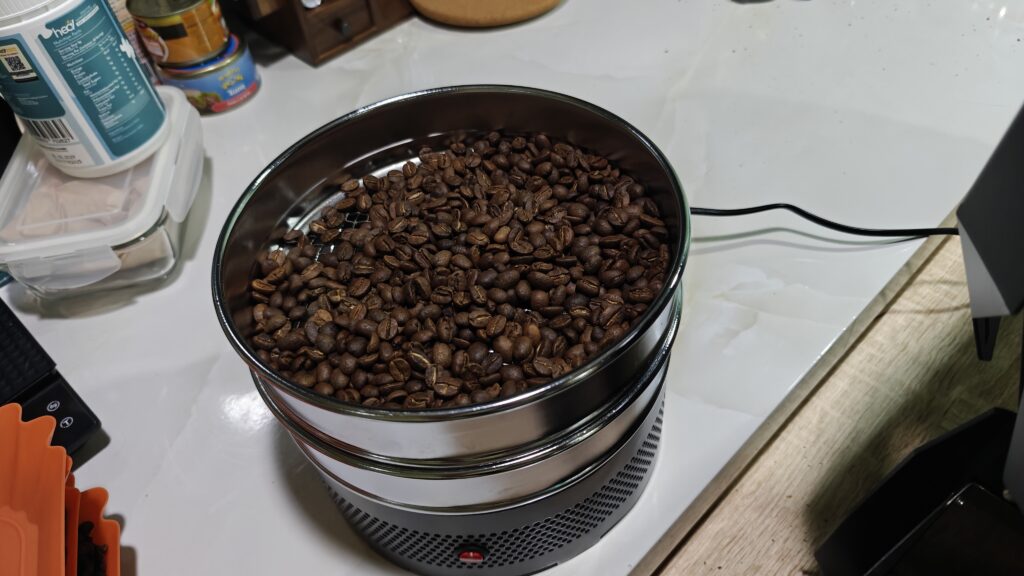
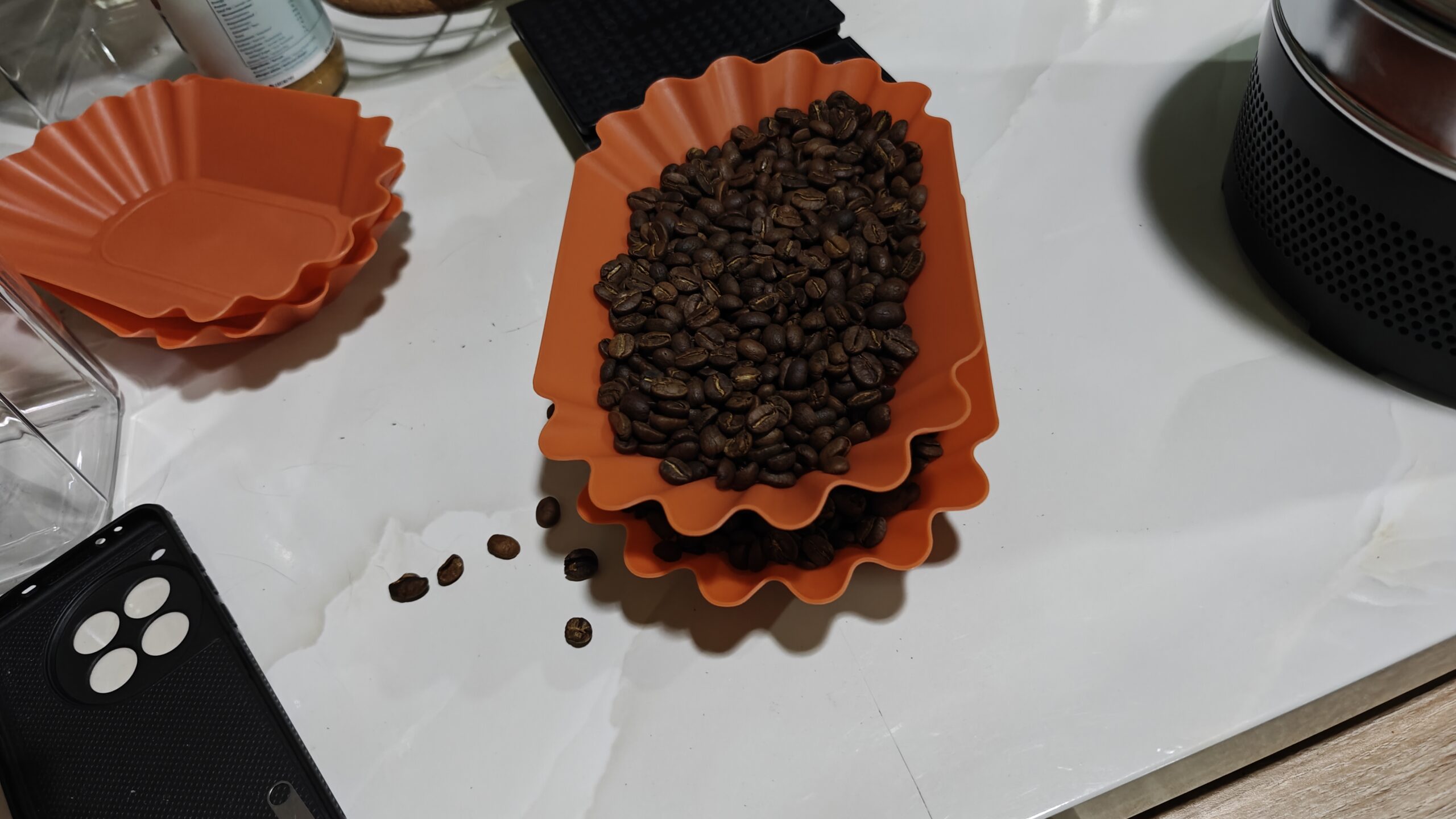
After cooling, I measured the Agtron color: 51.3
That’s solidly medium roast. Mission accomplished… somehow?
Despite:
- Short Maillard time (2:54 vs planned 5:40)
- Bloated development phase (24.8% vs planned 21.25%)
- Heat management failure throughout
- Reactive adjustments instead of planned execution
…the beans still landed at medium roast level.
How? I suspect the extended development time (24.8%) compensated for the inadequate Maillard phase. By giving the beans more time post-FC, I allowed additional caramelization and body development that would normally happen during Maillard.
The route was chaotic, but the destination was correct.
The Cup Question: Does Process Matter If Results Match?
Here’s the philosophical question this roast raises:
If Roast #1 and Roast #2 both produce medium roast (Agtron ~51), does the path matter?
Roast #1: Smooth progression, proper phase distribution, controlled execution → Medium roast
Roast #2: Chaotic heat management, collapsed Maillard, extended development → Medium roast (Agtron 51.3)
They might look identical by color measurement, but will they taste the same?
My prediction: Roast #2 will have less sweetness complexity (short Maillard) but potentially more body (extended development). Roast #1 will taste more balanced and integrated. Both medium, different characters.
The cupping will tell the truth.
Lessons: Low Density Demands Different Heat Strategy
The 0.6 density explains a lot:
Low density means:
- Heat penetrates faster
- Temperature climbs continue even after heat reduction
- Thermal momentum is harder to slow
- Reactive heat adjustments arrive too late
For roast #3, I need to:
- Reduce heat earlier after DE—anticipate the momentum, don’t react to it
- Be more aggressive with heat reduction given the low density
- Accept that cooldown times will be shorter than with denser beans
- Plan Maillard time conservatively, knowing I’ll probably shorten it accidentally
The high moisture (11.8%) affects DE timing, but the low density (0.6) dominates everything afterward. I can’t treat this bean like my 0.71-0.73 density beans—it’s a different thermal animal.
Not Bad, But Not Good
Roast #2 Assessment:
✓ Hit medium roast level (Agtron 51.3)
✗ Failed to execute planned Maillard time
✗ Lost heat control post-DE
✓ Recovered with extended development
? Unknown cup quality until brewing test
This roast succeeded despite poor execution. That’s better than failing with poor execution (looking at you, Catuai roast #2), but it’s not the controlled mastery I’m aiming for.
I got lucky. The beans forgave my mistakes. Next time they might not.
Roast Status: Medium roast achieved (Agtron 51.3)
Execution Quality: 2.5/5 – rescued by reactive adjustments
Key Learning: Low density (0.6) requires earlier, more aggressive heat reduction
Next Action: Cupping comparison between Roast #1 and Roast #2, then Roast #3 with better heat anticipation
Roast Profile Roast #2:
- Bean: Brazil Santos (Moisture 11.8%, Density 0.6)
- DE: 6:20 @ 149.5°C
- Maillard Time: 2:54 (planned 5:40)
- FC: 9:14 @ 183.3°C
- Development: 24.8% (planned 21.25%)
- Agtron Color: 51.3 (Medium roast)
- Result: Right roast level, wrong path to get there