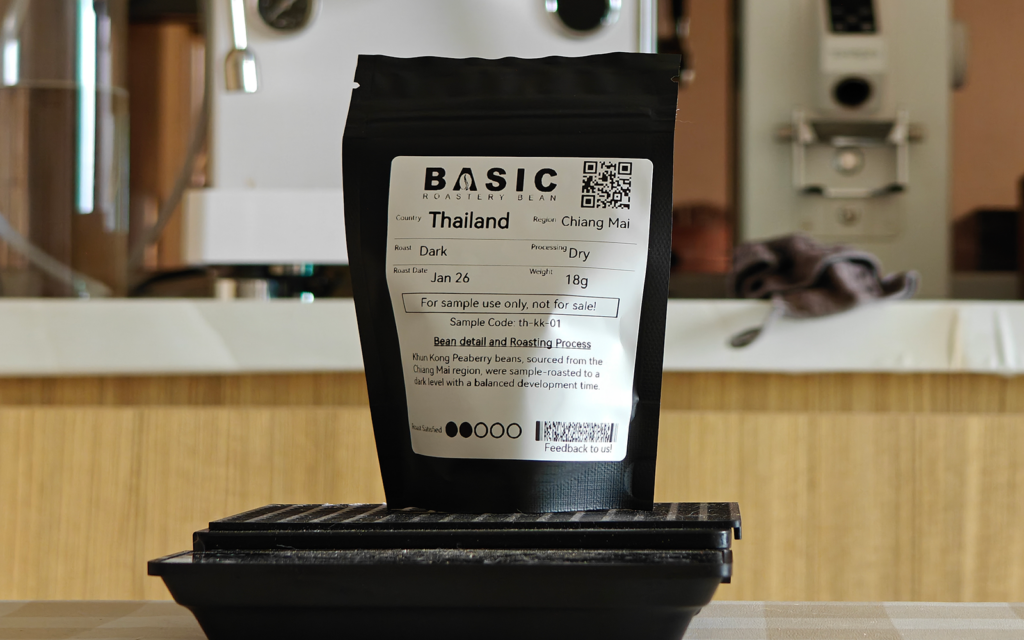
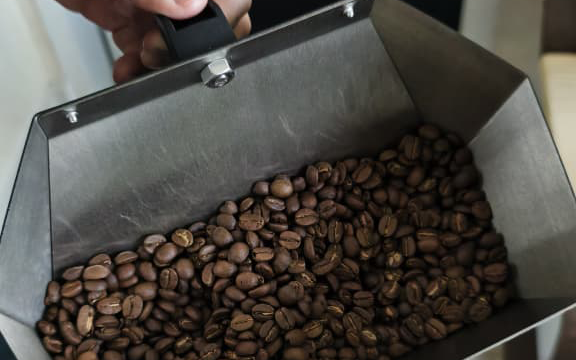
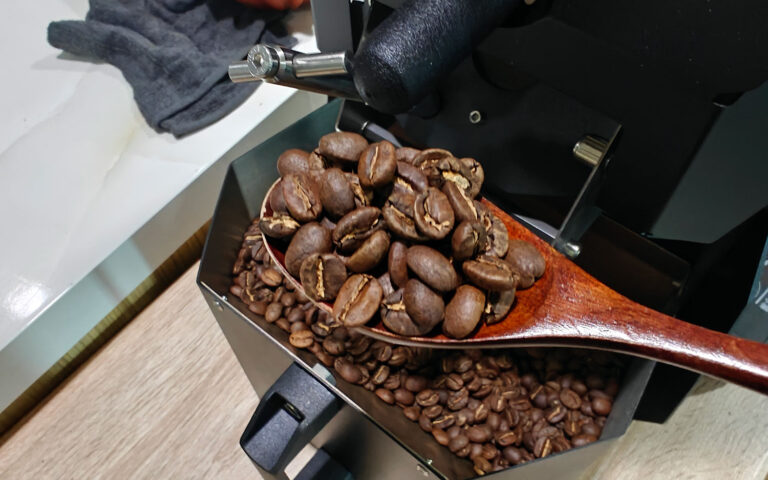
After working through the Mae Salong learning curve, I’m try another new bean to my Kaleido M6 journey: Khun Kong Peaberry from near Chiang Mai. This northern Thai coffee promises a complex flavor profile that caught my attention—caramel, brown sugar, and chocolate as the foundation, with subtle berry hints and citrus or orange notes brightening the cup.
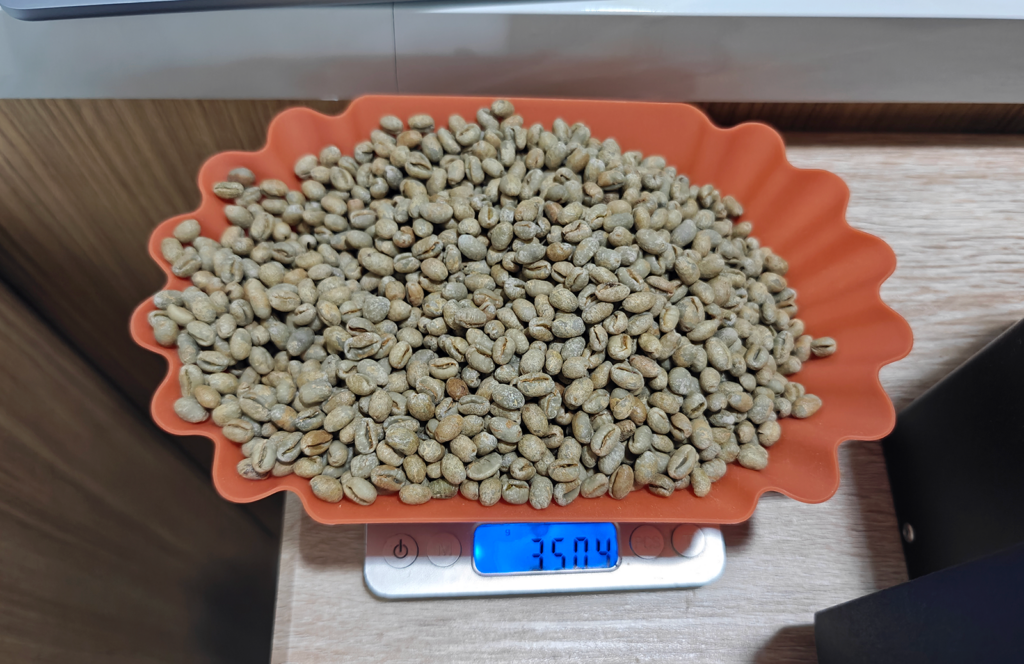
Bean: Khun Kong Peaberry, Chiang Mai region Batch Size: 350g Goal: Establish BT baseline data Next Action: BT analysis and roast #2 planning
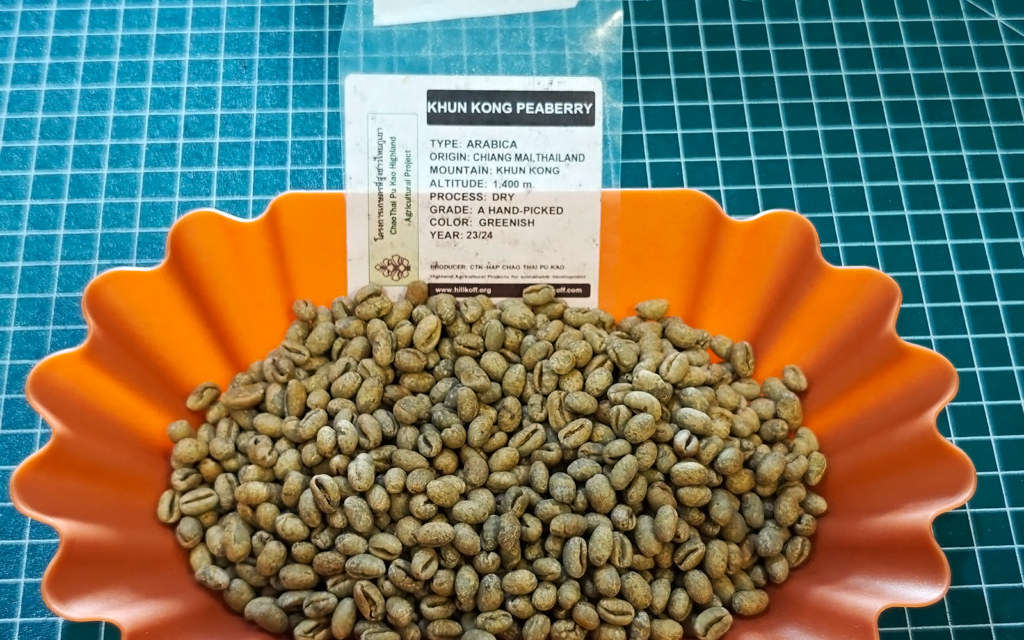
Why Peaberry?
Peaberries are nature’s anomaly—instead of the typical two flat-sided beans per coffee cherry, a peaberry is a single, rounded bean. This mutation occurs in roughly 5% of coffee cherries and creates a denser, more concentrated bean. Roasters often claim peaberries offer more intense, focused flavors due to receiving all the cherry’s nutrients alone.
With Khun Kong’s promised flavor complexity, the peaberry format intrigued me. Could that natural concentration amplify those caramel and citrus notes?
The Approach: Collecting BT Data
For this first roast, I kept the batch small at 350g—half my usual Mae Salong test size. The goal wasn’t perfection; it was information. Specifically, I needed to establish bean temperature (BT) benchmarks across the roast curve.
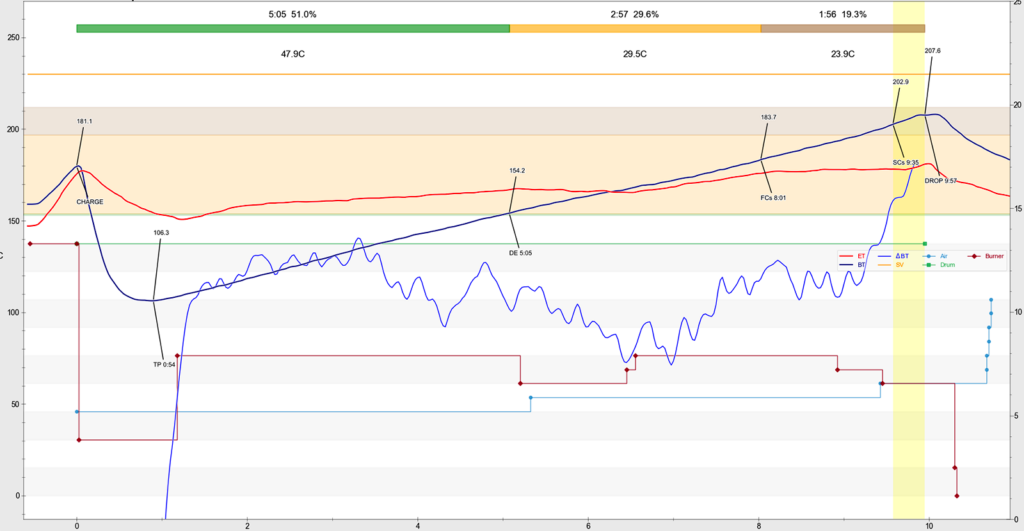
Every bean behaves differently in the roaster. Mae Salong taught me its temperature personality at 500g loads. Khun Kong Peaberry, with its denser structure and different moisture content, would have its own thermal characteristics. Understanding where this bean hits dry end, first crack, and second crack gives me the roadmap for roast #2.
Think of this as a reconnaissance mission. I’m not yet trying to coax out specific flavors or hit a particular roast level. I’m simply observing: How does Khun Kong respond to heat? Where do the phase transitions happen? How does the smaller 350g batch change heat retention compared to my usual loads?
Building the Foundation
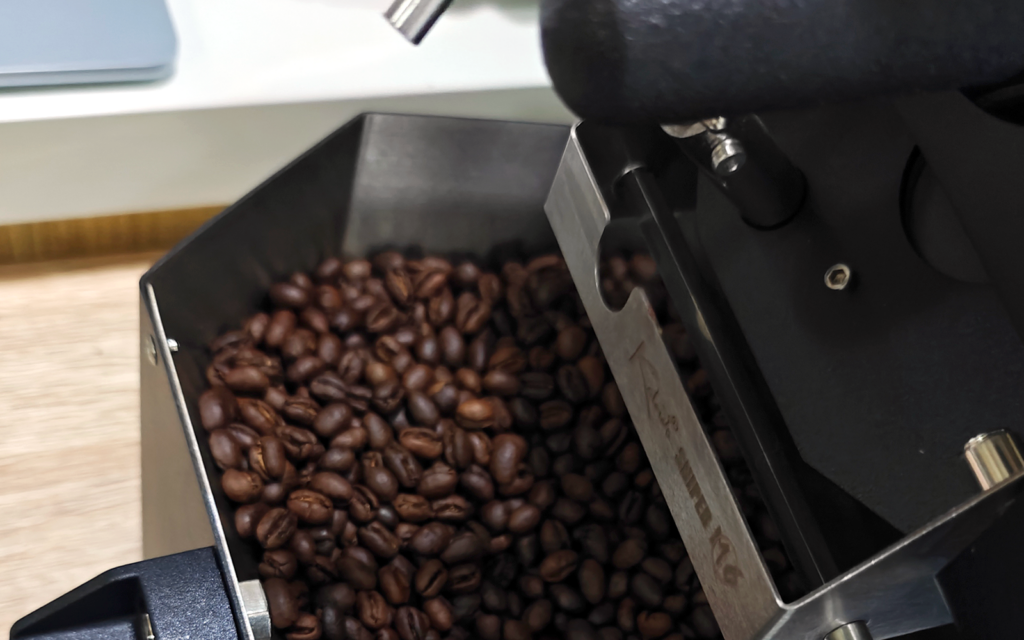
The promise of caramel and brown sugar suggests this bean will reward good Maillard development—that crucial phase between dry end and first crack where sugars caramelize and create sweetness complexity. The chocolate notes likely need body, meaning I can’t rush through development too quickly.
But those citrus and berry hints? They’re delicate. Push the roast too far, and they’ll disappear under the darker, heavier notes. This balance is what makes the second roast planning crucial—and why establishing accurate BT data now matters so much.
The 350g batch size also lets me be conservative with a new bean. If something goes wrong—if my heat application is off or my timing misjudged—I haven’t committed a full 500g or 700g to the experiment.
What’s Next
Once I analyze the BT curve from this roast, I’ll know where Khun Kong naturally wants to go. Then comes the interesting part: deciding where I want to take it. Do I extend Maillard time to maximize that caramel sweetness? Do I drop earlier to preserve citrus brightness? Do I push toward second crack to deepen the chocolate?
The data from roast #1 will answer these questions. For now, it’s about observation, measurement, and building knowledge.
One bean at a time.
Khun Kong Peaberry 1st Roast Sample
You’re welcome to request a sample if you’d like to try this first roast. It may not be perfect, but you might enjoy it!