
Before diving into roast profiles and temperature curves, let’s talk about the bean itself. Understanding where coffee comes from and how it’s processed gives context to every decision I make at the roaster. Meet Khun Kong Peaberry—a northern Thai coffee that’s become my latest roasting obsession.
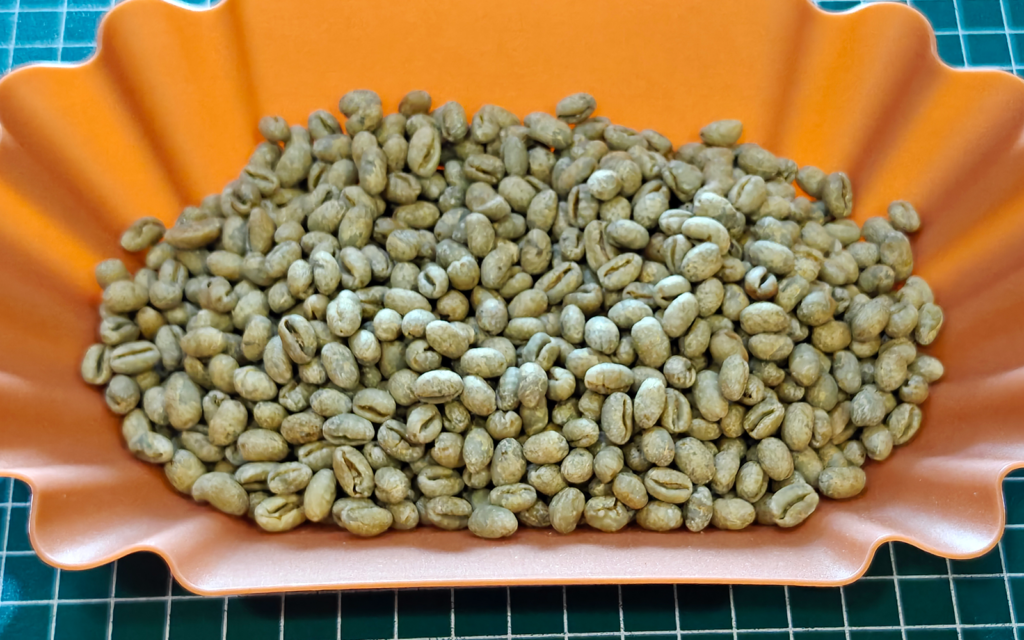
Origin: Khun Kong Mountain, Chiang Mai
Khun Kong Peaberry comes from the mountainous regions near Chiang Mai, grown at approximately 1,400 meters above sea level. This altitude is significant—at these heights, coffee cherries develop more slowly in cooler temperatures, allowing sugars and acids to develop complexity that lower-elevation coffees often lack.
The Khun Kong mountain area has become increasingly recognized for specialty coffee production, with farmers focusing on quality over quantity. This particular lot is 100% Arabica, the species prized for its nuanced flavors and lower bitterness compared to Robusta.
What Makes It Peaberry?
Most coffee cherries contain two flat-sided beans. Peaberries are nature’s mutation—a single, oval bean that develops alone inside the cherry. This happens in roughly 5-10% of any coffee harvest.
Because the peaberry receives all the cherry’s nutrients without sharing, these beans are denser and often considered more flavorful. They’re also sorted out by hand during processing, making them inherently more labor-intensive and often more expensive.
Processing: Dry (Natural)
This Khun Kong lot uses dry processing, also called natural processing. After hand-picking, the whole cherries are dried in the sun with the fruit still attached to the bean. This method, while risky (it requires careful monitoring to prevent fermentation defects), can impart incredible sweetness and fruit complexity.
Dry processing often contributes berry and wine-like notes—which aligns with the subtle berry hints promised in this coffee’s profile.
Grade A, Hand-Picked Quality
The “Grade A” designation and hand-picking detail matter. Hand-picking means only ripe cherries make it into the batch—no under-ripe or over-ripe cherries compromising quality. Grade A indicates minimal defects, uniform bean size, and careful processing.
For a roaster, this means I can focus on technique rather than compensating for inconsistent green coffee quality.
Expected Flavor Profile
Based on research and the supplier’s notes, Khun Kong Peaberry should deliver:
- Foundation: Caramel, brown sugar, chocolate
- Complexity: Subtle berry hints
- Brightness: Citrus or orange notes
This profile suggests a naturally sweet coffee with good body (from the dry processing and altitude) balanced by acidity (the citrus). The challenge will be roasting to preserve that balance—push too dark, and I lose the brightness; too light, and the sweetness won’t fully develop.
My Plan: 1kg, Two Approaches
I sourced 1 kilogram of this coffee, which I’m splitting strategically:
350g – Baseline Roast: This first batch is pure data collection. I need to understand how Khun Kong Peaberry behaves in my Kaleido M6—where dry end occurs, when first crack happens, how quickly it develops. No flavor targets yet, just observation.
650g – Planned Profile Roast: Once I have the baseline data, I’ll use the remaining 650 grams to execute a deliberate roast profile designed to highlight those caramel and citrus notes. This larger batch also gives me enough coffee to test through multiple brewing methods.
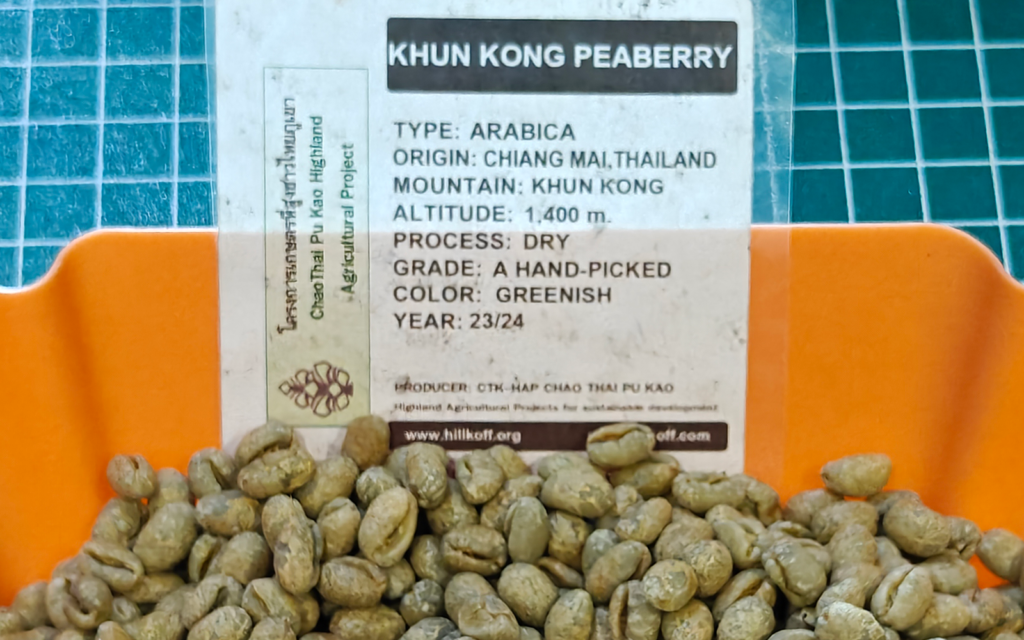
Origin: Khun Kong Mountain, Chiang Mai, Thailand
Altitude: ~1,400m
Variety: Arabica Peaberry
Process: Dry (Natural)
Grade: A, Hand-Picked
Batch: 1kg (350g baseline + 650g profile roast)


