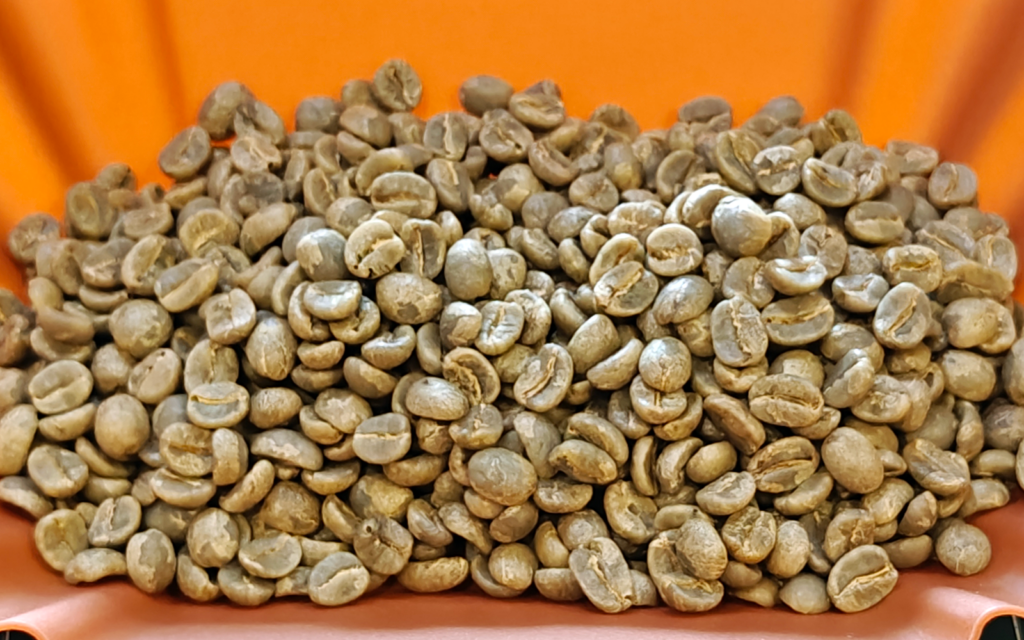
Adding another northern Thai coffee to my roasting lineup: Mae Ukho, sourced from the high-altitude coffee lands near Chiang Mai. At 1,600 meters above sea level, this Arabica lot sits even higher than my previous Thai coffees, promising the kind of complexity that comes from slow cherry development in cooler mountain air.
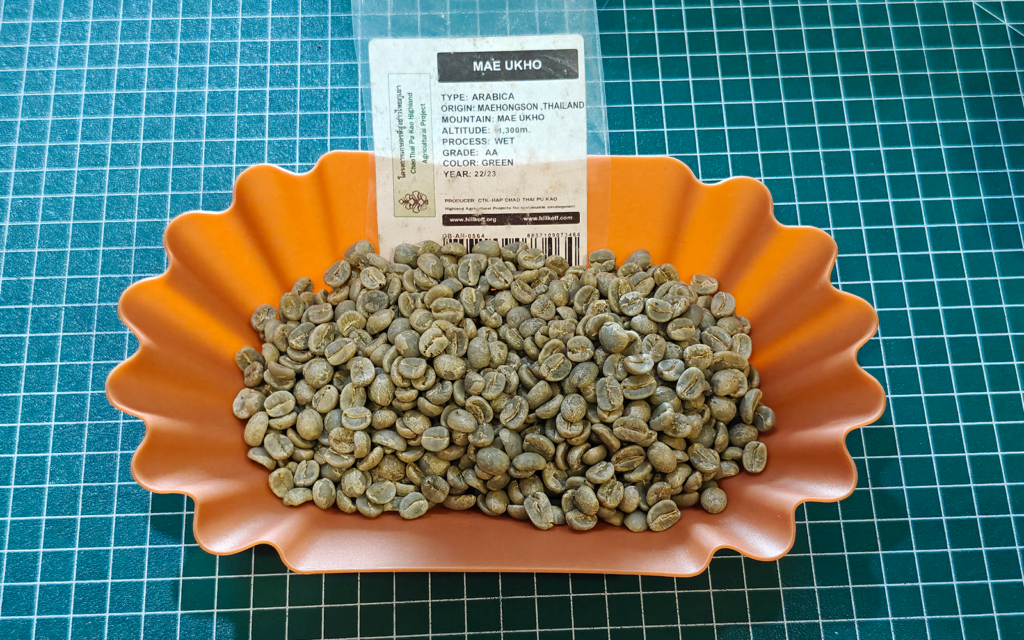
The Bean Profile
Origin: Mae Ukho, Chiang Mai, Thailand
Altitude: ~1,600m
Variety: Arabica
Process: Wet (Washed)
Moisture Content: 10.1%
Density: 0.73
The wet processing method marks a departure from the dry-processed Khun Kong Peaberry I’ve been working with. Washed coffees typically offer cleaner cup profiles with more pronounced acidity and clarity—the fruit’s influence is removed earlier in processing, letting the bean’s inherent characteristics shine through.
That 10.1% moisture content and 0.73 density closely mirror my Mae Salong beans, suggesting similar thermal behavior in the roaster. This familiarity gives me a starting reference point, though every bean still has its own personality.
Expected Flavor Profile
According to the supplier notes, Mae Ukho promises:
- Sweetness: Palm sugar, brown sugar
- Body: Sweet chocolate
- Character: Complex and sweet
This flavor description suggests a naturally sweet coffee with good body—the kind of profile that rewards proper Maillard development. The “complex” descriptor hints at layered flavors that might evolve as the coffee cools in the cup.
Wet processing should contribute to clarity, letting those sugar notes come through cleanly without the sometimes muddled fruit complexity that dry processing can add. The 1,600m altitude likely contributes brightness and structure that will balance the sweetness.
The Medium Roast Goal
For Mae Ukho, I’m targeting a medium roast level. Here’s why:
The promised palm sugar and brown sugar notes need heat and development time to caramelize and become prominent. Too light, and those sweetness nuances won’t fully develop—I’ll get potential rather than realization.
But push too far into dark territory, and I risk overwhelming the complexity with roast character. The chocolate notes might deepen, but I’d lose the sugar sweetness subtlety that makes this bean interesting.
Medium roast sits in that sweet spot—literally—where sugar caramelization is complete, chocolate develops richness, and the bean’s inherent complexity can express itself before roast bitterness takes over.
What’s Coming
My roasting records with Mae Ukho will follow soon. I’ll be applying lessons learned from Mae Salong (heat control) and Khun Kong Peaberry (second crack awareness) to this new challenge.
The wet processing and similar density to Mae Salong suggest I might find familiar thermal behavior, but the higher altitude and different terroir mean Mae Ukho will still need its own baseline roast for proper understanding.
Stay tuned for roast profiles, temperature curves, and whether I can coax out that palm sugar sweetness without rushing past medium into dark roast territory—a mistake I’ve now made enough times to hopefully avoid.
Bean: Mae Ukho
Target: Medium roast
Focus: Palm sugar sweetness, chocolate body
Next: First roast for baseline data