The 1kg Brazil Santos journey comes down to this: two final 500g batches, a new heat reduction strategy, and results that actually felt… controlled. After months of chasing medium roast and overshooting or undershooting, these last two Brazil roasts showed what happens when you stop fighting the machine and work with it.
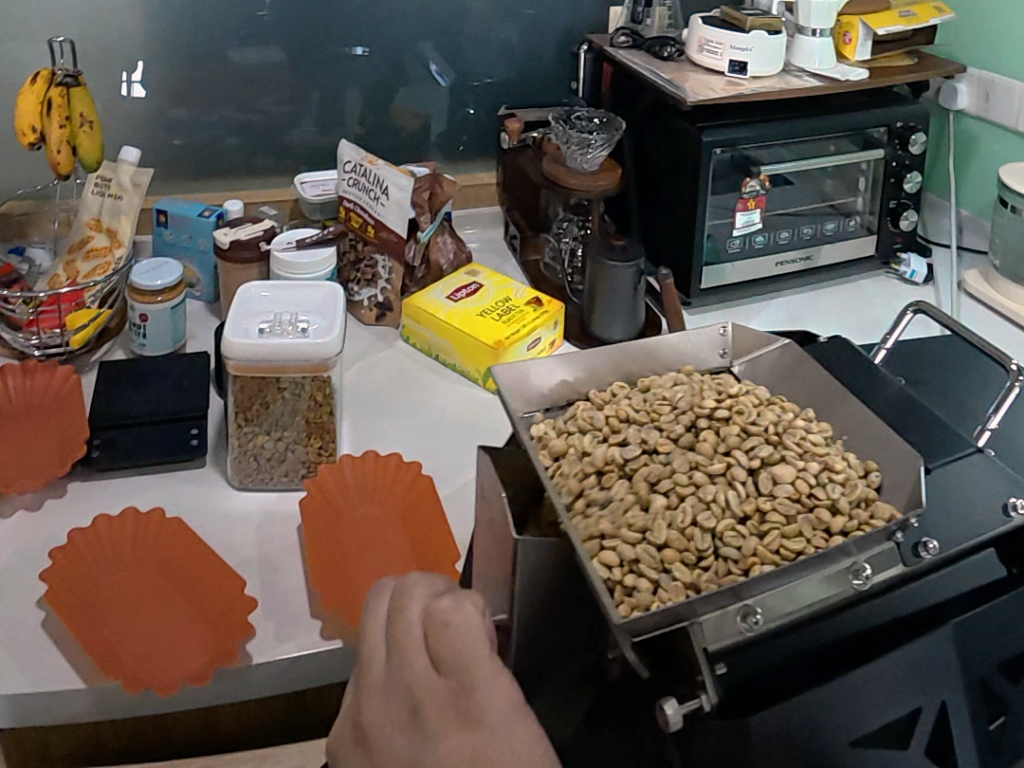
The Plan: Straightforward Medium
This time I wasn’t getting fancy. Just a clean target:
- DE: 5:45 @ ~150°C
- FC: 11:45 (roughly 6-minute Maillard)
- Drop: Medium roast (aiming for Agtron 53-54)
Simple. Achievable. A solid middle-ground roast that doesn’t demand perfection, just competence.
Batch #1: Close, But Early
Actual Results:
- DE: 5:38 @ 150.8°C (7 seconds early) ✓ basically perfect
- FC: 10:53 @ 183.9°C (52 seconds early) – Maillard was only ~5:15
- Drop: 13:56 @ 198.6°C
- Agtron: 54.0 (medium) ✓
Here’s the thing: I hit dry end almost exactly, which was huge. But first crack still arrived early—those 52 seconds meant my Maillard phase compressed from the planned 6 minutes down to about 5:15.
Still better than my usual collapsed Maillard disasters, but not what I was targeting.
The result? Agtron 54—solid medium roast. Not complaining.
Batch #2: Learning From Batch #1
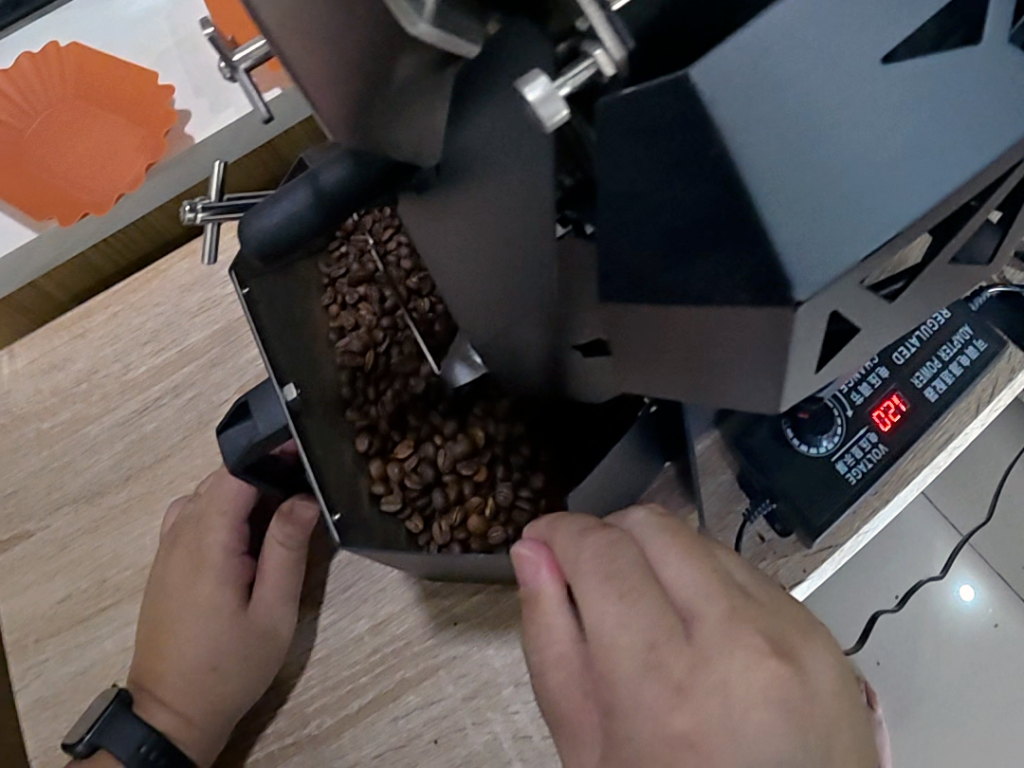
With batch #1 showing early FC again, I adjusted. For batch #2, I tried something different: I opened the “Loading” function in Artisan during Maillard phase.
Here’s the theory: Opening the loading door (or simulating it in Artisan settings) reduces heat faster and prevents that pesky thermal momentum from carrying the beans toward FC before I’m ready.
Instead of just reducing heat output, I was actively removing stored heat from the roasting chamber.
Actual Results:
- DE: 5:50 @ 149.4°C (5 seconds over) ✓ still solid
- FC: 10:42 @ 183.4°C (63 seconds early) – Maillard ~4:52
- Drop: 13:45 @ 197.2°C
- Agtron: 55.0 (medium-light) ✓
FC still came early, but this time I saw something interesting: the Loading function did change heat behavior. The temperature climb felt different—more controlled, less like momentum was carrying me forward.
The result landed at Agtron 55—medium-light instead of medium. Close, but one shade lighter than batch #1.

The Discovery: Opening Matters
Here’s what I learned: actively reducing heat (via the Loading function) isn’t the same as passively reducing heat output.
When I just lower the heat setting, residual thermal energy in the roaster keeps pushing the bean temperature up. When I “open the loading door” (simulated or real), I’m removing that stored heat from the system.
It’s a real difference. Batch #2’s earlier FC might look like a failure, but it’s actually a win—the Loading function worked as intended. The Maillard phase still compressed, but for a different reason: the beans were responding more directly to my heat input rather than coasting on residual thermal momentum.
This is a technique worth keeping.
Better Maillard Control (Finally)
The big win here: neither batch had a catastrophically short Maillard time.
Batch #1: 5:15 Maillard (planned 6:00) – only 45 seconds short
Batch #2: 4:52 Maillard (planned 6:00) – only 68 seconds short
Compare that to my usual disasters where Maillard collapsed to 2-3 minutes, and this is legitimately better control.
I’m not claiming victory—I still didn’t hit my 6-minute target either time. But the gap is narrowing. The technique is working.
The Results: Medium and Medium-Light
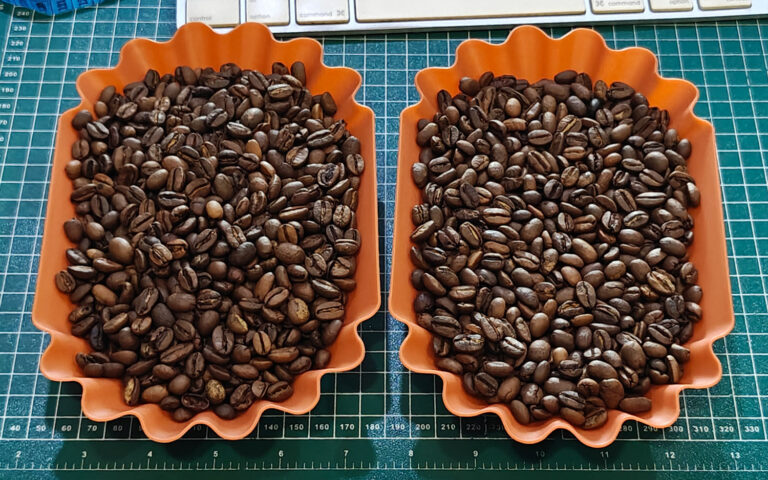
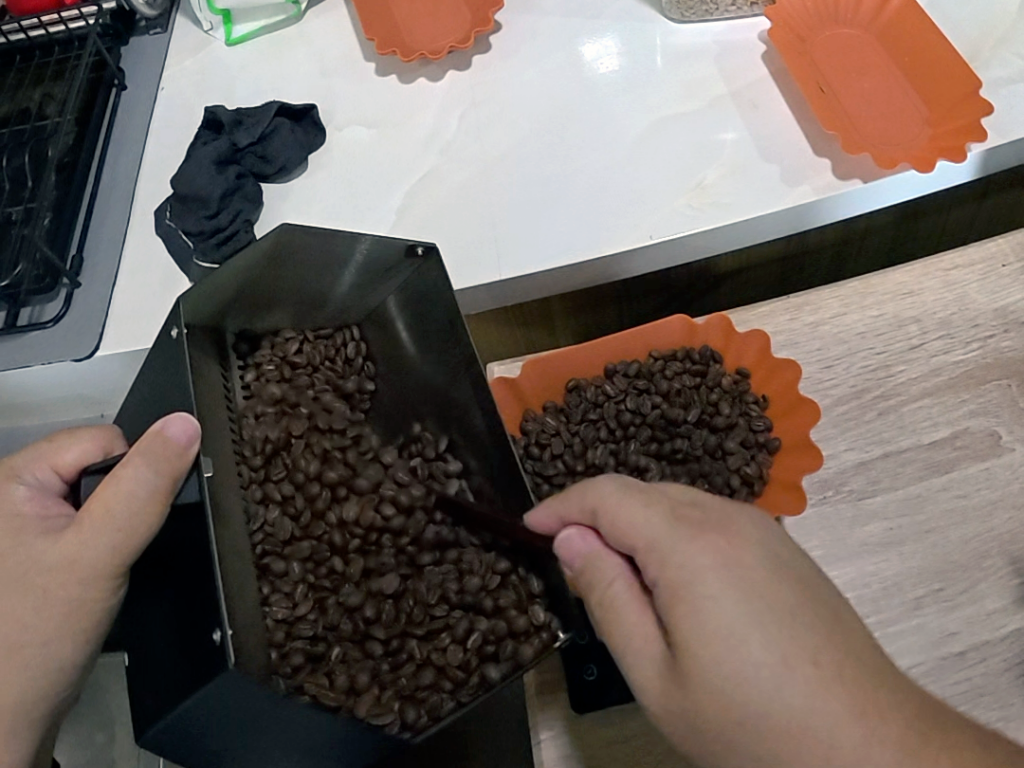
Agtron 54.0 and Agtron 55.0 are basically cousins—both in the medium family, just one shade apart.
When I was targeting medium (Agtron 53-54), batch #1 nailed it. Batch #2 landed slightly lighter.
Not perfect, but close enough that I don’t feel like I’m failing. These are legitimate medium roasts, not accidental light roasts or unexpected dark roasts.
For finishing the Brazil Santos journey, that feels like a decent note to end on.

The Casual Win
What I appreciate most about these two roasts: they didn’t stress me out.
No panic moments. No overshooting into dark. No undershooting into light-medium. Just two straightforward medium roasts that hit close to target and showed that my heat management is actually improving—slowly, painfully, but improving.
The Loading function trick is solid. The DE control is solid. The Maillard management is… getting there.
These last two batches of Brazil Santos are proof that sometimes all you need is one small technique tweak and suddenly roasting becomes slightly less like fighting the machine and slightly more like leading it.
What’s Next
Brazil Santos is done. The 1kg journey is closed. Two solid, competent medium roasts to finish it.
Looking back:
- Roast #1 (early): Control regression, Artisan panic
- Roast #2 (late month 1): Fear-based decisions, undershooting
- Roast #1 & #2 (last batch): Better control, technique discovery, solid results
Progress isn’t always dramatic. But when you zoom out and see the arc from panic to competence, that counts for something.
Final Batch Status: Two solid medium roasts, technique improved ✓
Agtron Results: 54.0 and 55.0 (on target) ✓
Brazil Santos Journey: Closed ✓
Key Learning: Loading function matters for heat control
Confidence Level: Cautiously optimistic
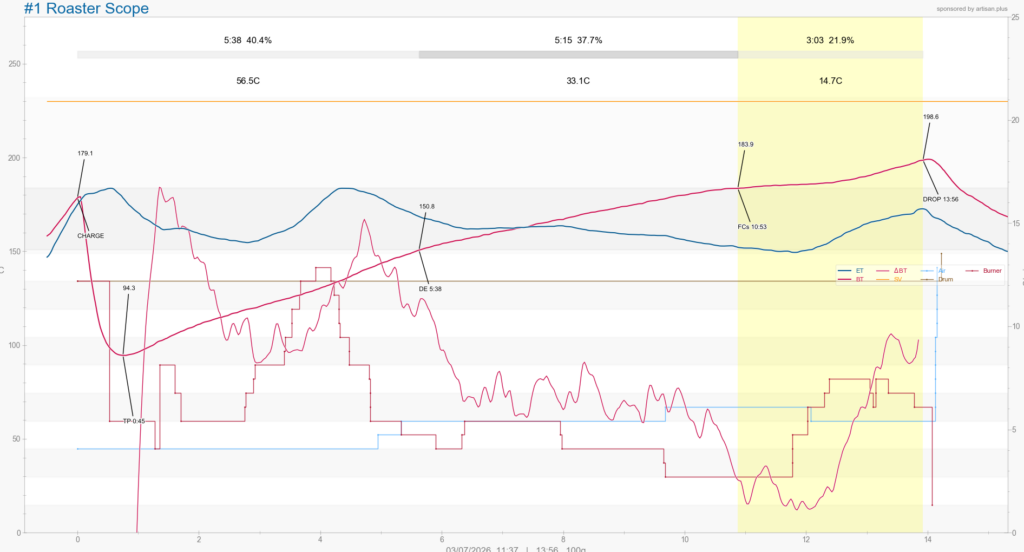
Roast Profile Batch #1:
- Bean: Brazil Santos (500g, final batch)
- DE: 5:38 @ 150.8°C (planned 5:45)
- FC: 10:53 @ 183.9°C (Maillard 5:15)
- Drop: 13:56 @ 198.6°C
- Agtron: 54.0 (Medium) ✓
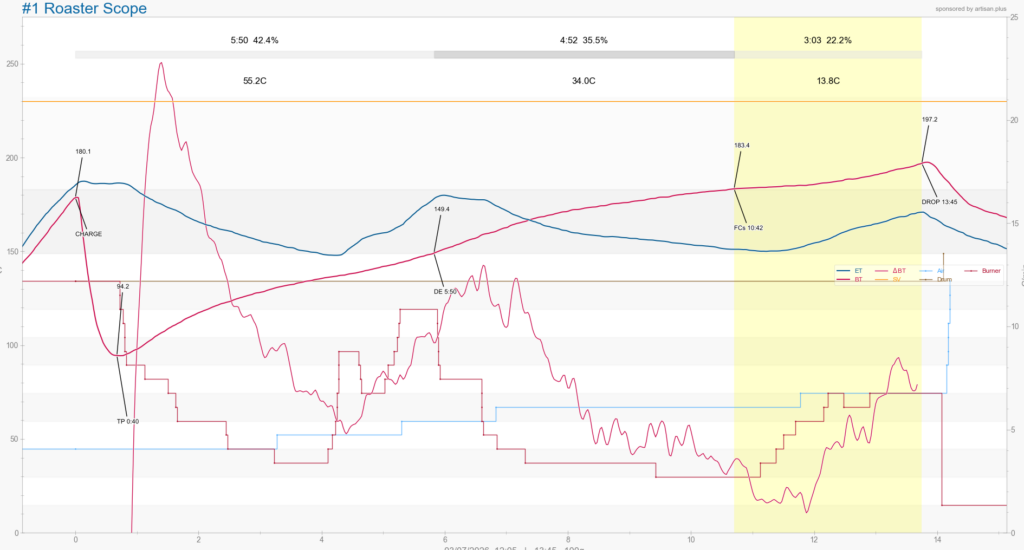
Roast Profile Batch #2:
- Bean: Brazil Santos (500g, final batch)
- DE: 5:50 @ 149.4°C (planned 5:45)
- FC: 10:42 @ 183.4°C (Maillard 4:52)
- Drop: 13:45 @ 197.2°C
- Agtron: 55.0 (Medium-light) ✓
- Technique: Opened Loading during Maillard for faster heat reduction