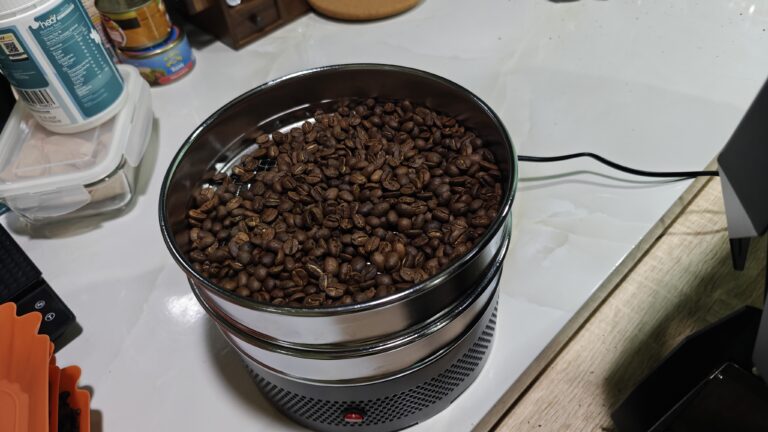
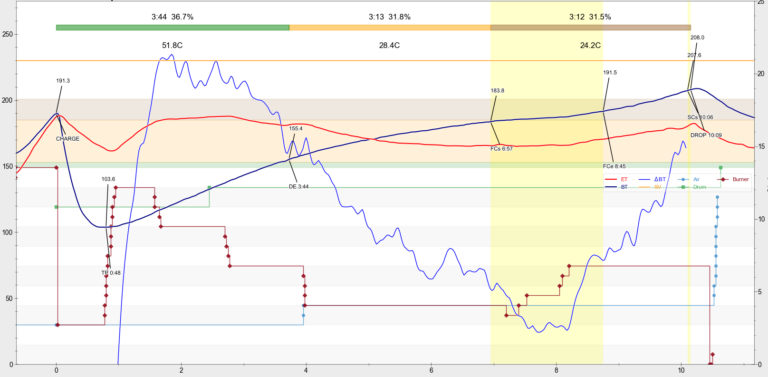
After several roasts of learning curves, mistakes, and near-misses, I finally executed a roast that came remarkably close to plan. Mae Ukho’s second roast wasn’t perfect, but it was my most controlled, intentional, and satisfying result on the Kaleido M6 to date.
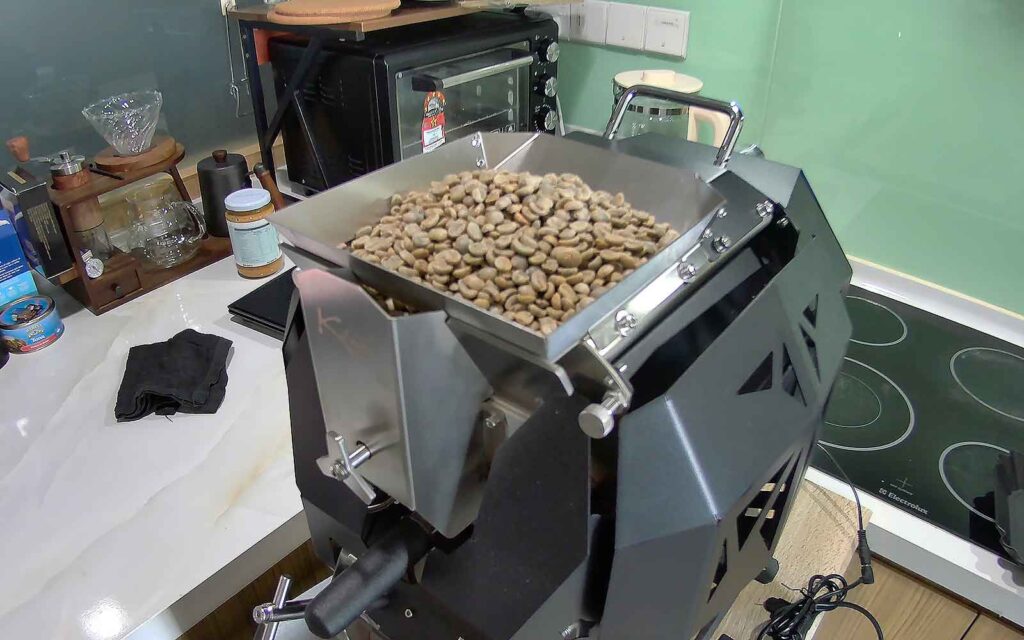
The Strategic Plan
Building on the first Mae Ukho roast’s accurate baseline data, I crafted a deliberate profile targeting balanced sweetness:
Target Timeline:
- Dry End (DE): 5 minutes 45 seconds @ 153°C – moderate drying phase
- Maillard Phase: 4 minutes 50 seconds to FC – extended development for brown sugar notes
- First Crack (FC): Expected around 178°C (based on first roast)
- Development Time: 3 minutes post-FC
- Drop: 196°C for medium roast
Target Roast Phases:
- DE phase: 42%
- Maillard phase: 36%
- Development: 22%
The philosophy: Give adequate drying time without rushing, invest heavily in Maillard for sweetness complexity (those palm sugar and brown sugar notes), then develop conservatively to lock in medium roast character.
Total planned roast time: approximately 13 minutes 35 seconds.
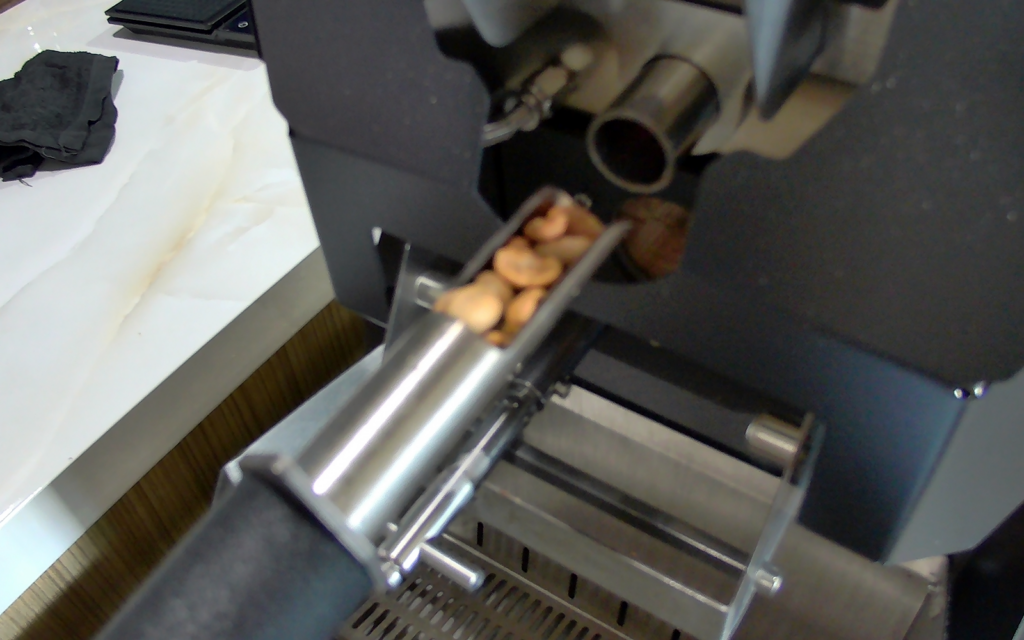
What Actually Happened
The Numbers:
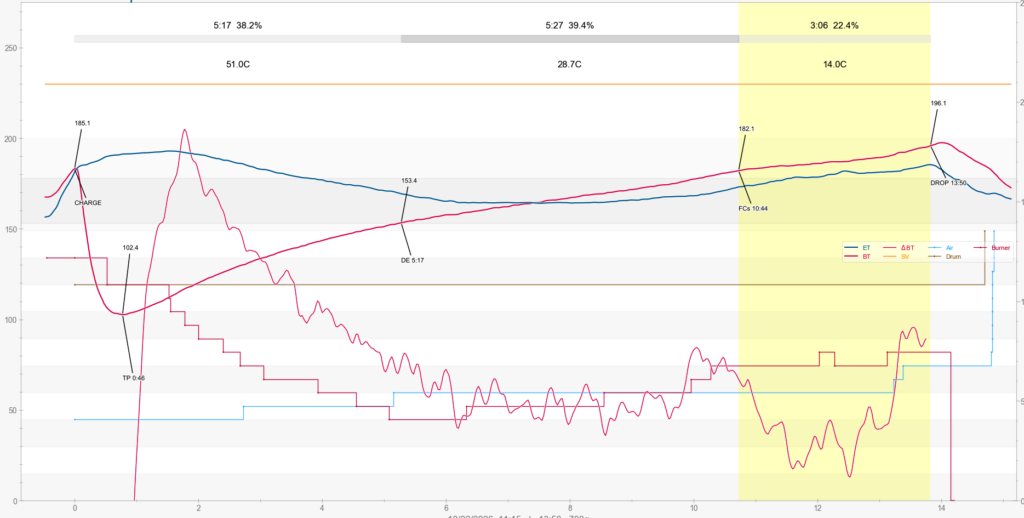
- Dry End: 5:17 @ 153°C (planned 5:45) – 28 seconds early ✓
- First Crack: 10:44 @ 182°C (planned 10:35 @ 178°C) – 9 seconds late, 4°C higher
- Maillard Time: 5:27 (planned 4:50) – 37 seconds longer
- Drop: 13:50 @ 196°C (planned 13:35)
- Development Time: 3:06 (planned 3:00) – 6 seconds over ✓
Actual Roast Phase Percentages:
- DE phase: 38.2% (target 42%)
- Maillard phase: 39.4% (target 36%)
- Development: 22.4% (target 22%)
The FC Temperature Shift
First crack arrived at 182°C instead of the 178°C I’d recorded in roast #1. This 4-degree difference caught my attention, was it the bean, or the batch size?
My theory: The larger batch (600g vs 380g first roast) carries more thermal mass. More beans absorb and distribute heat differently, potentially delaying temperature rise and pushing FC markers slightly higher. This is a valuable data point for future roasts, batch size affects more than just total roast time; it shifts phase transition temperatures too.
Despite FC arriving later than expected temperature-wise, the extended Maillard time (5:27 vs planned 4:50) likely compensated by allowing more thorough sugar development. Not what I planned, but possibly not worse, maybe even better for sweetness.
The Roast Phase Analysis
Looking at the percentage breakdown, my actual roast was remarkably balanced:
- I shortened the DE phase slightly (38.2% vs 42% target) – beans dried efficiently
- Maillard phase expanded (39.4% vs 36% target) – more time for sugar caramelization
- Development held almost perfectly (22.4% vs 22% target) – controlled finish
The deviation from plan wasn’t random chaos, it was a controlled shift that likely enhanced sweetness development at the minor expense of some acidity preservation. For a coffee promising “complex and sweet” with palm sugar notes, this trade-off might actually be ideal.
The Visual Confirmation
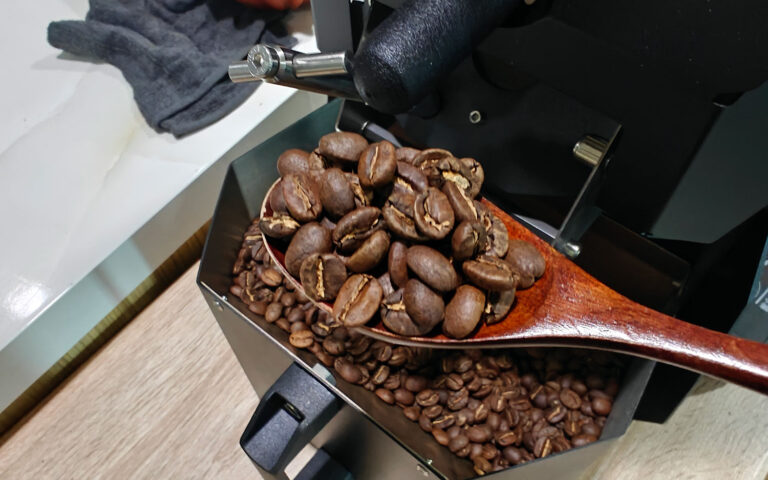
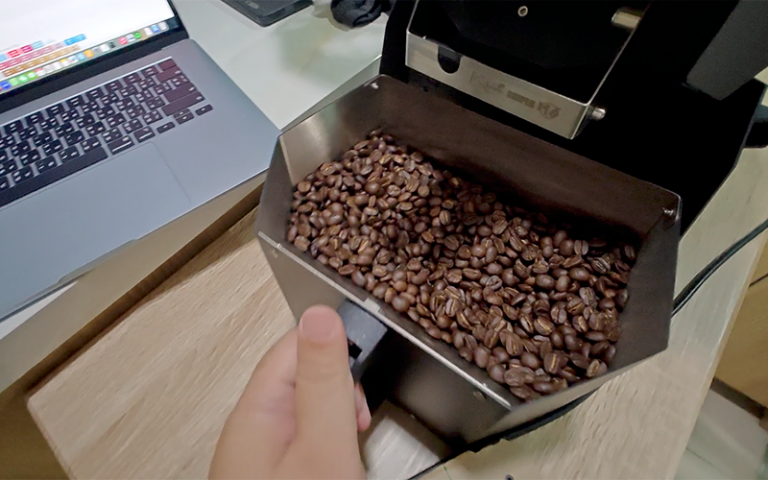
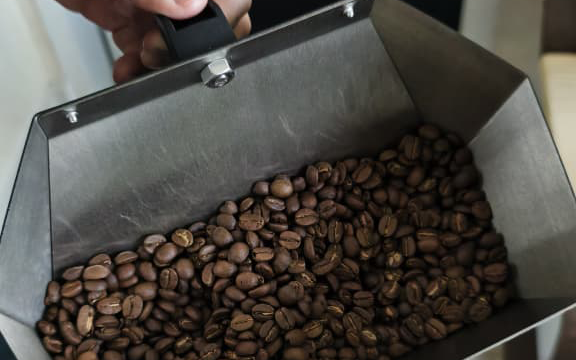
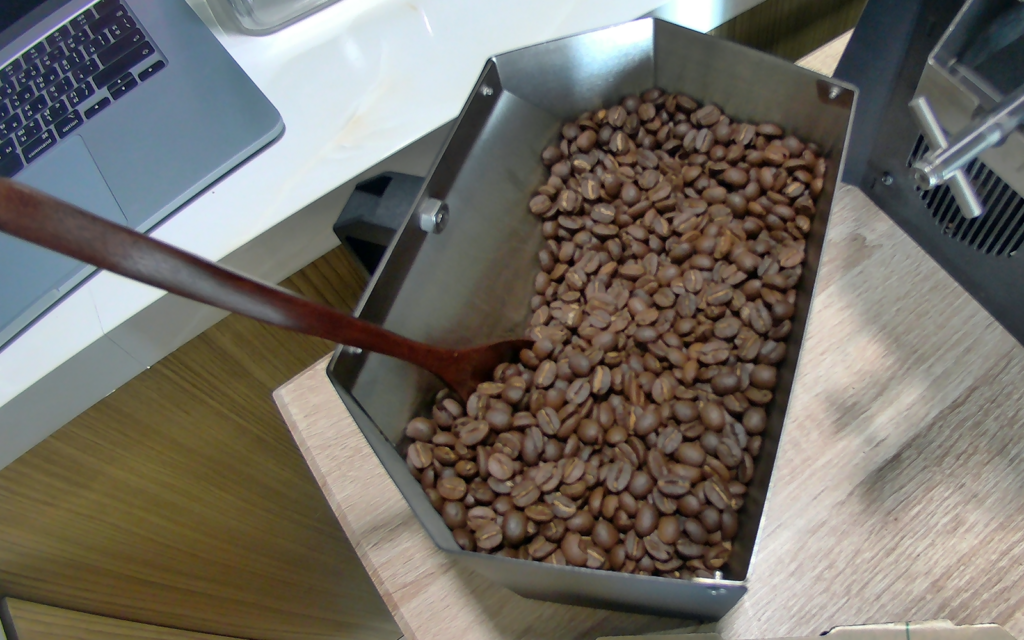
When I dropped the beans at 196°C and saw them cool, I experienced something new: satisfaction. The color was exactly what I’d been chasing, that classic medium roast brown that promises balance between origin character and development sweetness.
No “oops, too dark” sinking feeling. No “maybe I should have pushed it further” second-guessing. Just beans that looked right.
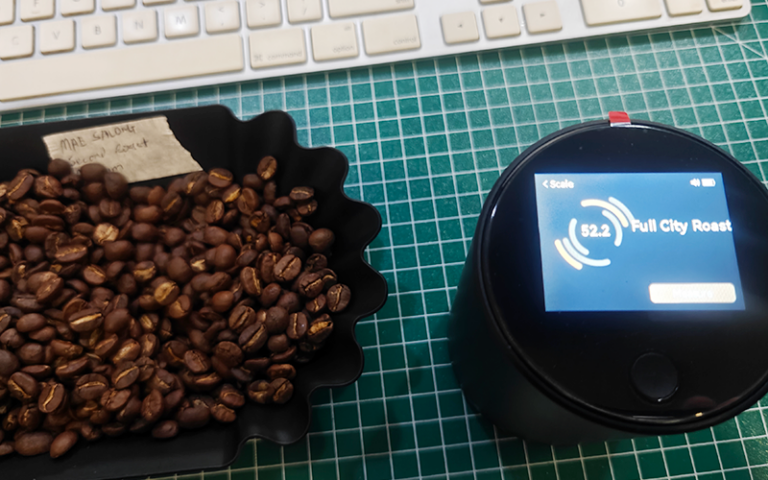
I measure the Agtron color reading about 52 after 24 hours of rest to quantify: this is proper medium roast.
Self-Assessment: 4/5
Why not 5/5 if I’m so pleased?
What Went Right:
- Hit target drop temperature precisely
- Achieved desired roast color
- Maintained controlled development time
- Balanced phase percentages overall
- No panic moments or scrambling adjustments
Room for Improvement:
- DE came slightly faster than planned (heat application still not perfectly calibrated)
- Maillard phase extended beyond target (though possibly beneficial)
- FC temperature shift suggests I need batch-size-specific planning
This roast proved I’m finally learning the M6’s personality. I’m making informed adjustments rather than reactive corrections. The gap between planning and execution is narrowing.
What’s Next
Now comes the real test: cupping. I need to compare roast #1 (380g, 2:22 Maillard, dropped at 196.6°C) against roast #2 (600g, 5:27 Maillard, dropped at 196°C).
Will the extended Maillard time in roast #2 deliver noticeably sweeter, more complex palm sugar notes? Will roast #1’s slightly lighter finish preserve more brightness? Or will they taste remarkably similar, suggesting these small differences matter less than I think?
The beans will tell the truth in the cup. That’s the brewing test here.
Roast Status: Success – Best execution yet ✓
Self Rating: 4/5
Key Learning: Batch size affects FC temperature
Next Action: Cupping comparison between roast #1 and #2
Roast Profile Roast #2:
- Batch Size: 600g
- DE: 5:17 @ 153°C (38.2%)
- FC: 10:44 @ 182°C (39.4% Maillard)
- Drop: 13:50 @ 196°C (22.4% Development)
- Maillard Time: 5:27
- Development Time: 3:06
- Visual Result: Perfect medium roast color