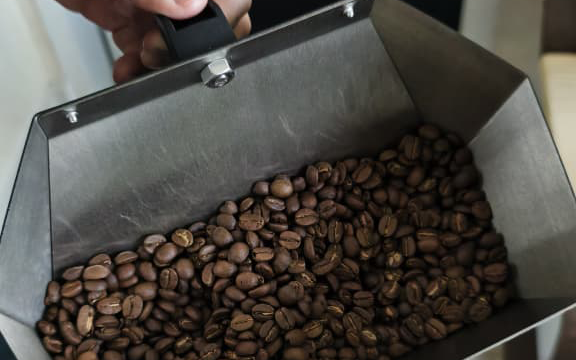
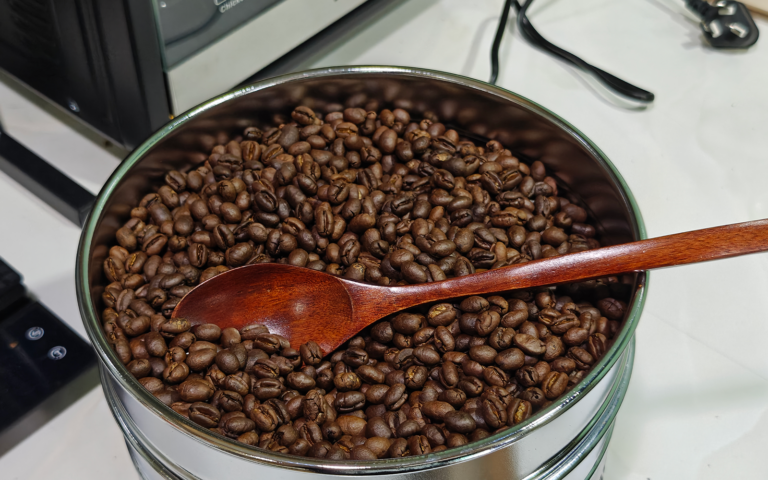
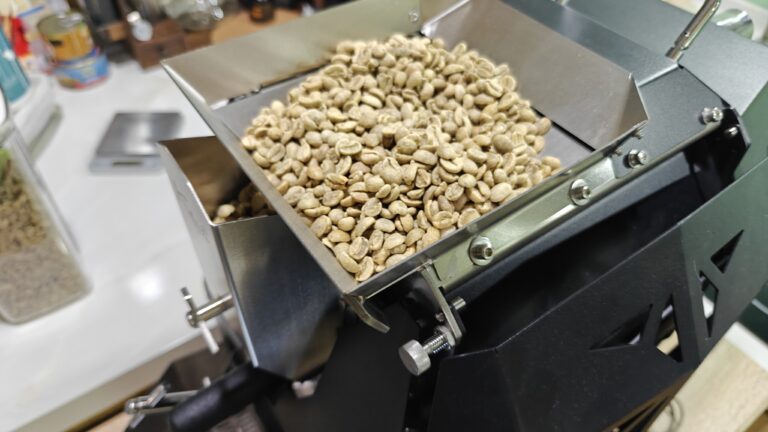
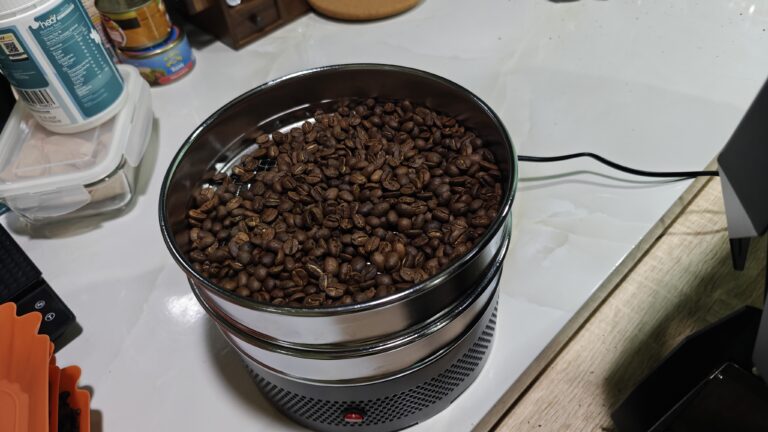
After my Kenya competition roasts (which didn’t advance past the first round—expected at six months experience), I had 1kg of premium Kenya beans remaining. Rather than let them sit, I decided to work through the remainder with focused roasting.
What I discovered: my roasting control has regressed compared to a month ago.
The Setup: Batch Size Reality Check
The Kaleido M6 technically maxes out at 700g, but I’ve learned that 500-600g is the sweet spot for this machine. Anything larger and thermal dynamics become less predictable. I split the 1kg into two separate roasts at reasonable batch sizes.
Simple plan. Clean execution should have followed.
It didn’t.
Kenya Roast #1: Artisan Panic and Missed Targets
The Plan:
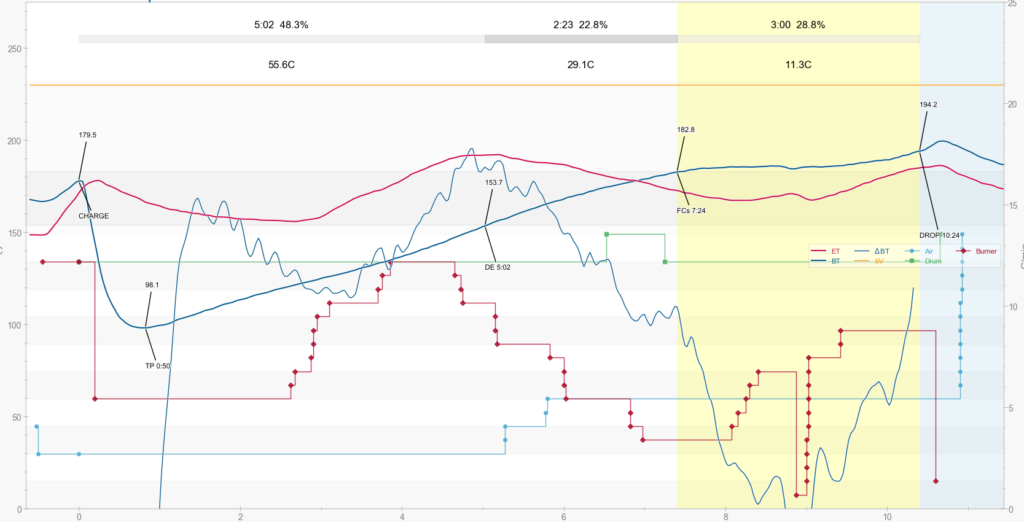
- DE: 4 minutes @ 153.7°C
- Maillard: 4 minutes (3:13 total DE-to-FC time)
- Drop: 199°C for medium roast
What Actually Happened:
Dry End: 5 minutes @ 153.7°C – one minute slower than planned. I was building heat conservatively, learned caution from previous overshoots.
Maillard Phase: 2 minutes 20 seconds (not 4 minutes). Same Maillard collapse I’ve been fighting for months. Despite understanding the theory of aggressive heat reduction, I keep executing it half-heartedly.
The Panic Moment:
Mid-roast, I accidentally clicked the “cool down” button in Artisan software. This immediately reduced heat application to 10%.
I watched the BT display, waiting for heat to increase per my plan. Nothing. The temperature continued climbing, but slower than expected. My confusion turned to panic—why won’t the heat go back up?—before I realized what I’d done.
By the time I corrected the Artisan settings, precious Maillard development time had been lost.
Drop Decision:
I reached development with the roast already behind schedule and thermal momentum uncertain. By the time I dropped at 194°C, I’d been in development for approximately 3 minutes—far longer than ideal.
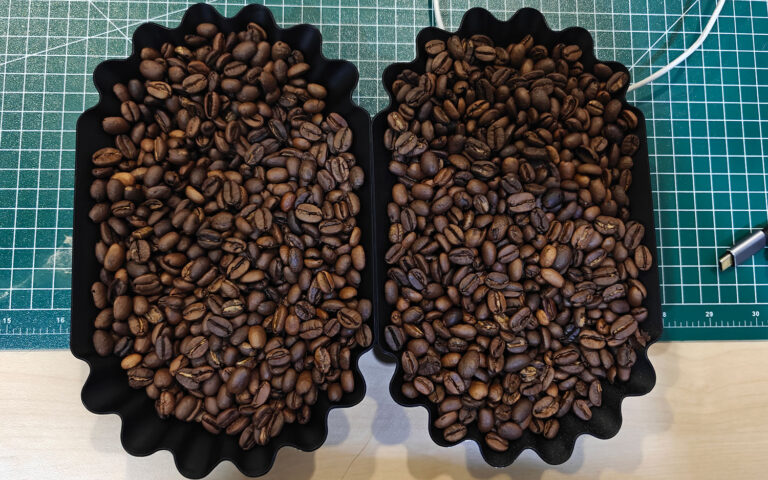
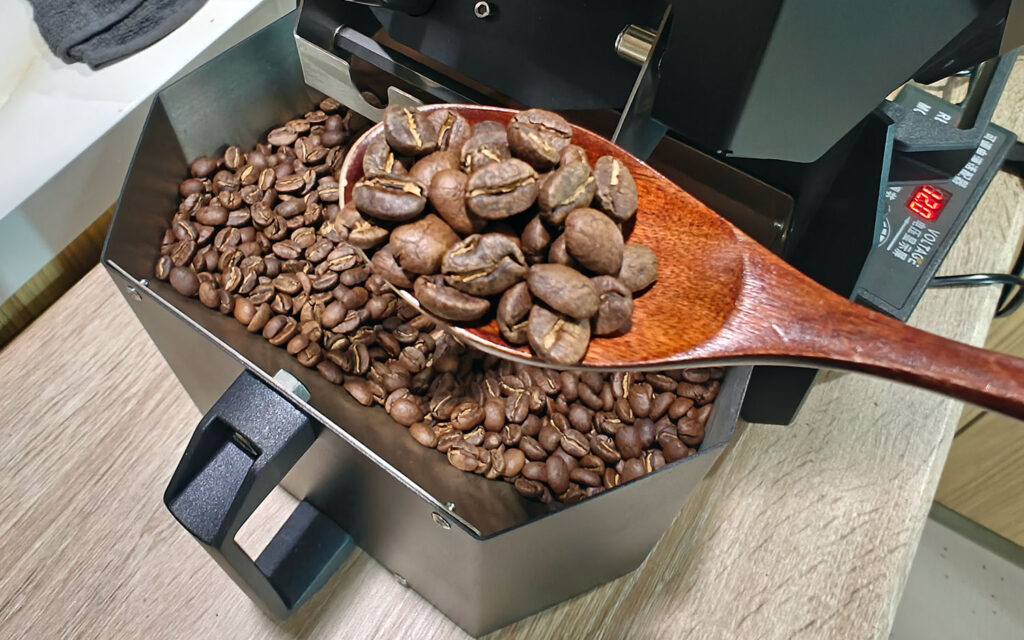
Result: 194°C is below my 199°C medium roast target. The extended development time at lower heat didn’t compensate. This Kenya came out between light-medium and medium—not the balanced medium roast I’d planned.
Kenya Roast #2: Fear Becomes the Problem
After roast #1’s disappointment, I approached roast #2 with caution—maybe overcautious.
The Plan:
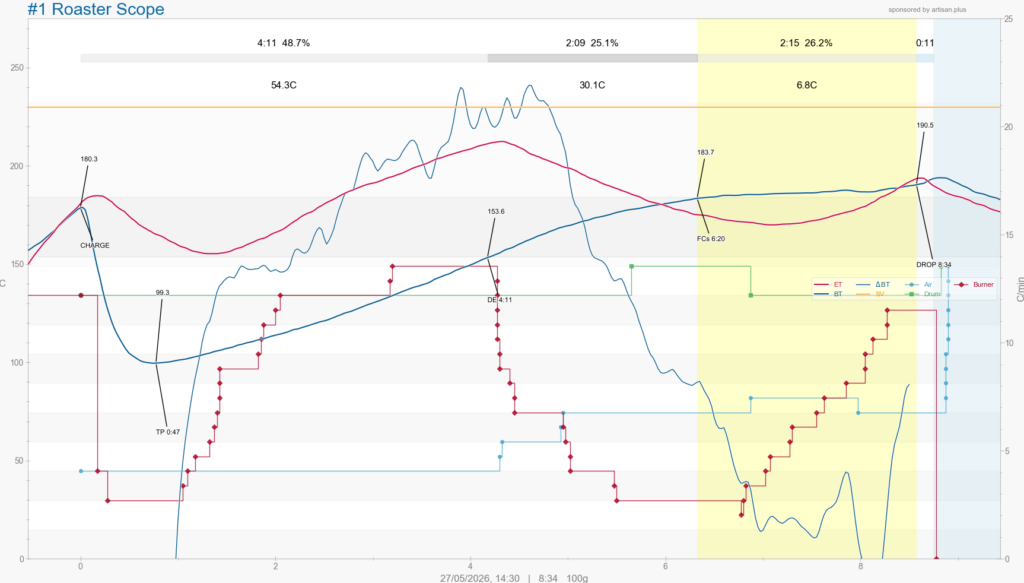
- Same targets as roast #1 (4min DE, 4min Maillard, 199°C drop)
- Better execution this time, hopefully
What Actually Happened:
Dry End: 4 minutes 11 seconds @ 153.7°C – significantly better than roast #1’s 5 minutes. I controlled the drying phase more confidently.
Maillard Phase: 2 minutes 09 seconds (still short of the 4-minute target). Once again, I failed to maintain extended Maillard time. The issue persists.
The Fear Factor:
Here’s where roast #2 reveals something concerning: I’m now afraid to add heat.
After roast #1’s Artisan panic and the stress of managing thermal momentum, I became overly cautious about heat application. When I sensed the beans approaching FC, instead of confidently adjusting heat to maintain my plan, I hesitated.
Better to err on the side of underdevelopment than overshoot again, my brain whispered.
So I dropped conservatively at 2 minutes 15 seconds post-FC, with BT only at 190.5°C.
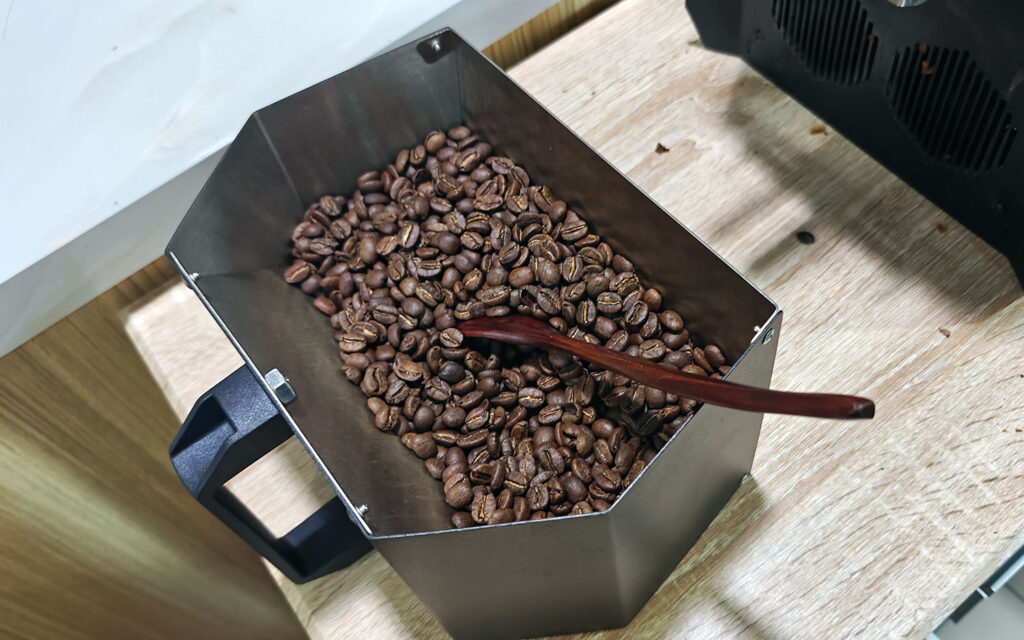
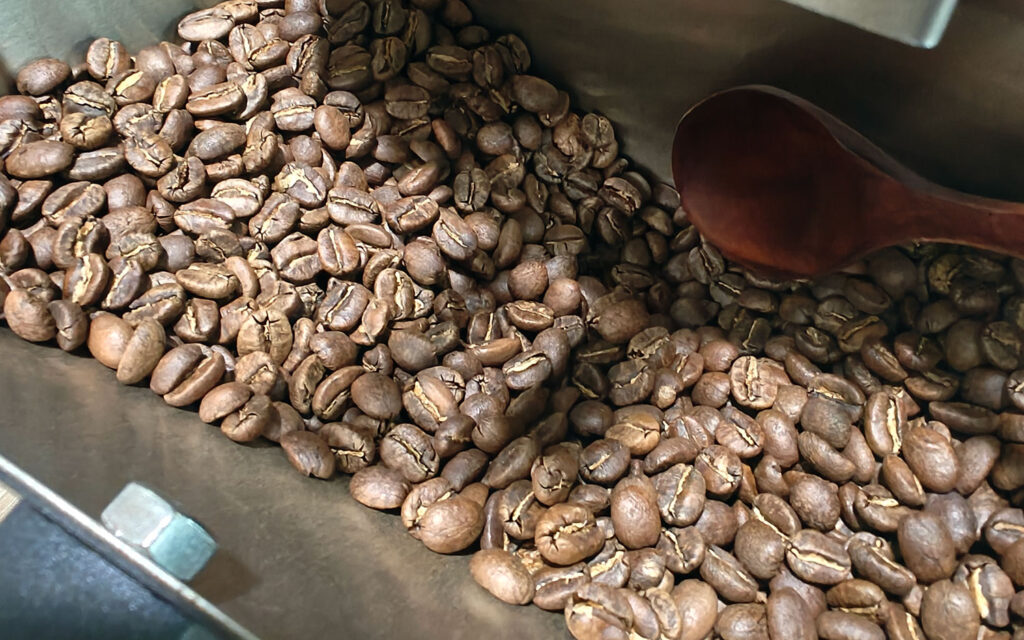
Result: This Kenya is medium-light roast—notably lighter than my target and potentially undershooting the flavor development this bean needs.
The Regression: What Changed in One Month?
Looking back at my Mae Ukho roast (4/5 satisfaction, well-controlled) to these Kenya roasts, something shifted:
Confidence eroded.
A month ago, I was executing multi-minute Maillard phases and controlling development times with some success. I was making mistakes, but I was actively roasting—making decisions, adjusting, learning.
Now I’m reacting fearfully to setbacks rather than confidently exploring thermal boundaries.
Roast #1’s Artisan panic shook me. Roast #2’s response was overcautious withdrawal.
This is the opposite of progress.
The Quality Prediction
Kenya Roast #1 (194°C, extended development): Probably balanced but slightly underdeveloped. Medium-light to medium. Could taste fine—balanced sweetness and body.
Kenya Roast #2 (190.5°C, conservative drop): Almost certainly sour. Light roast Kenya, especially with my conservative development strategy, will emphasize acidity. Compared to my previous darker roasts (Brazil, Vietnam, Mae Ukho), this will stand out as noticeably brighter and more acidic.
I’m expecting to taste the consequence of fear-based roasting decisions.
The Honest Assessment
This isn’t a blog post celebrating learning or breakthrough. It’s documentation of regression:
- Control: Worse than one month ago ✗
- Maillard Management: Still unresolved ✗
- Confidence: Noticeably lower ✗
- Decision-making: Driven by fear rather than curiosity ✗
- Unexpected Issues: Artisan software click caused unnecessary stress ✗
What went right:
- Dry end control on roast #2 was better ✓
- I recognized what went wrong ✓
- I’m still roasting and learning ✓
But the trajectory concerns me. A month ago I felt momentum building. Now I feel like I’m sliding backward.
What’s Different?
The competition deadline passed. The pressure to produce good results lifted. Maybe I’ve unconsciously decreased my standards? Or maybe the early success created overconfidence that recent failures have crushed?
Either way, these Kenya roasts represent a valley in my learning curve—not a peak, not flat ground, but a noticeable dip in control and confidence.
Next Steps (If I Continue Kenya)
If I roast more Kenya from remaining stock, I need to:
- Rebuild confidence in heat management: Trust that I can increase heat post-DE without destroying the roast
- Address the fear: Acknowledge that some roasts will overshoot. That’s how learning happens. Excessive caution isn’t wisdom—it’s just fear wearing a disguise
- Understand Artisan software: Know exactly where the cool-down button is and avoid accidentally clicking it mid-roast
- Return to controlled aggression: I was making better roasts a month ago when I was willing to push boundaries. Conservative roasting = mediocre results
Roast #1 Status: Light-medium, missed target, Artisan panic incident
Roast #2 Status: Medium-light, fear-based conservative drop
Confidence Level: Noticeably lower than one month ago
Expected Cup: Sour, especially roast #2
Self Assessment: Regression, not progression
Roast Profile Roast #1:
- Bean: Kenya (competition leftover)
- DE: 5:00 @ 153.7°C (planned 4:00)
- FC: 7:20 @ 183°C (2:20 Maillard, planned 4:00)
- Development: 3:00 (too long)
- Drop: 194°C (target was 199°C)
- Result: Light-medium (below target)
- Issue: Artisan cool-down button panic
Roast Profile Roast #2:
- Bean: Kenya (competition leftover)
- DE: 4:11 @ 153.7°C ✓ (improvement)
- FC: 6:20 @ 183°C (2:09 Maillard, still short)
- Development: 2:15 (conservative, fear-based)
- Drop: 190.5°C (too light)
- Result: Medium-light (significantly below target)
- Issue: Fear-based decision making