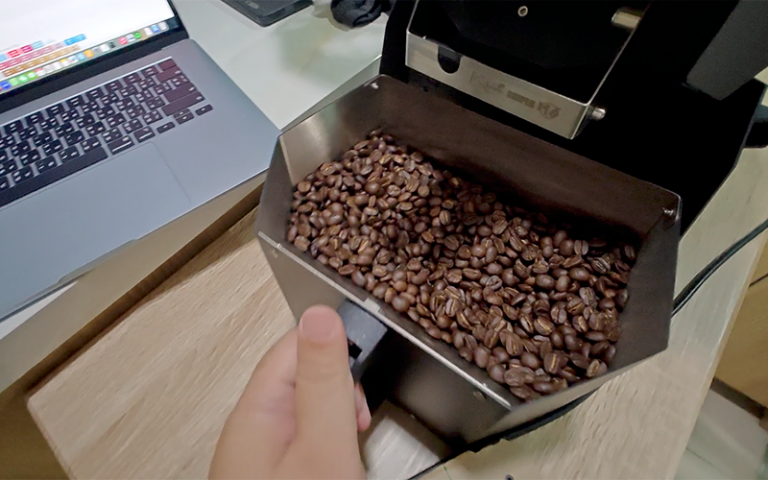
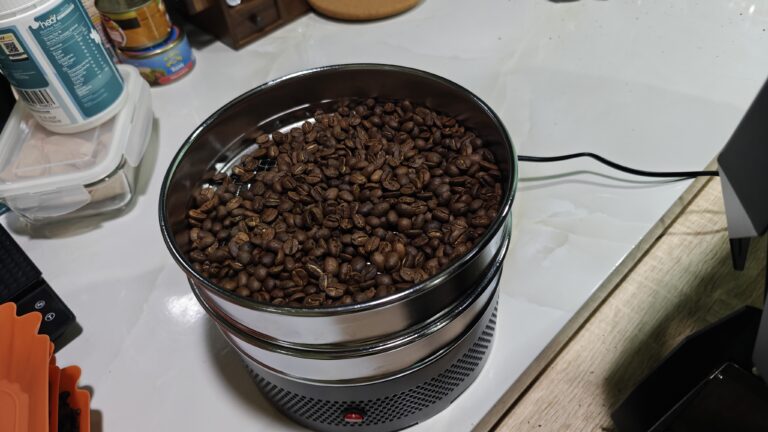
Life happens. Holidays pile up. Other jobs demand attention. When my brother requested Vietnam beans for roasting reference, I said yes—but the actual roasting got delayed. By the time April 12 rolled around and I finally opened the 2kg package, I had about a month of anticipation built up.
The contents didn’t inspire immediate confidence.
First Impressions: Grade Concerns
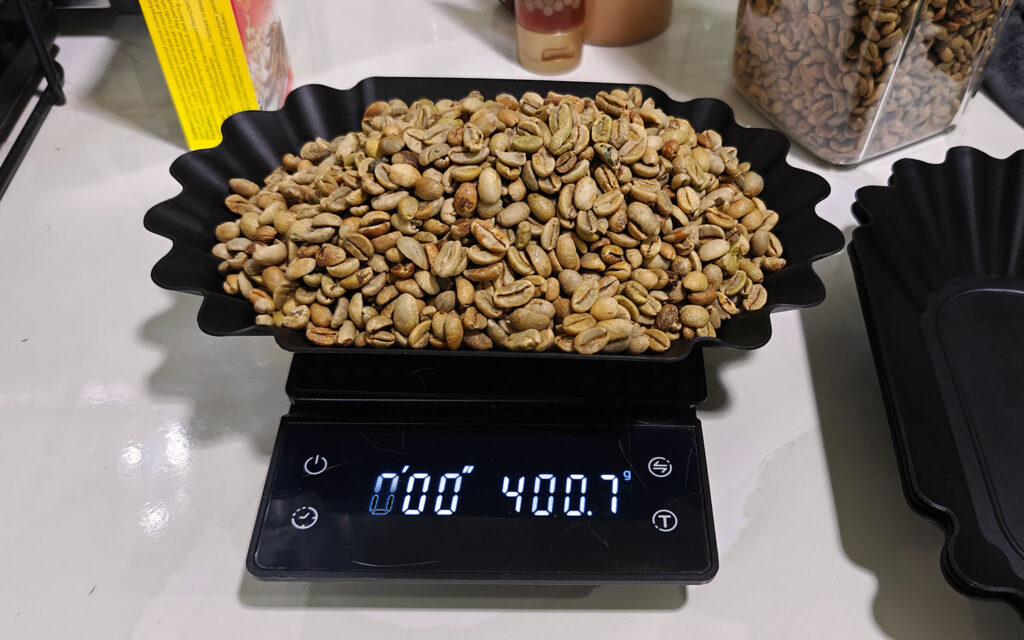
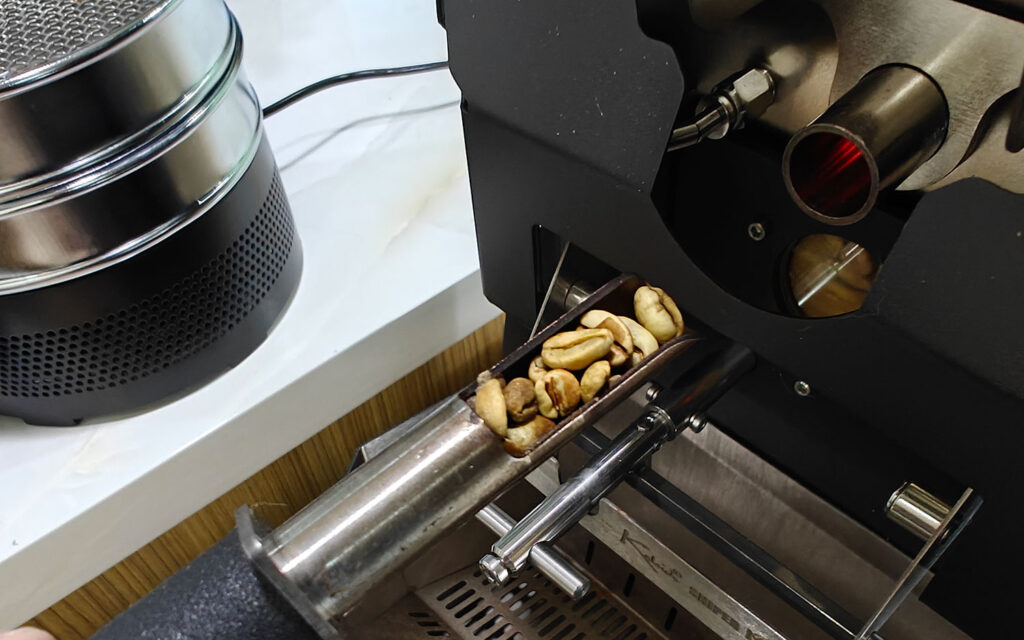
Opening the sealed bag, I immediately noticed something: inconsistent bean size and color.
Quality green coffee should look relatively uniform—similar bean dimensions, consistent color tone, minimal defects. This Vietnam lot? The beans varied noticeably. Some larger, some smaller. Color ranged from greenish to slightly yellowed.
I could see the photos showing this variance, and it raised a red flag about overall grade quality.
This wasn’t the prettiest green coffee I’d worked with. But my brother specifically requested it, and I promised to roast a reference batch. So: first roast, baseline data, and report back what the bean actually does on the Kaleido M6.
The Approach: Standard Baseline Protocol
Despite my skepticism about the green bean’s appearance, I followed the same process I’ve applied to every unfamiliar bean:
- Load conservatively (didn’t commit the full 2kg)
- Roast to establish thermal behavior
- Capture dry end, first crack, second crack temperatures
- Push to SC to confirm boundaries
- Evaluate result against my growing Kaleido M6 reference library
No special treatment. No adjusted expectations. Just: watch, measure, record, learn.
The Roast: Familiar Territory
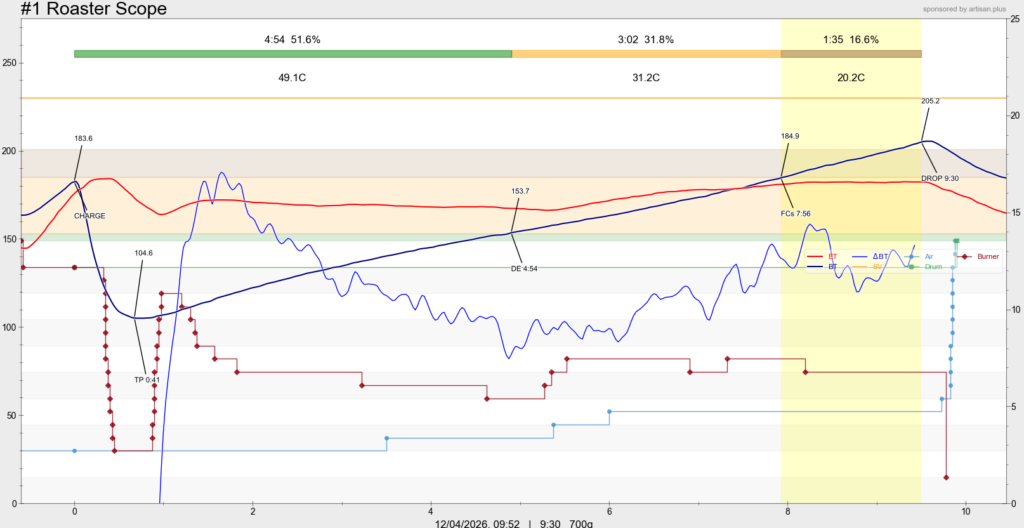
Recorded Bean Temperatures:
- Dry End (DE): 153.7°C
- First Crack (FC): 184.9°C
- Second Crack (SC): 205.2°C
Here’s what struck me: these numbers fit the established pattern.
Comparing to my other roasts on the Kaleido M6:
Brazil Santos: DE 149.5°C, FC 183.3°C, SC 199.5°C
Kenya: DE 155°C, FC 183.8°C, SC 207.6°C
Mae Ukho: DE 153°C, FC 179-182°C, SC ~200°C
Catuai: DE 149°C, FC 181-185°C, SC 205°C
Vietnam: DE 153.7°C, FC 184.9°C, SC 205.2°C
The Vietnam bean slots neatly into my reference range. It’s not behaving erratically or unexpectedly. Despite the inconsistent green bean appearance, thermally it performs like a standard Arabica at typical roast phase transitions.
This suggests the grade quality concerns might be cosmetic—the beans function normally under heat, even if they didn’t look pristine in the bag.
The Data Point: Adding to the Library
I didn’t taste this roast. My brother did—it was roasted specifically for his evaluation and feedback, not my own experimentation.
But I captured what I needed: another confirmed BT baseline for the Kaleido M6’s Vietnam bean behavior.
- DE: 153.7°C ✓
- FC: 184.9°C ✓
- SC: 205.2°C ✓
If I ever source Vietnam beans again, or if my brother requests another reference roast, I have these numbers to work from.
Brother’s Feedback: Dark Roast Preference Confirmed
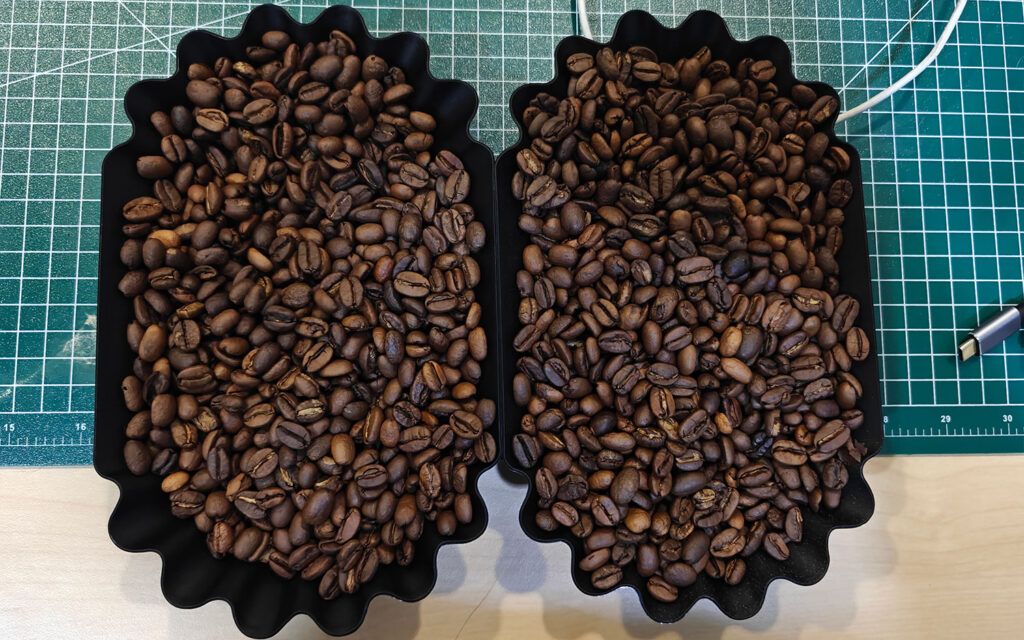
I didn’t cup this batch, but my brother did. His verdict:
He likes it.
His reasoning: He doesn’t enjoy sour coffees. He prefers bitter.
This is useful information—not just about his palate preferences, but about how roasting decisions communicate. By pushing this roast through full development toward SC, I created a darker profile with more body, less acidity, more roast character.
For my brother’s taste (bitter-preferring), this roasted well. For a specialty coffee enthusiast seeking origin expression, this would be too dark.
The same roast. Different audiences. Different satisfaction levels.
The Grade Question: Unanswered
I still haven’t resolved my initial concern about the inconsistent bean size and color. The roast performed normally, but that doesn’t necessarily mean:
- The beans are high quality
- They’ll cup cleanly
- They’re properly processed
- The color variance indicates something problematic
What it does mean: thermal behavior is decent regardless of appearance.
Sometimes in coffee, things that look wrong work fine. Sometimes they don’t. Only the cup reveals the truth.
Moving Forward: Data Without Judgment
This Vietnam roast sits in my growing library of reference points:
Vietnam (Grade uncertain, appearance inconsistent):
- DE: 153.7°C
- FC: 184.9°C
- SC: 205.2°C
- Result: Brother approved (bitter preference)
- Personal evaluation: Pending (didn’t taste)
If my brother requests more Vietnam beans, or if I decide to experiment with the remaining 2kg myself, I have a baseline.
If I encounter Vietnam beans from different sources, I can compare their BT behavior to this reference.
The baseline roast doesn’t answer questions about quality or cup profile—it just establishes how this particular batch thermally behaves on my machine.
For a roaster still building knowledge across different origins, sometimes that’s enough.
Roast Status: Baseline established, brother approved
Grade Assessment: Questionable appearance, normal thermal behavior
BT Data: DE 153.7°C, FC 184.9°C, SC 205.2°C ✓
Personal Tasting: Pending
Next: Reference roasting for brother, or exploration roasting for myself