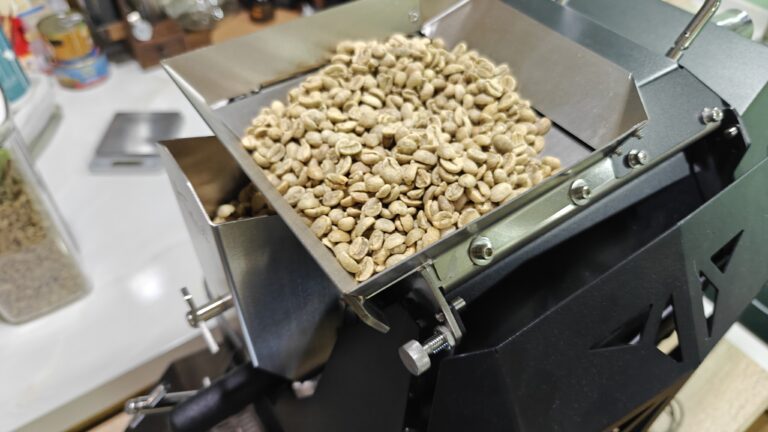
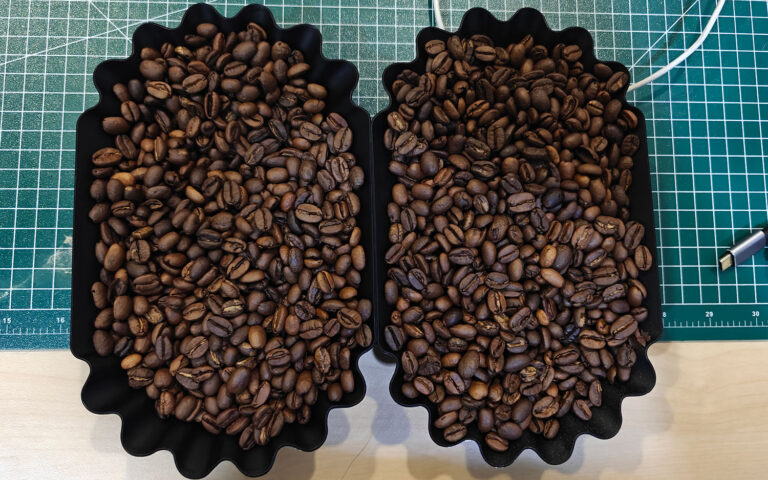
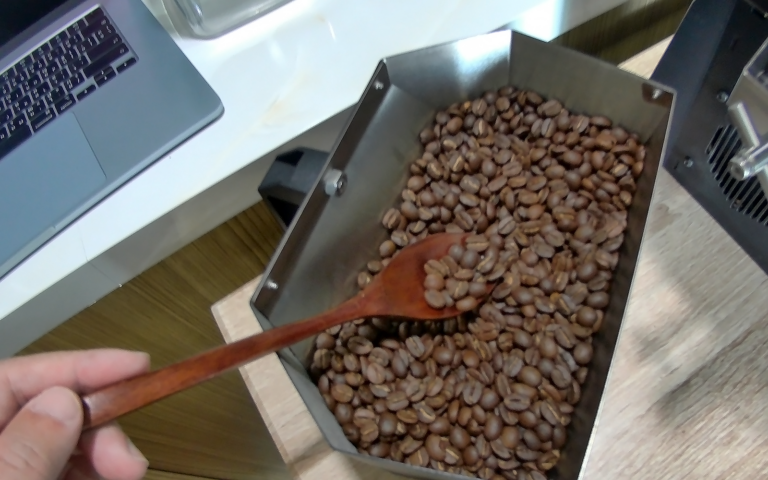
I’m back from Chiang Mai and finally back at the roaster. This update comes with a request: my brother wanted some winey, fruit-forward coffee, so I picked up two Ethiopian beans for him. I didn’t post photos lately because I wanted to focus on roasting first. Honestly, I’m not satisfied with these roasts.
The Brief
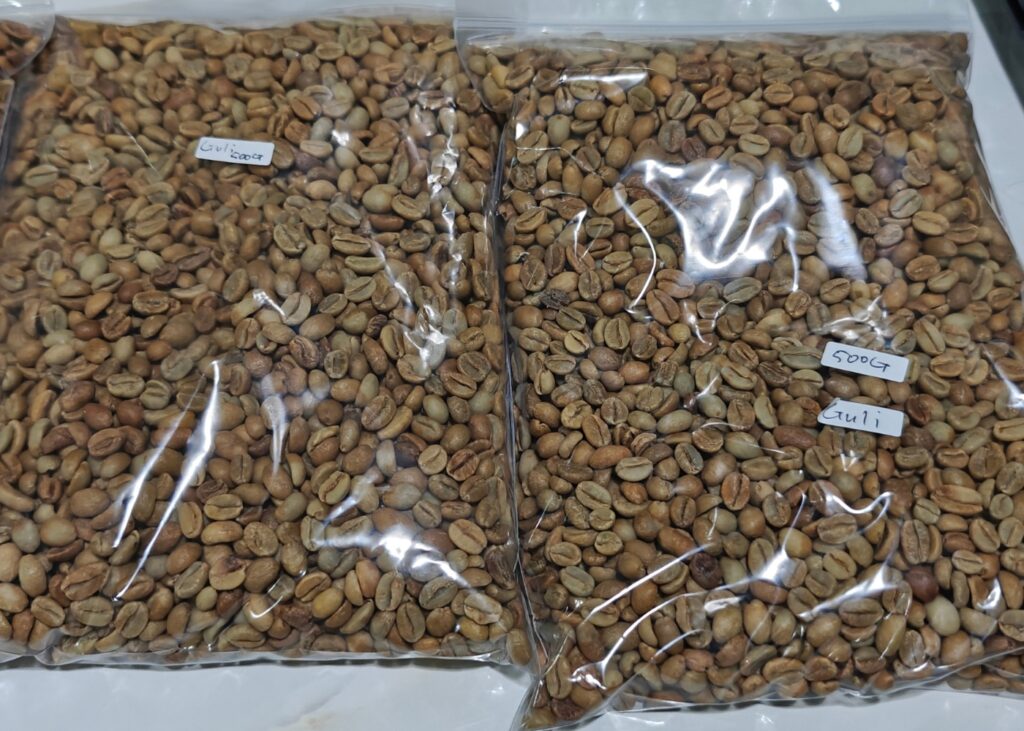
My brother asked for winey, fruity coffee, so I sourced two lots:
- Ethiopia Supernatural Guji Wubanchi
- Ethiopia Anaerobic Sidamo G4
I only had 1 kg of each. That’s enough for a couple of test roasts, but not enough to properly map how these beans behave on the Kaleido M6. Splitting each into two roasts left very little room for experimentation.
The cupping notes I got from the supplier:
- Guji Wubanchi: Winey, tropical fruits, citrus, floral, berries, intense sweetness
- Sidamo G4: Anaerobic processing (the supplier note was incomplete, so I’m working from the process alone)
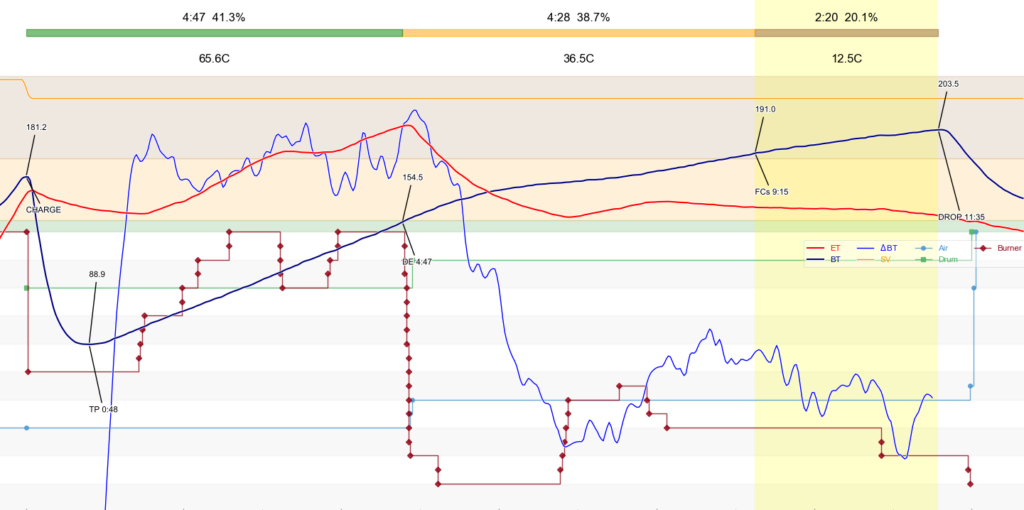
Ethiopia Supernatural Guji Wubanchi
I only saved the profile from one roast. The second was similar.
- Dry End: 4:47 @ 154.5°C
- First Crack: 4:28 into the roast @ 191°C
- Development: 2:20 @ 203.5°C
- Agtron: 48
The drop came before second crack, but the color still read darker than I wanted. For a fruity, winey profile, that’s a problem. Fruit notes tend to fade quickly once the roast moves past medium, and at Agtron 48 I’m worried this one lost much of what the origin offers.
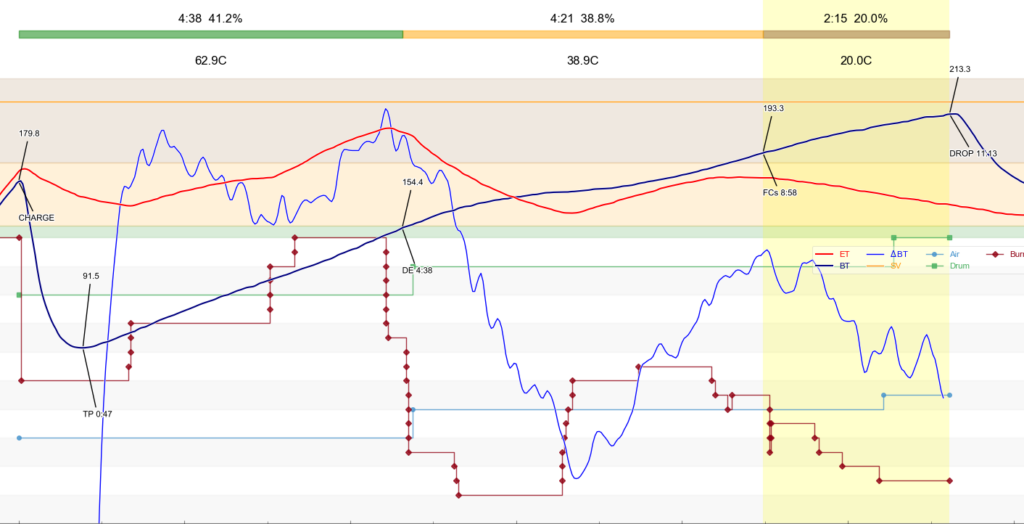
Ethiopia Anaerobic Sidamo G4
This bean gave me two roasts, and both went darker than planned.
First roast:
- Dry End: 4:38 @ 154.4°C
- First Crack: 4:21 into the roast @ 193.3°C
- Development: 2:15 @ 213.3°C (clearly dark)
Second roast:
- Dry End: 4:45 @ 154.6°C
- First Crack: 4:19 into the roast @ 193.3°C
- Development: 2:17 @ 206.3°C
The second roast dropped at a lower bean temperature, but it still came out dark. Agtron 38 for the pair. Since the green bean already looked darker than I expected, the anaerobic process may have pushed its color further out of balance during roasting. I can’t be certain without more samples.
What Went Wrong
Looking at the numbers, a few things stand out:
- Development was too long for these beans. Both Guji and Sidamo spent around 2:15 to 2:20 after first crack. For a delicate, fruit-forward Ethiopian, that’s too much.
- First crack arrived at similar bean temperatures on both beans (around 191 to 193°C), but I didn’t adjust my drop plan for that. I let the roast run too far.
- The Sidamo’s color was off from the start. The green coffee looked dark, which may have made the roast color read even darker than the BT suggests.
What I Learned
This was a first real attempt at roasting Ethiopian coffee, and it showed me how much I still have to learn. Ethiopian beans are known for their delicate aromatics, and my roasts ran heavier than the beans seemed to want.
Next time I’ll:
- Drop earlier, around 1:30 after first crack, to keep the fruit intact
- Check the green bean color and density before planning a profile
- Use a slightly shorter total roast time to keep the fruit notes present
Even with disappointing roasts, I’m glad I tried. Ethiopia is a different world from the Thai beans I’ve been working with, and I’ll keep practicing until I can read these beans properly.
Guji Wubanchi: Agtron 48, dark for a fruity profile
Sidamo G4: Agtron 38 (two roasts), dark, color likely affected by green bean
Next: More Ethiopian roasts with earlier drops to protect the fruit