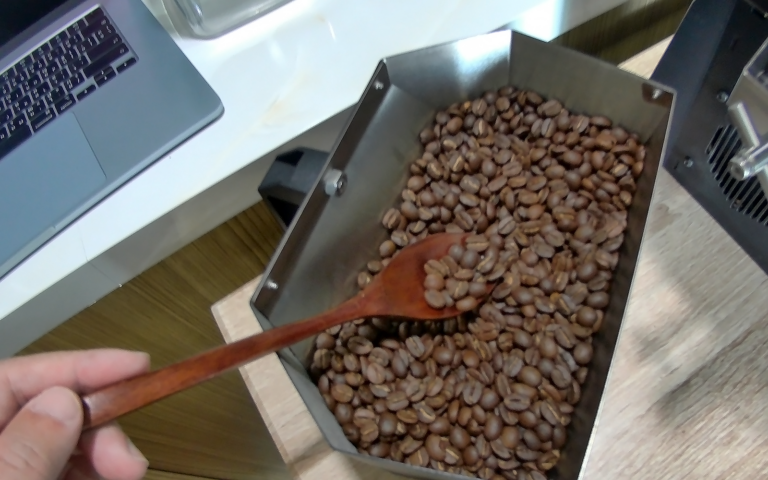
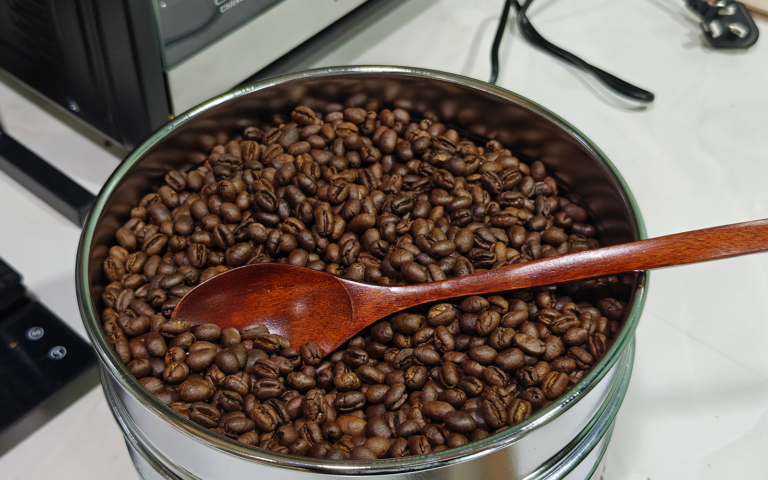
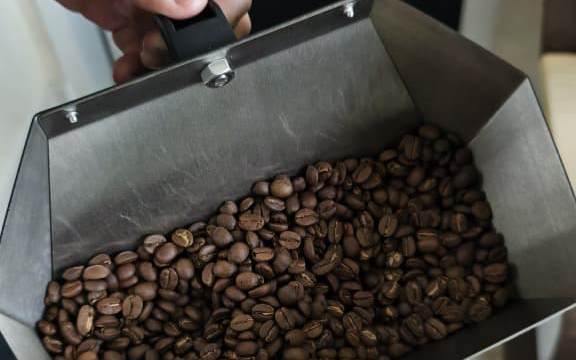
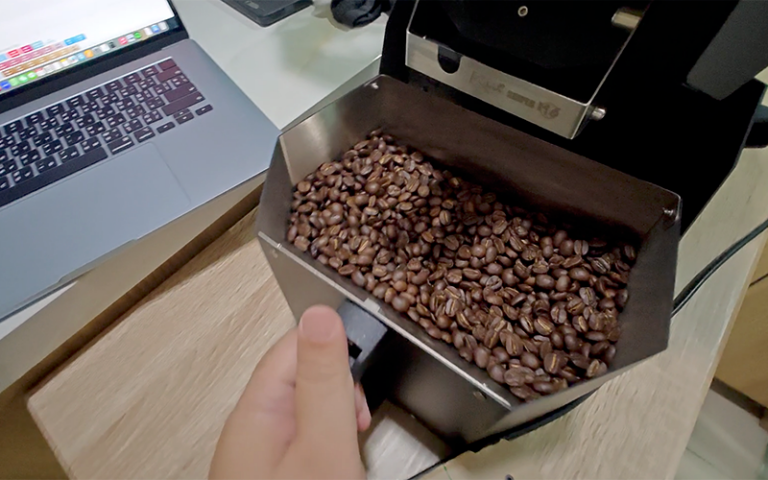
My friend loved the Guatemala Antigua I roasted earlier for my skill testing, so I decided to explore more Guatemalan coffee. This time I bought Huehuetenango, a region in the western highlands. The cupping notes listed chocolate, nutty, berries, and creamy. I wasn’t sure how different it would be from Antigua, but the only way to find out was to roast it.
I didn’t take photos this time. I focused on the roast, watched the curve and rate of rise (ROR), and worked on controlling the heat.
The Plan
My goal was balance between the first two phases:
- Dry End (DE): around 4:30
- Maillard (DE to FC): around 4:30
- Development: stop before second crack, and record where SC begins for my next roast
The aim was a clean baseline with a balanced drying and Maillard phase.
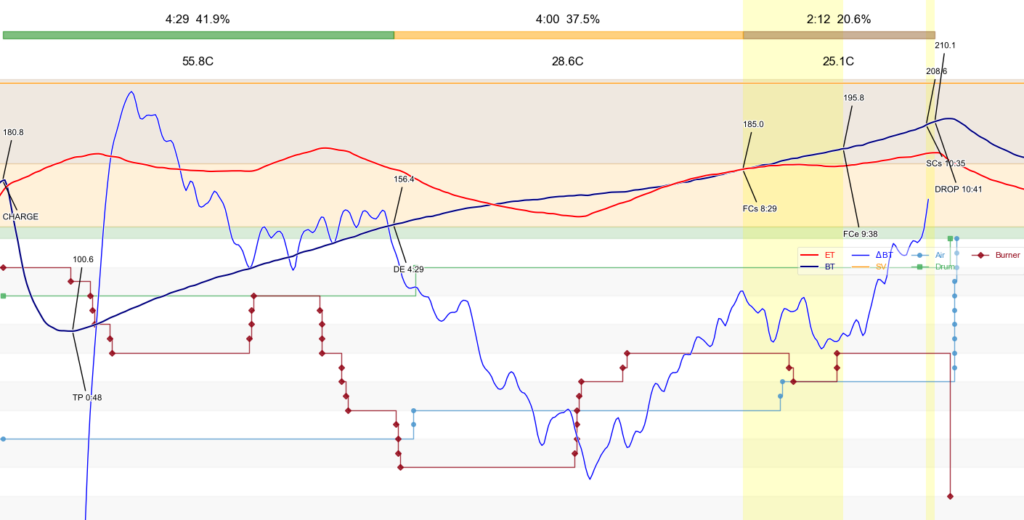
Roast #1
- Dry End: 4:29 @ 156.4°C
- First Crack: 4:00 Maillard @ 185°C
- Second Crack: 208.6°C
- Drop: 2:12 development @ 210°C
- Agtron: 47 (after 24 hours of cooling)
DE and FC landed close to plan, so the early phases were solid. The development phase carried the roast into second crack, which meant I expected a dark roast. The Agtron reading came in at 47 after resting, which is darker than I wanted but not as dark as I feared. The main value of this roast is the BT data, which gives me a reliable SC marker for this bean.
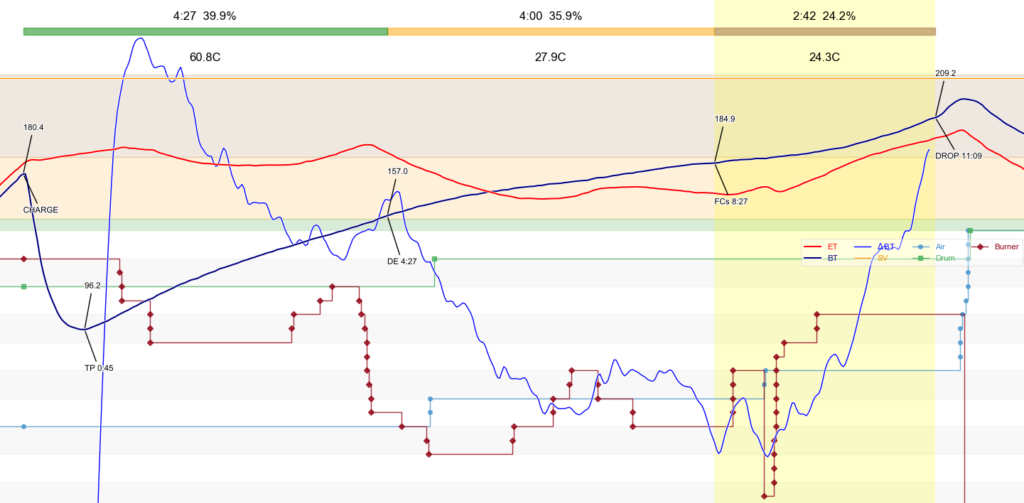
Roast #2
Right after the first roast, I roasted another 500g batch to check whether the numbers repeated.
- Dry End: 4:27 @ 157°C
- First Crack: 4:00 Maillard @ 184.9°C
- Drop: 2:42 development @ 209.2°C, just before SC
- Agtron: 49
The second roast tracked the first closely, which is encouraging. Dry end, first crack, and Maillard were nearly identical. The longer development phase brought the roast to Agtron 49, still medium-dark. Stopping at the edge of second crack gave me a clearer picture of where this bean’s dark limit sits.
What I Learned
Two roasts back to back gave me consistent numbers, and that consistency matters more than the color for now. Once the BT markers repeat, I can start shaping the curve on purpose instead of reacting to it.
For the next roast, I want to:
- Keep DE near 4:30 at about 156 to 157°C
- Hold the Maillard phase close to 4:00 to 4:30
- Shorten development to around 1:30 to 2:00 if I want a medium roast, and drop before 205°C
- Watch the ROR closely after first crack, since that’s where development tends to run away
Looking Ahead
I now have 10 kg of this Guatemalan green coffee, which gives me plenty of room to refine the profile. My friend has already said she’ll buy some, so this batch will help me test and also share roasted coffee with people who enjoy it.
Huehuetenango is a new direction for me, and the early results suggest it responds well to a controlled Maillard. Next, I’ll aim for a true medium roast and see whether the chocolate and nutty notes come through as promised.
Roast Status: Two consistent baseline roasts
Agtron: 47 and 49 (medium-dark)
Key BT Markers: DE 156 to 157°C, FC 185°C, SC around 208.6°C
Next Action: Shorter development for a medium roast, with a drop before SC