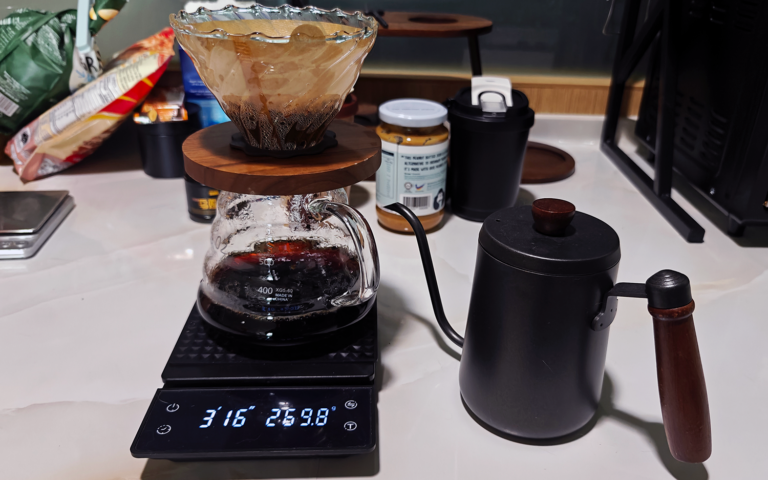
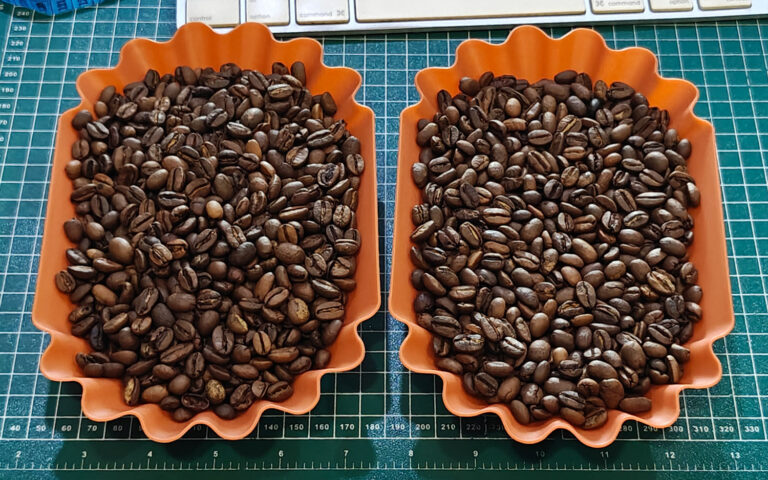
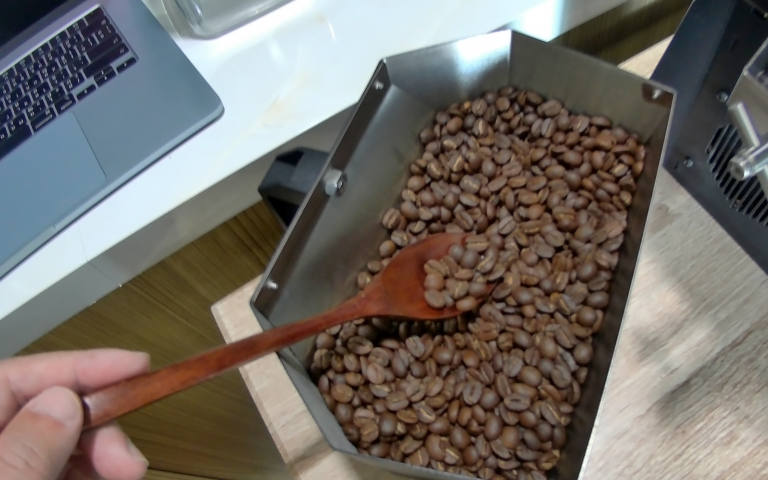
Sometimes roasting is methodical and documented. Other times, it’s a sprint through limited time with competition beans and a deadline looming. This Kenya lot falls firmly in the latter category—five roasts across two days, minimal documentation, maximum learning velocity.
The Competition Context (Spoiler: I Didn’t Advance)
Let me be upfront: I didn’t make it past the first round of the competition.
With only a few months of roasting experience under my belt, this outcome wasn’t surprising. I already knew walking in that my skills weren’t competition-level yet. But the opportunity to roast Kenya beans—typically expensive and reserved for special occasions—under the pressure of competition evaluation? Too valuable to pass up.
Think of it as paying for an intensive Kenya roasting workshop, except the tuition is in ego bruising rather than cash.
The Time Crunch: Two Days, Five Roasts, No Documentation
My schedule forced a compressed timeline:
Day 1: Roasts #1, #2, #3 back-to-back
Day 2: Roasts #4, #5
No photographing beans at various stages. No careful tasting notes written in a journal. Just: roast, cool, taste, adjust, repeat.
This isn’t my preferred method—I like data, reflection, documentation. But sometimes you work with the constraints you have. The beans wouldn’t wait, and neither would the competition deadline.
Roast #1: Capturing Kenya’s Baseline
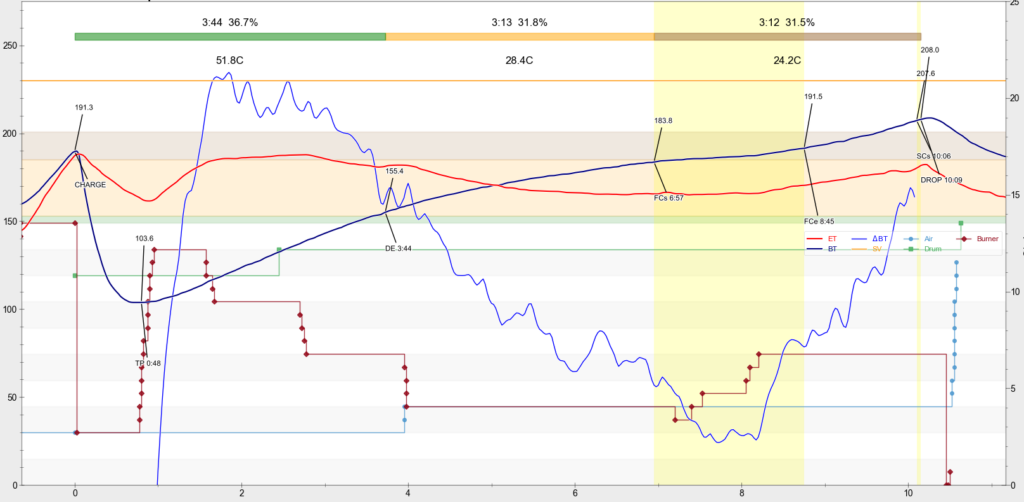
The first roast had one job: understand this Kenya’s thermal behavior on my Kaleido M6.
Recorded Bean Temperatures:
- Dry End (DE): 155°C @ 3:44
- First Crack (FC): 183.8°C @ 6:57 (3:13 Maillard)
- Second Crack (SC): 207.6°C @ 10:09 (3:12 Development)
- Drop: 208°C
Phase Distribution:
- DE: 3:44 (36.6%)
- Maillard: 3:13 (31.7%)
- Development: 3:12 (31.7%)
Remarkably balanced phase percentages—almost perfectly even thirds (37-32-32). This wasn’t planned; it’s just where the bean naturally went when I followed its lead without forcing a specific profile.
The SC Investigation
I pushed this roast all the way to 208°C—past second crack onset at 207.6°C—specifically to confirm the SC temperature. With my Robusta struggles (couldn’t hear FC) and various Arabica surprises (Khun Kong’s unexpected SC timing), I wasn’t taking chances.
I needed to know where this Kenya hit second crack, not guess.
Result: SC confirmed at 207.6°C. Clear, audible, unmistakable. Now I had my upper boundary for future roasts.
The Development Time Trade-Off
Taking 3:12 for development (31.7% of total roast) is longer than ideal for preserving Kenya’s famous bright acidity and fruity complexity. Most specialty roasters targeting Kenya’s vibrant character would drop earlier—maybe 1:30-2:00 post-FC for light-medium roast.
But I needed that SC data. The extended development time pushed the roast darker, potentially muting some of Kenya’s delicate fruit notes in favor of body and sweetness.
The Friend’s Feedback: “I Like This One”
After cupping roast #1, I asked a friend with better sensory skills than mine for honest feedback.
His verdict: “I prefer this first roast.”
His reasoning: He likes bitter.
There it is—the dark roast truth. By pushing to 208°C past second crack with 3:12 development, I’d created a darker Kenya with more roast character, body, and yes, bitterness.
For someone who enjoys bitter profiles, this worked. For a competition judging panel evaluating Kenya’s origin expression—bright acidity, complex fruit, floral notes, clean finish—this roast probably buried everything that makes Kenya special under roast development.
My friend’s preference confirmed what I suspected: roast #1 was good baseline data but wrong competition direction.
The Maillard-Development Balance
One positive: DE and Maillard times were relatively close (3:44 vs 3:13), suggesting decent balance in early roast phases.
The issue wasn’t how I got to first crack—it was what I did after. That 3:12 development phase carried the roast too far for Kenya’s character preservation.
Accurate BT Record: The Foundation for Roasts #2-5
Despite the competition-inappropriate roast level, roast #1 succeeded at its primary mission:
Confirmed Kenya BT markers on my Kaleido M6:
- DE: 155°C
- FC: 183.8°C
- SC: 207.6°C
These numbers gave me a roadmap for roasts #2 through #5. Now I could plan:
For competition (bright, fruity):
- Drop around 195-200°C (before SC)
- Target 1:30-2:00 development time
- Keep total roast under 10 minutes
For my friend (bitter preference):
- Keep roast #1’s profile
- Maybe even push slightly darker
The baseline roast, however imperfect for competition, provided the reference points I needed to execute targeted profiles quickly across the remaining four roasts.
Another 4 Profile for 400G each roast
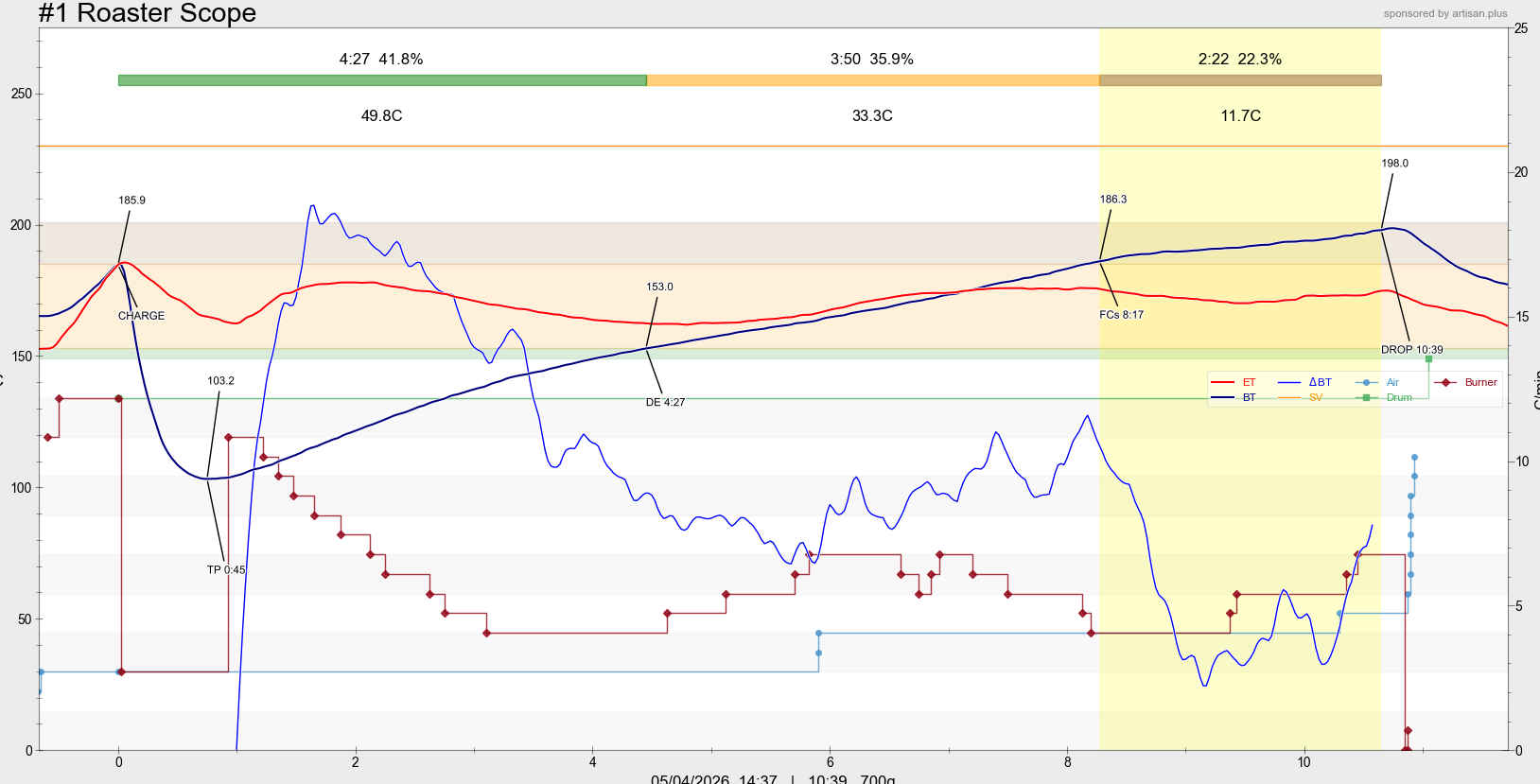
Roast Profile 2
My 2nd Roast where actually not bad on controlling the hear where follow my plan
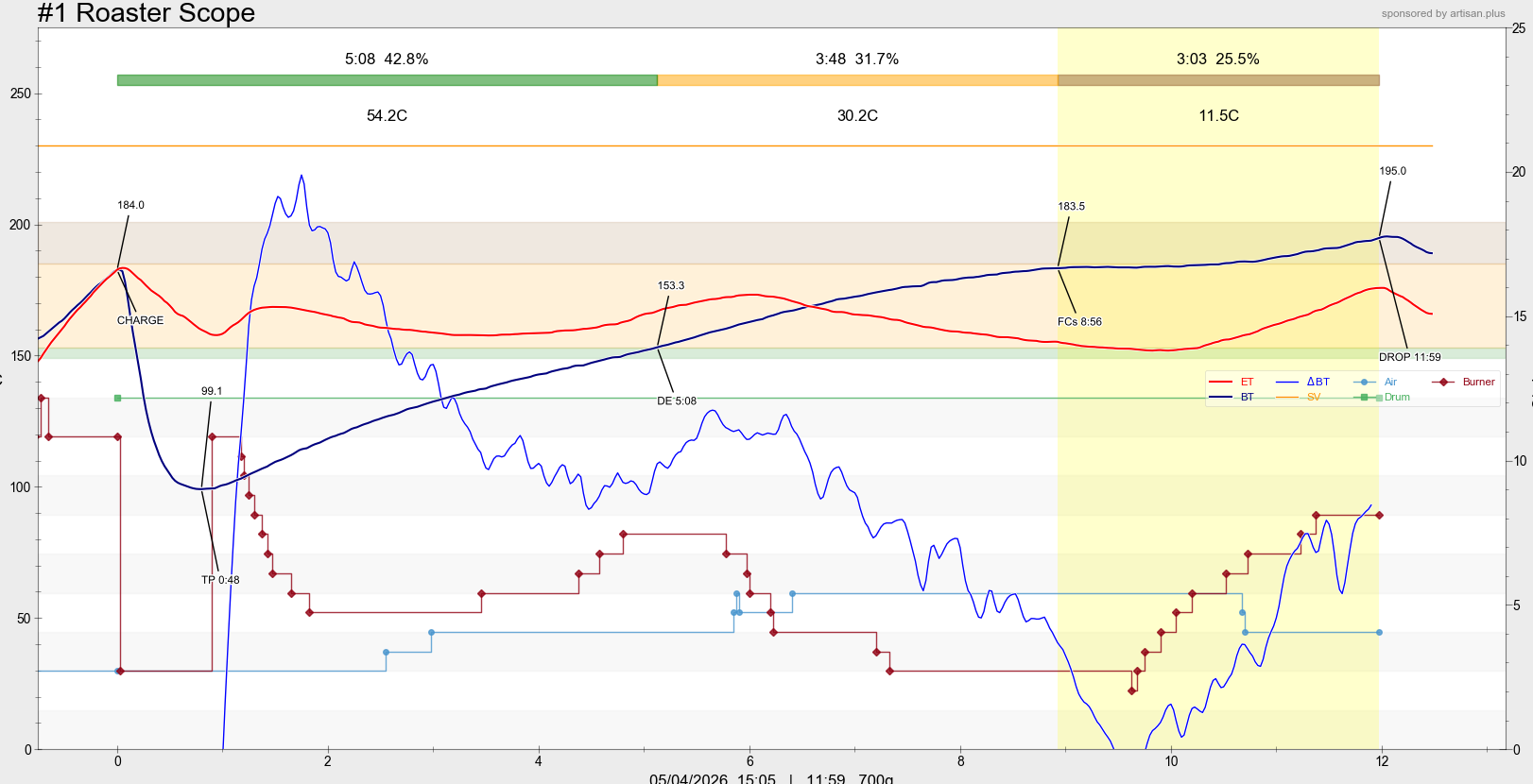
Roast Profile 3
My 3rd Roast try to get more accurate on my planning
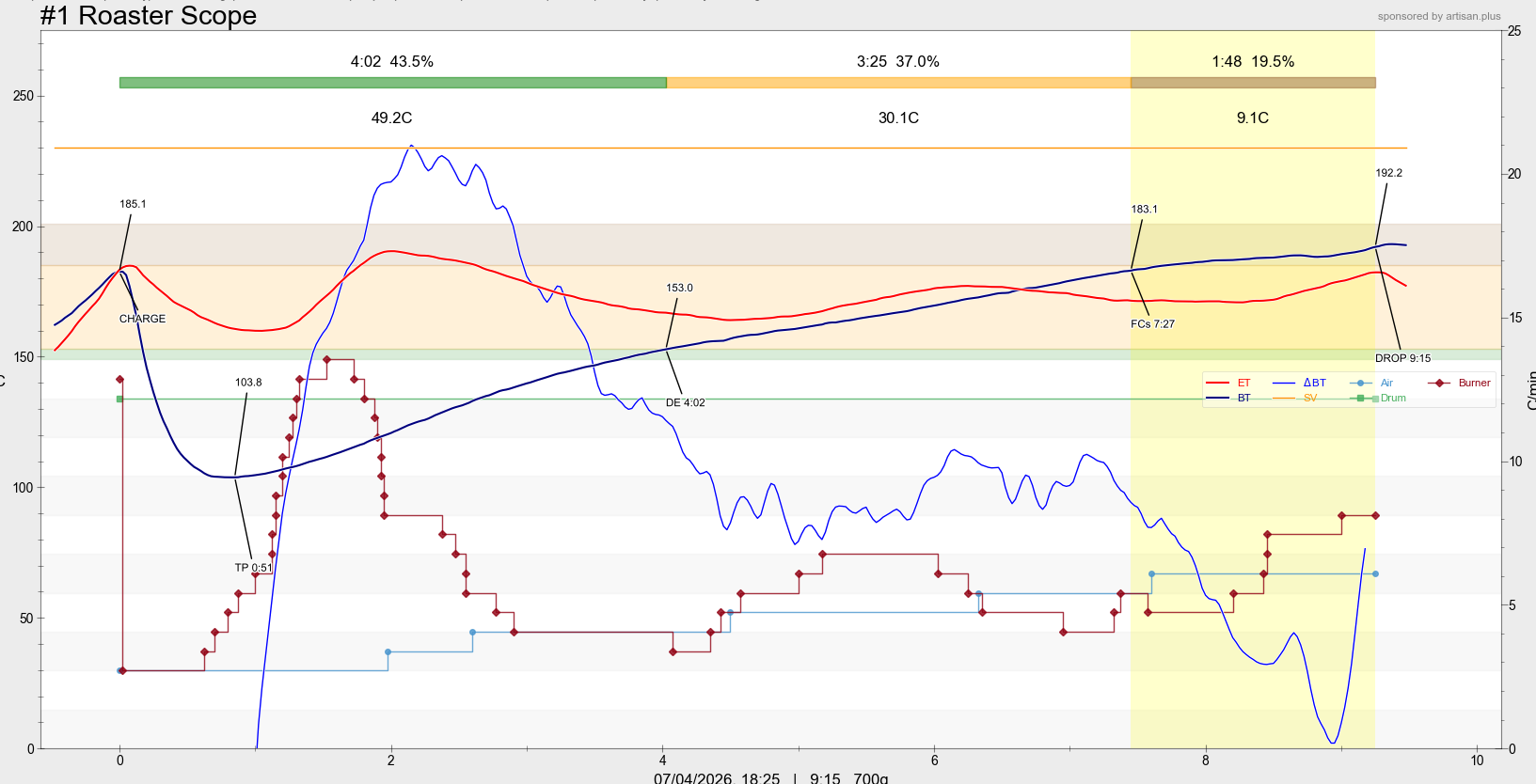
Roast Profile 4
Change shorten DE and Maillard to see what is the different
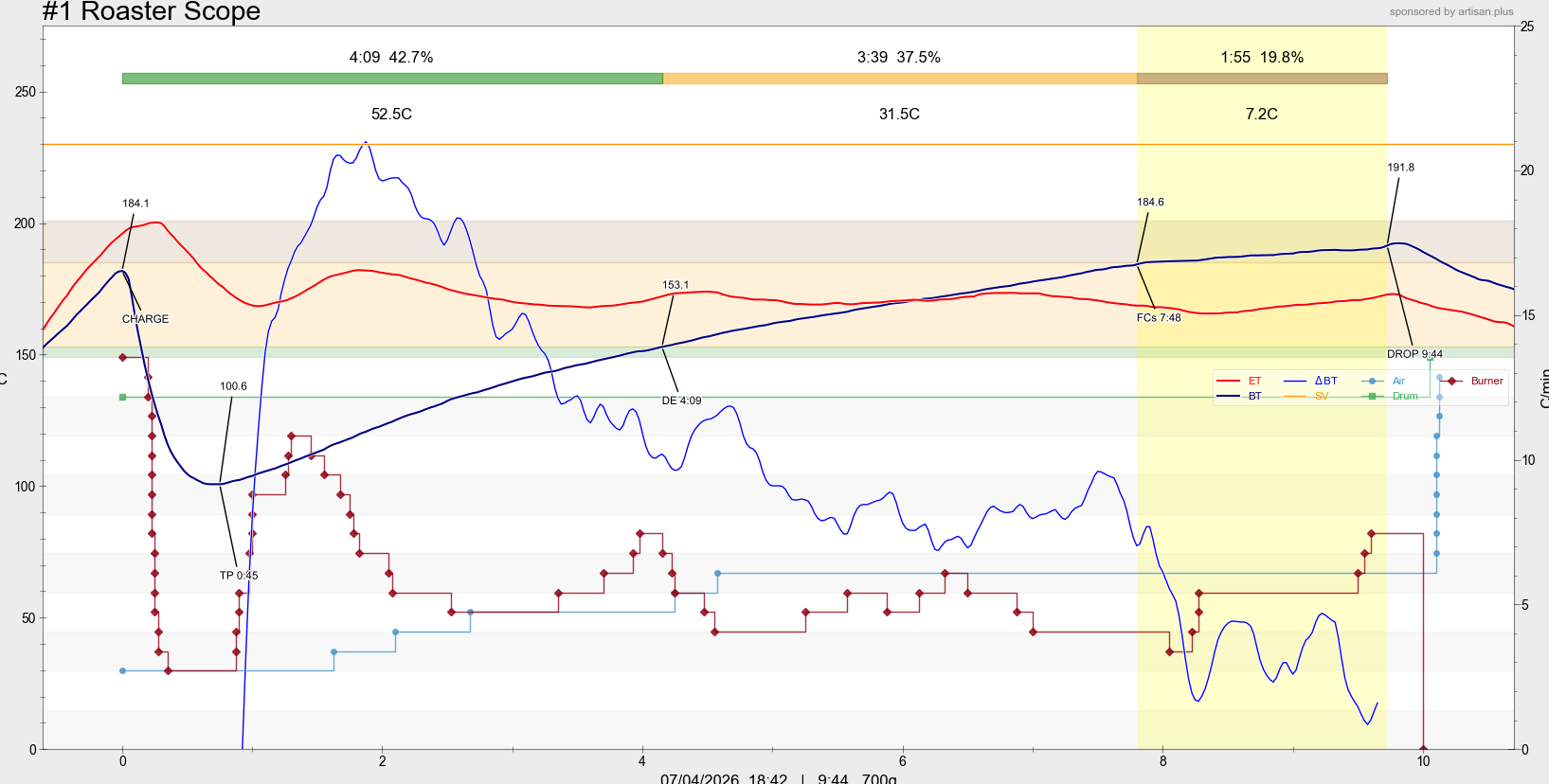
Roast Profile 5
Same plan with Roast 4, wonder see which roast have a better result
The Reality Check
Looking back, five roasts in two days with competition pressure was ambitious—maybe overly so for my skill level. But it forced rapid iteration and decision-making without the paralysis of over-analysis.
I learned more about Kenya in 48 hours than I would have stretching five roasts across weeks with careful documentation between each. Sometimes velocity teaches differently than thoroughness.
Did it get me past the first competition round? No.
Did it make me a better Kenya roaster? Absolutely.
Roast #1 Status: Baseline established, too dark for competition
BT Data Captured: DE 155°C, FC 183.8°C, SC 207.6°C ✓
Phase Balance: 37-32-32% (balanced but over-developed)
Friend’s Rating: “I like this one” (likes bitter)
Next: Roasts #2-5 targeting brighter profiles for competition
Roast Profile Roast #1:
- Bean: Kenya (competition lot)
- DE: 3:44 @ 155°C (36.6%)
- FC: 6:57 @ 183.8°C (31.7% Maillard)
- SC: 10:09 @ 207.6°C
- Drop: ~10:12 @ 208°C (31.7% Development)
- Result: Dark for Kenya, good baseline data, friend approved