After my first Robusta roast exposed my ignorance—assuming Arabica experience would translate directly to C.Canephora—I approached the second batch with humility and research. I read about Robusta’s silent first crack. I understood the cellular structure differences. I knew audio cues wouldn’t save me.
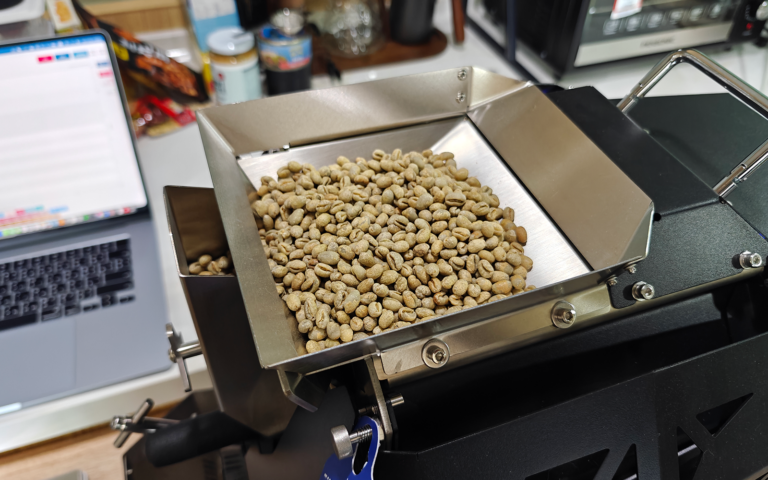
Armed with knowledge and 650 grams of PHU-120 mosto washed Robusta, I planned for medium roast using visual cues, temperature markers, and instinct.
I still ended up with dark roast.

The Plan: Trust Everything Except Your Ears
Going into this 650g batch, my strategy was clear:
Ignore Audio: Accept that first crack would be inaudible or ambiguous on the Kaleido M6. Don’t strain to hear phantom pops.
Rely on Visual Cues: Watch bean color changes through the sight glass. Look for the color transition that signals first crack’s onset.
Temperature Markers: Use my first roast’s questionable 189°C “FC” as a rough reference point. Monitor rate of rise changes around that zone.
Sixth Sense: Trust my developing roaster’s intuition—that gut feeling built from months of watching Arabica roast. The beans feel a certain way when they’re approaching medium roast.
Target: Medium roast—enough development for body and sweetness without pushing into the dark, bitter territory Robusta is already prone toward.
What Actually Happened: Silence and Guesswork
The Silence Continued
Around the temperature zone where first crack should theoretically occur (185-195°C based on Arabica patterns and Robusta research), I heard… nothing definitive.
Maybe some faint sounds. Maybe just beans tumbling in the drum. Maybe my imagination again. The Kaleido M6’s acoustic environment combined with Robusta’s cellular structure created a black box—heat going in, no audible feedback coming out.
Visual Cues: Ambiguous
Through the sight glass, I watched color progression. The beans darkened from green to tan to brown. But when exactly does that color change signal first crack in Robusta versus just ongoing Maillard browning?
With Arabica, I’d learned to correlate visual changes with crack sounds—they reinforced each other. With silent Robusta, the visual cues stood alone, and I realized I didn’t trust my color-reading ability enough to make critical roast decisions.

The Sixth Sense Decision
Somewhere in the roast progression—temperature climbing, color deepening, rate of rise shifting—my gut said: “This feels like it’s approaching medium. Drop soon.”
No crack confirmation. No clear visual marker. Just instinct built on Arabica experience telling me the beans were “there.”
I trusted it. I dropped.
The Result: Dark Roast (Again)
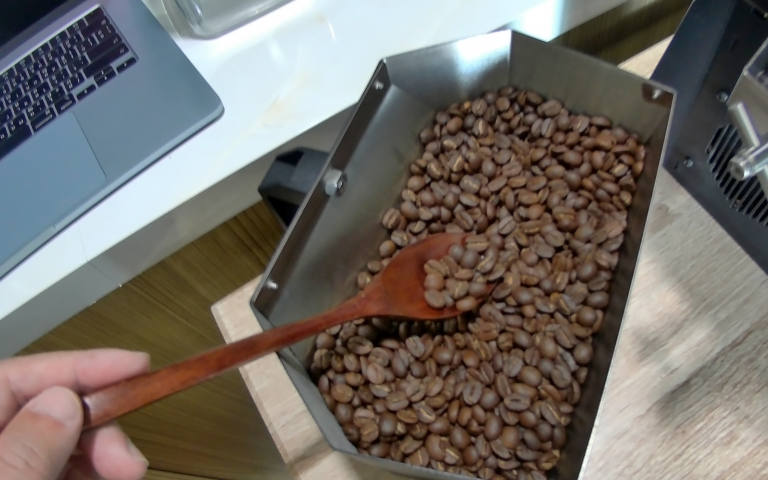
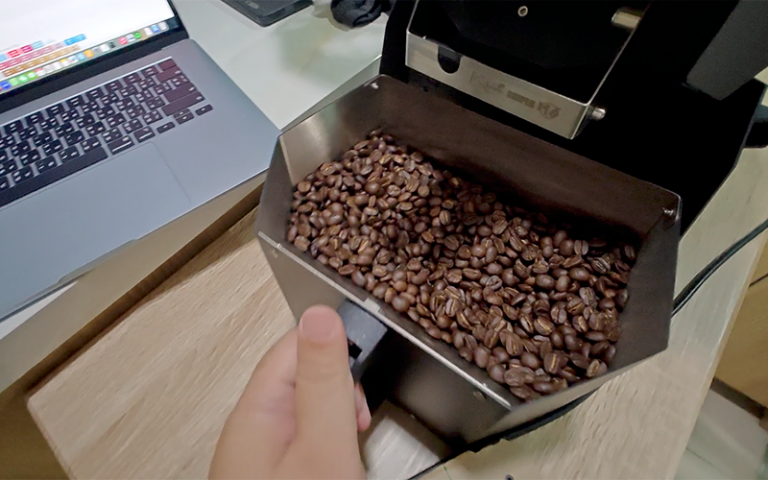
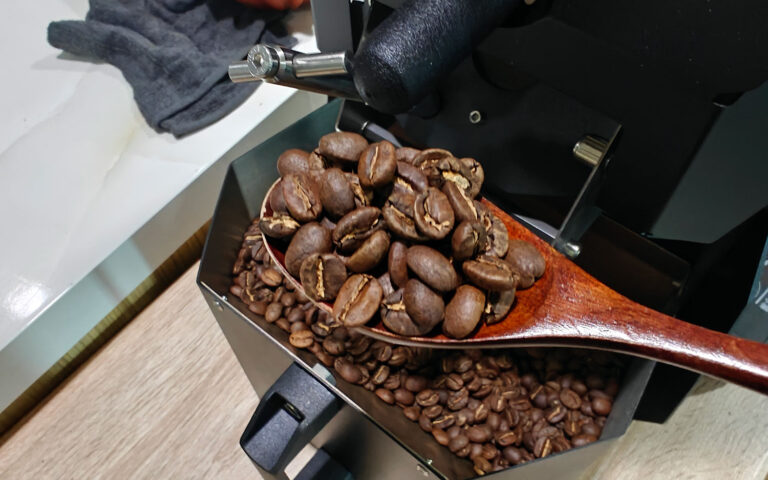
After cooling, the truth revealed itself in bean color: dark roast.
Not as devastatingly dark as roast #1 (which I’d pushed to 215°C second crack). This was better—slightly better—but still well past the medium roast I’d targeted.
My sixth sense had failed me. Or more accurately, my Arabica-calibrated sixth sense didn’t translate to Robusta’s different development curve.

Why Medium Became Dark
Theory 1: Robusta Develops Faster Post-“FC”
Even though I couldn’t hear first crack, it happened somewhere. Robusta’s denser cellular structure and different sugar composition might mean that once first crack occurs (audibly or silently), development to darker roast levels happens faster than in Arabica.
If FC happened earlier than I thought, and I dropped based on an Arabica-timed gut feeling, I would have given Robusta too much development time—resulting in darker roast than intended.
Theory 2: Temperature Markers Don’t Transfer
My “sixth sense” is really temperature-and-time intuition built on Arabica. “This temperature at this time feels like medium roast” is Arabica knowledge.
Robusta might hit medium roast at different absolute temperatures or different time-after-FC intervals. My instinct was wrong because it was calibrated to the wrong species.
Theory 3: Visual Assessment Is Harder Than I Thought
Maybe the beans looked medium roast through the sight glass, but Robusta’s exterior color progression doesn’t match its interior development the same way Arabica’s does. I dropped when it looked right, but the roast had already progressed further than appearance suggested.
The Silver Lining: Better Than Roast #1
At least this roast showed some improvement:
Roast #1: Completely lost, recorded impossible FC at 189°C, pushed to 215°C SC, ended up very dark with zero understanding of what happened.
Roast #2: No FC audio, relied on visual and instinct, dropped earlier than roast #1, achieved dark roast instead of very dark roast, learned that my intuition needs recalibration.
Progress? Barely. But technically yes.
I’m moving in the right direction—just extremely slowly and with expensive beans as tuition.
What I Still Don’t Know
After two Robusta roasts, I’m still blind on critical questions:
When does this Robusta actually hit first crack? Temperature? Time? Visual indicator?
What does medium roast actually look/feel like for Robusta? My Arabica references are clearly wrong.
How much development time does Robusta need post-FC? Assuming I could identify FC, how long until medium versus dark?
Should I drop earlier or later than my instinct suggests? If my gut consistently overshoots dark, should I trust that and drop 30 seconds earlier next time?
The Frustration of Species Ignorance
Here’s what’s maddening: I’ve successfully roasted Mae Ukho to 4/5 satisfaction. I understand Arabica phase distributions, Maillard timing, development strategies. I can plan a roast profile and execute reasonably close to target.
All that competence evaporates with Robusta. I’m a beginner again, guessing and hoping, with no reliable feedback mechanism.
The Kaleido M6’s acoustic limitations amplify the problem. On a machine with crystal-clear crack sounds, I might eventually correlate temperature/visual/audio cues and build Robusta-specific intuition. On the M6, I’m roasting with one sense (audio) effectively disabled.
Next Steps: Actually Learning This Time
I’m out of PHU-120 Robusta now. Before I source more Canephora beans, I need to:
Find Robusta-Specific Resources: Tutorials, forums, guides written by roasters who work primarily with Robusta. Stop trying to adapt Arabica knowledge; learn Robusta from scratch.
Understand Drop Temperature Targets: What bean temperatures correspond to light, medium, medium-dark, dark roast for typical Robusta? Hard numbers, not instinct.
Study Visual Progression: Find photo references or videos showing Robusta color changes through roast levels. Calibrate my eyes to Robusta-specific cues.
Consider Different Equipment: Would a different roaster with better acoustics help? Or is silent FC just Robusta reality regardless of machine?
Accept Longer Learning Curve: I learned Arabica over months and many kilograms. Robusta will demand the same investment. Two roasts isn’t enough data.
The Honest Assessment
Roast #2 Result: Dark roast (unintended, but better than roast #1)
Process Improvement: Slight—at least I understood why I couldn’t hear FC
Outcome Improvement: Marginal—still overshot target significantly
Knowledge Gained: Arabica intuition doesn’t transfer to Robusta
This roast reinforced a humbling truth: species matter. Coffea arabica and Coffea canephora aren’t just different varieties—they’re fundamentally different plants that behave differently under identical roasting conditions.
Until I respect that difference and build Robusta-specific skills, I’ll keep producing dark roasts while aiming for medium.
The beans deserve better. So does my wallet.
Roast Status: Dark roast (slight improvement from roast #1)
Sixth Sense Reliability: 0/10 for Robusta
Next Action: Deep research before attempting Robusta roast #3
Beans Remaining: 0g (learning complete… for now)
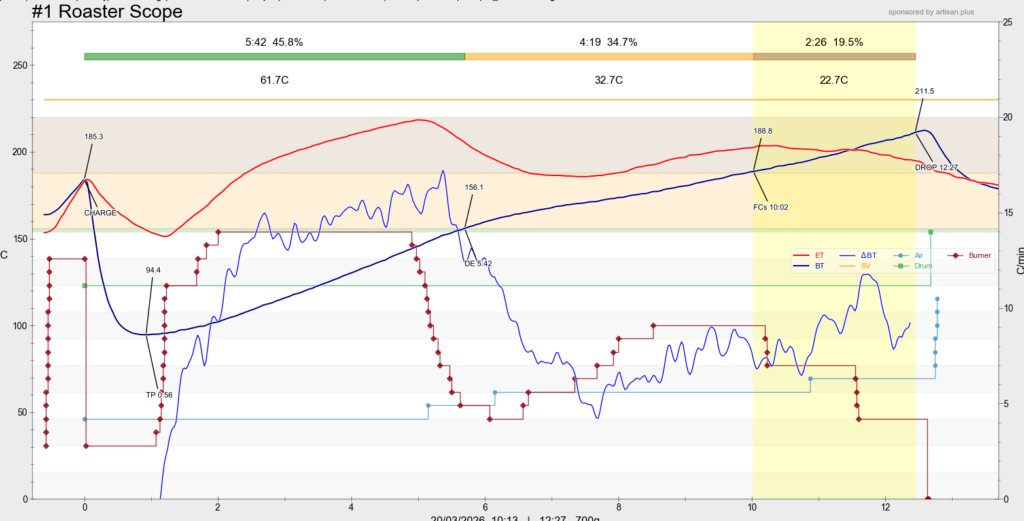
Roast Profile Roast #2:
- Batch Size: 650g
- DE: ~156°C (probably)
- FC: ??? (still couldn’t hear it)
- Drop: Unknown BT (based on gut feeling, clearly wrong)
- Result: Dark roast (better than roast #1, worse than planned medium)
- Lesson: Arabica instinct ≠ Robusta instinct