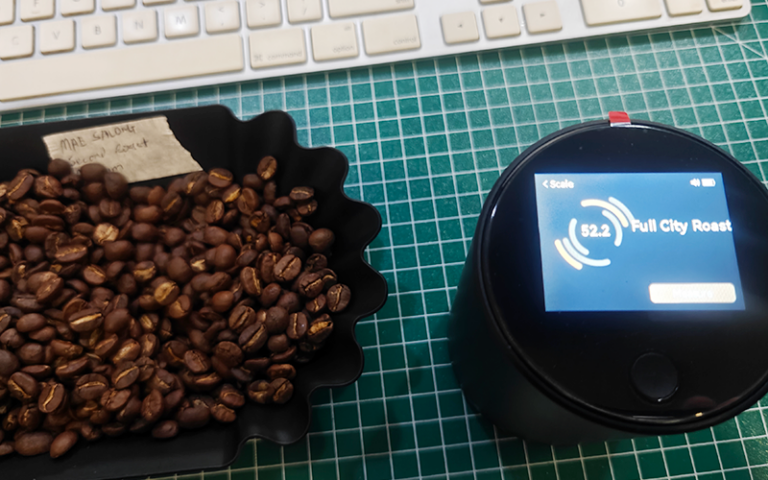
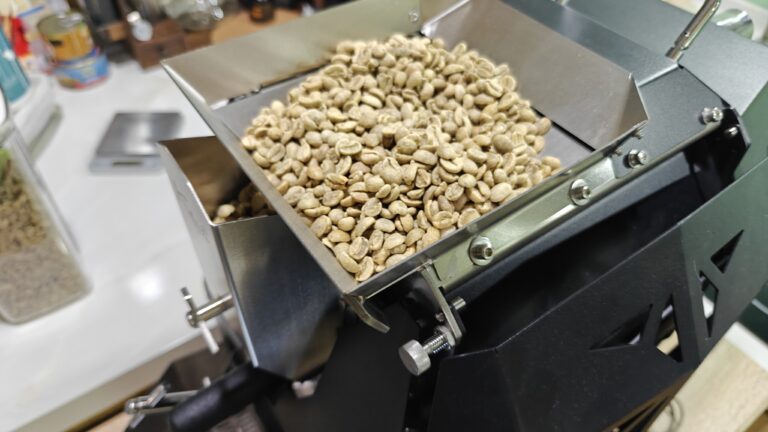
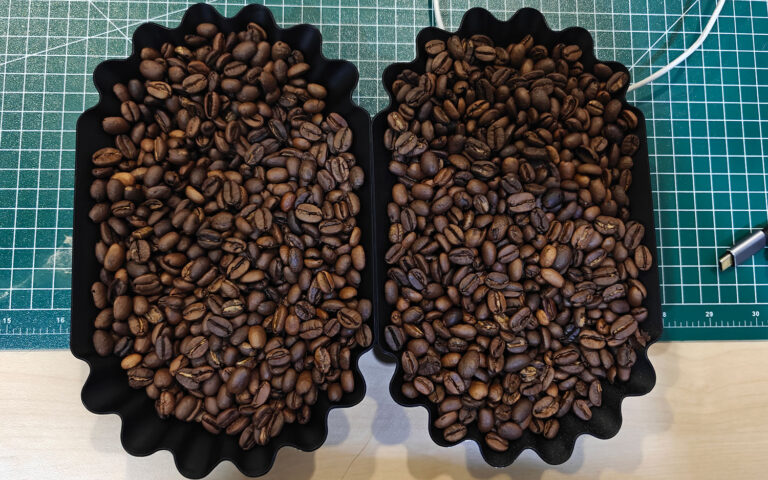
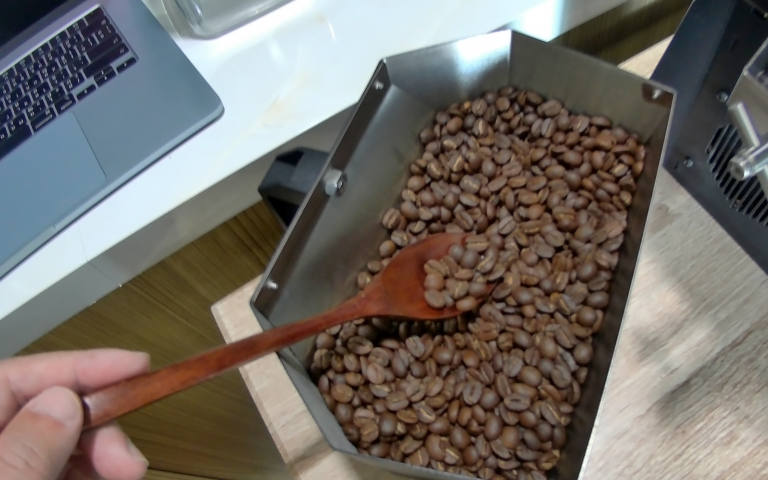
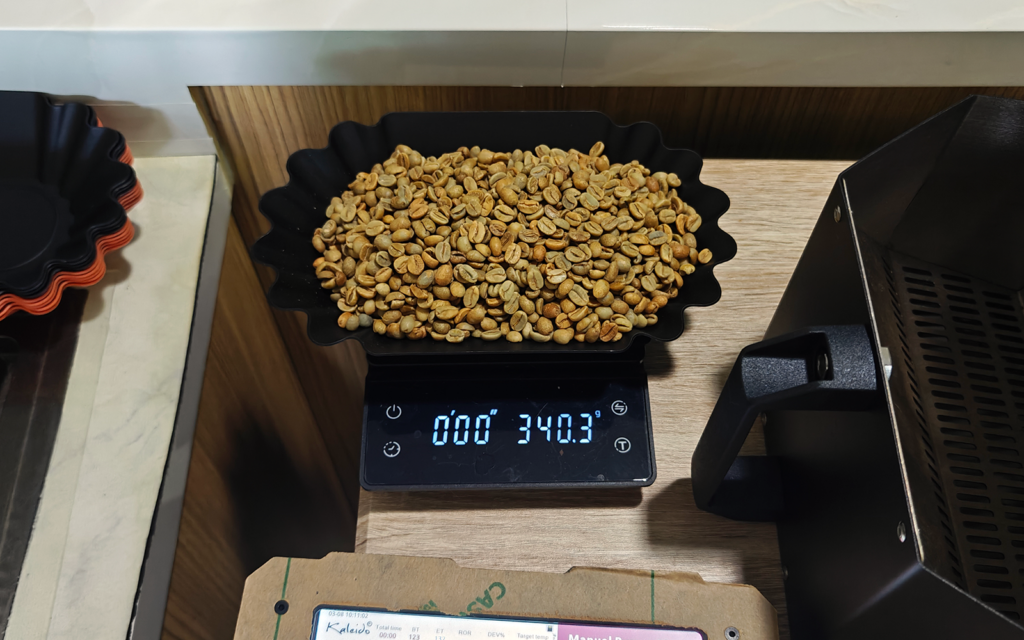
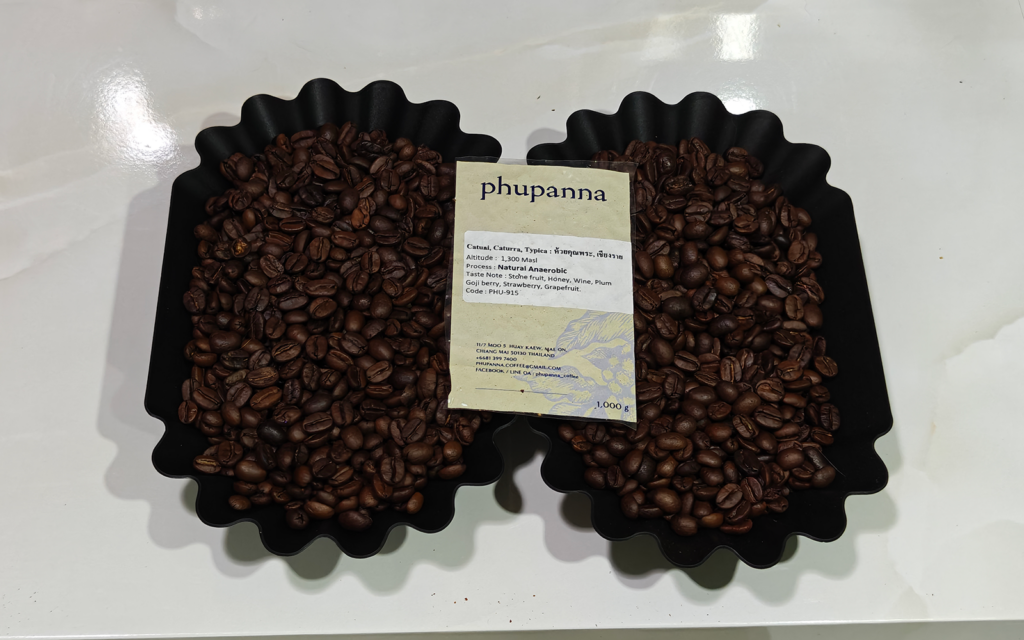
After being overwhelmed by Catuai’s intense pre-roast aroma—that fruit bomb smell straight from the bag—it was time to see if the cup could deliver on that olfactory promise. First roast: 340 grams, conservative batch size, pure data collection mission. The goal wasn’t perfection; it was understanding this bean’s thermal personality before committing to a planned profile.
A Different Chiang Mai Expression
This Catuai comes from the same Chiang Mai region as my other Thai beans, but it’s a completely different batch and processing method. While Mae Salong and Mae Ukho use wet processing for clean, bright profiles, this natural anaerobic Catuai represents the experimental, fruit-forward end of Thailand’s specialty coffee spectrum.
Same mountains, different philosophy.
The Roast Plan: Follow the Bean
Going into this first roast, I kept it simple: wait for second crack, then drop. No aggressive flavor targeting, no predetermined drop temperature. Just observe where this lower-density (0.71), higher-moisture (10.7%) bean naturally wants to go.
I expected this would result in a dark roast—staying through second crack typically does—but for baseline data, I needed to see the full thermal curve from beginning to end.
What Actually Happened
The Numbers:
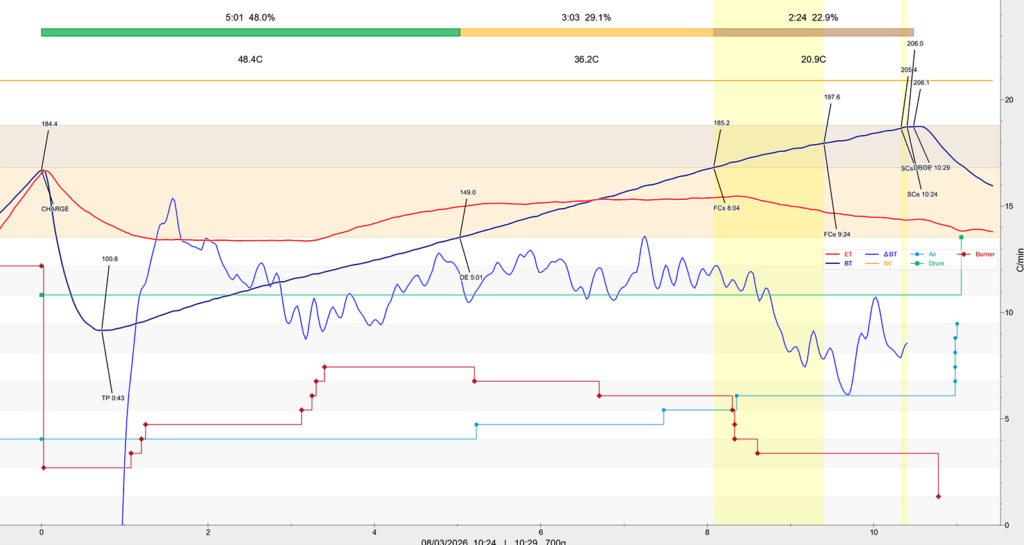
- Dry End (DE): 5:00 @ 149°C
- First Crack (FC): 8:00 @ 185°C
- Second Crack (SC): ~10:00 @ 205°C
- Drop: 10:30 @ 206°C
Roast Phase Breakdown:
- DE phase: 48%
- Maillard phase: 29.1% (3 minutes)
- Development phase: 22.9%
Total roast time: 10 minutes 30 seconds
The Phase Distribution Analysis
Let’s be honest: 48% DE phase is heavily front-loaded. Nearly half the roast time spent just drying the beans suggests either:
- The higher moisture content (10.7%) demanded extended drying
- I applied insufficient heat early on
- Some combination of both
Ideally, I’d prefer something closer to 40-42% for the drying phase, giving more time to Maillard development. But for a first roast on an unfamiliar bean? This isn’t terrible—it’s data.
The 29.1% Maillard phase (3 minutes) falls into acceptable territory. Not the extended 4-5 minute Maillard I’ve been chasing lately, but sufficient for sugar development. With natural anaerobic processing already loading the bean with fruit complexity, maybe aggressive Maillard time isn’t as critical here as it would be for a clean washed coffee.
Development time at 22.9% hits almost exactly where conventional roasting wisdom suggests (20-25% for balanced development). This phase felt controlled—I wasn’t scrambling or reacting; I was waiting and watching for second crack.
Temperature Markers: Lower Than Expected
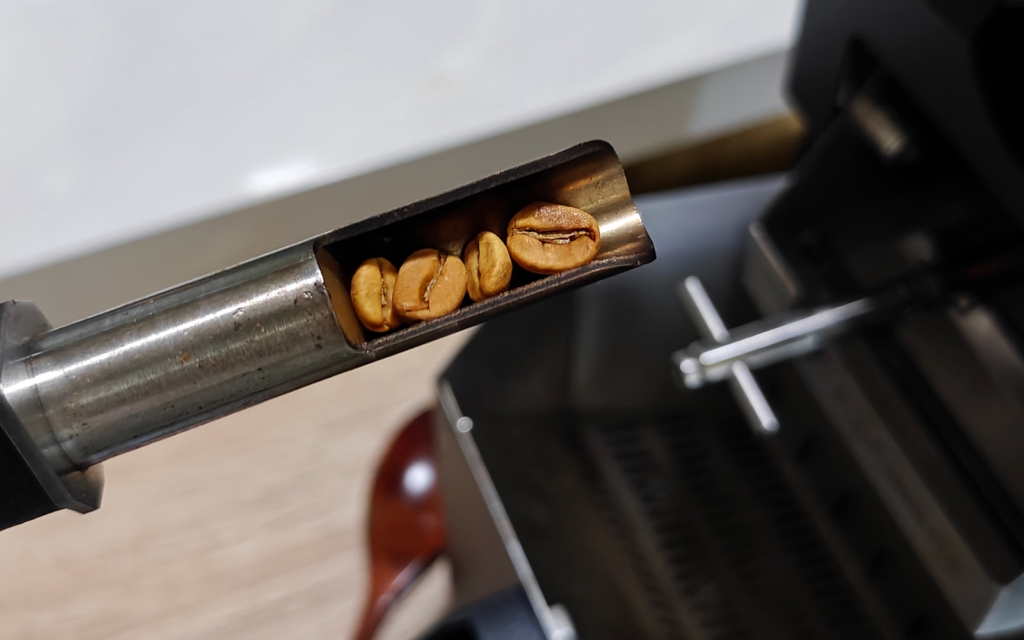
First Crack at 185°C arrived slightly higher than some of my other beans (Mae Ukho at 179-182°C, for example). The lower density should theoretically mean faster heat penetration and earlier crack, but the higher moisture content likely balanced that out—more energy spent evaporating water means slightly delayed exothermic reactions.
Second Crack at 205°C is right in the expected range for most beans. Waiting until 206°C to drop means I pushed just past SC onset—solidly into dark roast territory.
This was intentional. I wanted to see where SC actually begins for this Catuai, not guess based on other beans’ behavior.
Flavor Expectations from This Profile
The 5-minute DE phase suggests potential for some wood smoke or earthy undertones. Extended drying time can sometimes create these characteristics, especially in natural processed coffees where fruit remnants can develop savory, smoky notes under prolonged heat.
Will this complement or compete with the fruit intensity? That’s the question.
The 3-minute Maillard phase should theoretically preserve berry flavors—those strawberry, goji berry, and plum notes promised by the processing. Three minutes is enough for sugar caramelization without overwhelming the fruit with heavy roast sweetness.
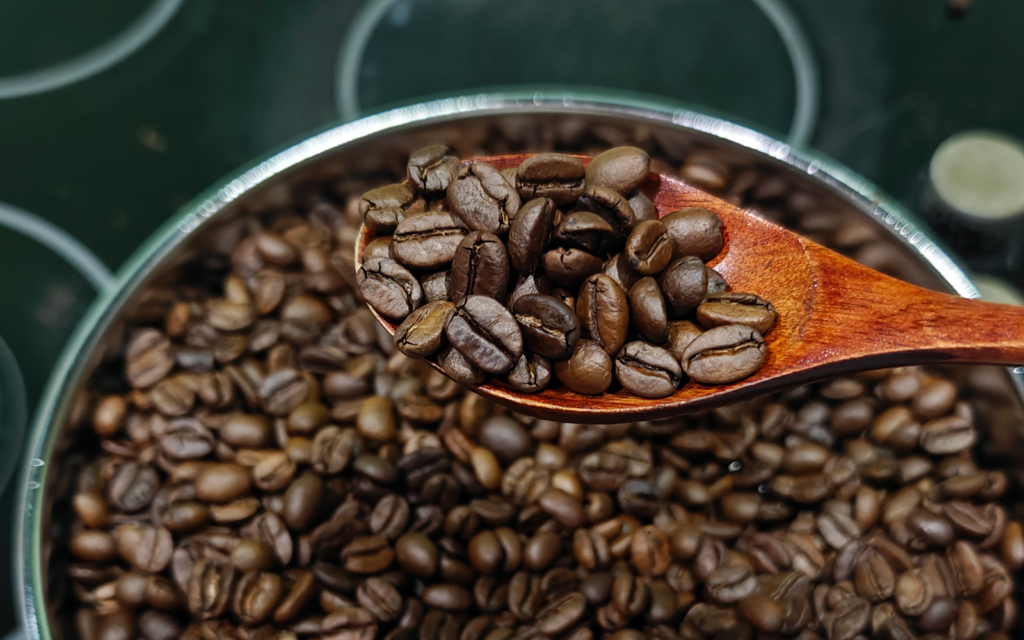
But here’s the tension: I dropped at 206°C, past second crack. Dark roast development typically mutes origin character and fruit notes in favor of roast character—chocolate, bitterness, body.
Did I just erase the very characteristics that make natural anaerobic processing expensive and interesting?
The Correction Hope
Despite pushing into dark territory, this roast gave me what I needed: accurate BT markers.
- DE @ 149°C
- FC @ 185°C
- SC @ 205°C
Now I know. For roast #2, I can make informed decisions:
- Want to preserve maximum fruit intensity? Drop at 195-198°C (medium roast, before SC)
- Want balanced fruit with body? Drop at 200-203°C (medium-dark, approaching SC)
- Want to see if dark roast works? I already have that data from this roast
The beauty of baseline roasts is they remove guesswork. I’m no longer estimating or hoping—I have concrete temperature targets based on this bean’s actual behavior in my roaster.
Not Perfect, But Good Enough
The phase distribution (48-29-23) isn’t ideal, but it’s “good for a first roast”—my own assessment, and I’m sticking with it. I learned:
- This bean needs more aggressive early heat (to shorten DE below 5 minutes)
- Maillard will happen efficiently even at just 3 minutes
- SC arrives predictably at 205°C
- The bean tolerates extended roasting without obvious defects
More importantly, I have correct data for roast #2. No more guessing about crack temperatures. No more surprise dark roasts when I wanted medium.
The cup will reveal whether this dark roast destroyed the fruit or created an interesting chocolate-berry hybrid. Either way, I know what to do differently next time.
Next Steps
Roast #2 will target medium roast around 196-198°C—dropping well before second crack to preserve those stone fruit, strawberry, and wine notes that the natural anaerobic processing promised.
I’ll also aim for:
- Shorter DE phase (4-4.5 minutes instead of 5)
- Slightly extended Maillard (3.5-4 minutes)
- Conservative development (drop before SC)
Target phase distribution: 40% / 35% / 25%
Let’s see if I can make this fruit bomb actually taste like fruit.
Roast Status: Dark roast baseline established
Phase Balance: 48% / 29.1% / 22.9% – acceptable for first attempt
Key Discovery: SC @ 205°C, FC @ 185°C
Next Action: Medium roast at 196-198°C to preserve fruit character
Roast Profile:
- Batch Size: 340g
- DE: 5:00 @ 149°C (48%)
- FC: 8:00 @ 185°C (29.1% Maillard)
- SC: ~10:00 @ 205°C
- Drop: 10:30 @ 206°C (22.9% Development)
- Final Result: Dark roast (likely fruit-muted)